.avif)
Find & Read
No items found.


.avif)

Access requires sign-in

Access requires sign-in
Access requires sign-in
Access requires sign-in
Access requires sign-in

Access requires sign-in

Access requires sign-in

Access requires sign-in
Access requires sign-in

Access requires sign-in

Access requires sign-in


Access requires sign-in

Access requires sign-in

Access requires sign-in

Access requires sign-in

Access requires sign-in

Access requires sign-in

Access requires sign-in

Access requires sign-in
Access requires sign-in

Access requires sign-in

Access requires sign-in

Access requires sign-in

Access requires sign-in

Access requires sign-in

Access requires sign-in

Access requires sign-in

Access requires sign-in

Access requires sign-in

Access requires sign-in

Access requires sign-in

Access requires sign-in

Access requires sign-in
Access requires sign-in

Access requires sign-in

Access requires sign-in

Access requires sign-in

Access requires sign-in

Access requires sign-in

Access requires sign-in

Access requires sign-in
Access requires sign-in

Access requires sign-in

Access requires sign-in

Access requires sign-in

Access requires sign-in
.avif)

Access requires sign-in

Access requires sign-in
.avif)

Access requires sign-in

Access requires sign-in

Access requires sign-in
Access requires sign-in

Access requires sign-in

Access requires sign-in
Access requires sign-in
Access requires sign-in
.avif)
Access requires sign-in

Access requires sign-in
Access requires sign-in
Access requires sign-in
Access requires sign-in
Access requires sign-in
Access requires sign-in
Access requires sign-in

Access requires sign-in
Access requires sign-in
Access requires sign-in
Access requires sign-in
Access requires sign-in
Access requires sign-in

Access requires sign-in

Access requires sign-in
Access requires sign-in
Access requires sign-in
Access requires sign-in


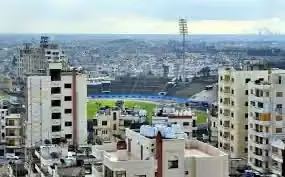
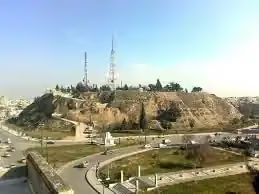
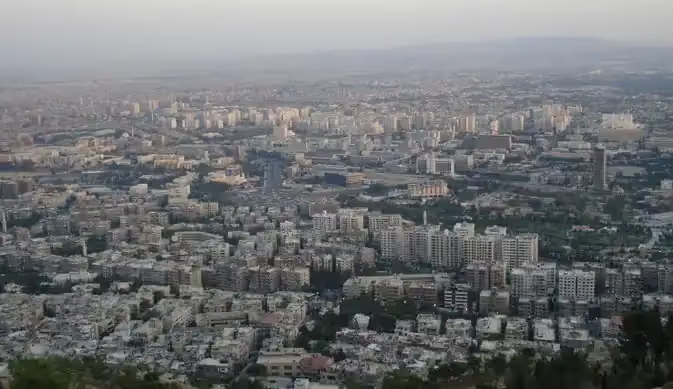
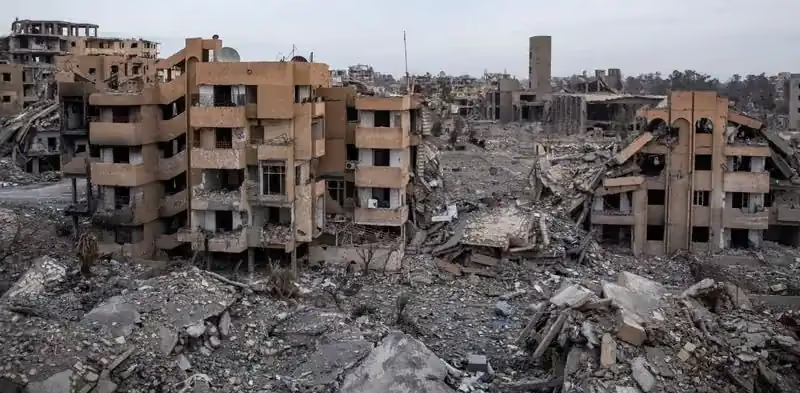
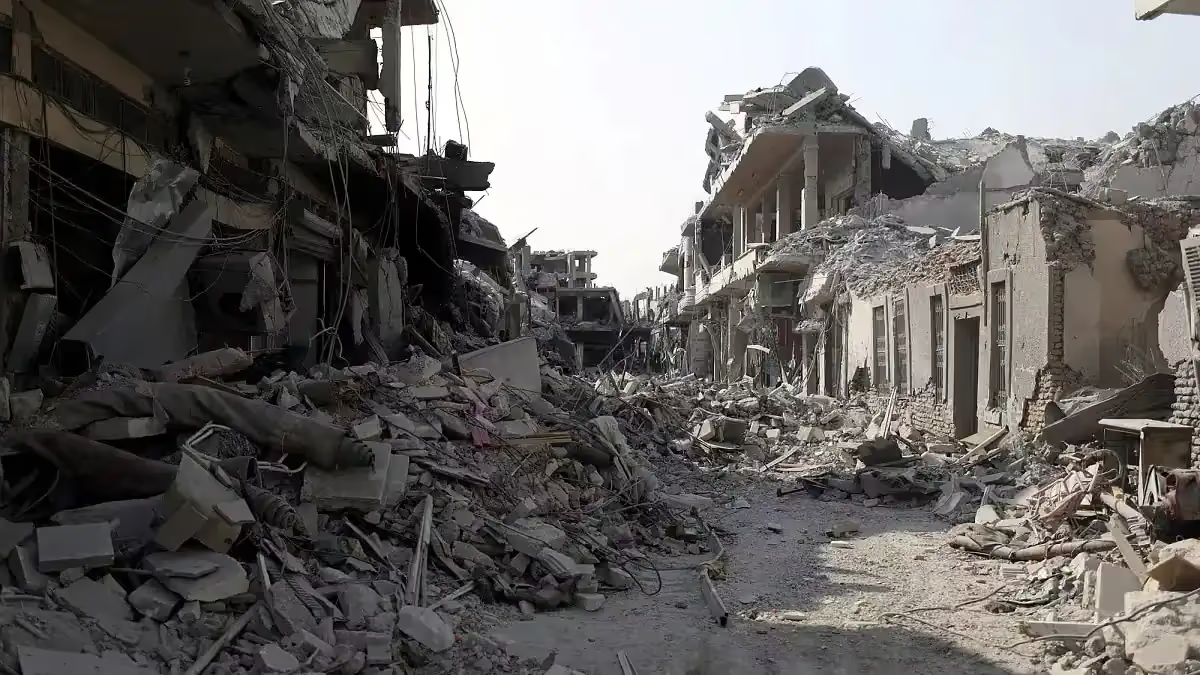
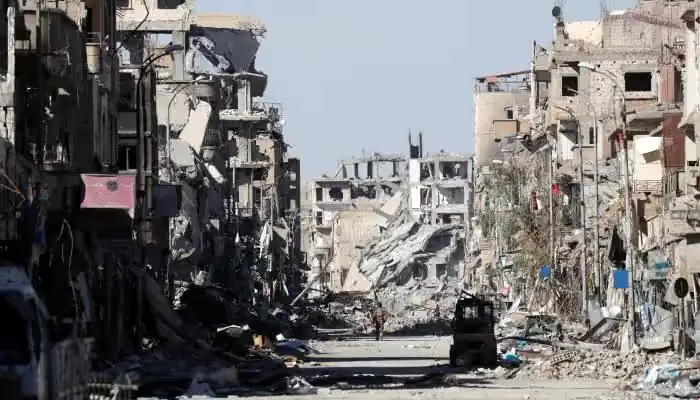
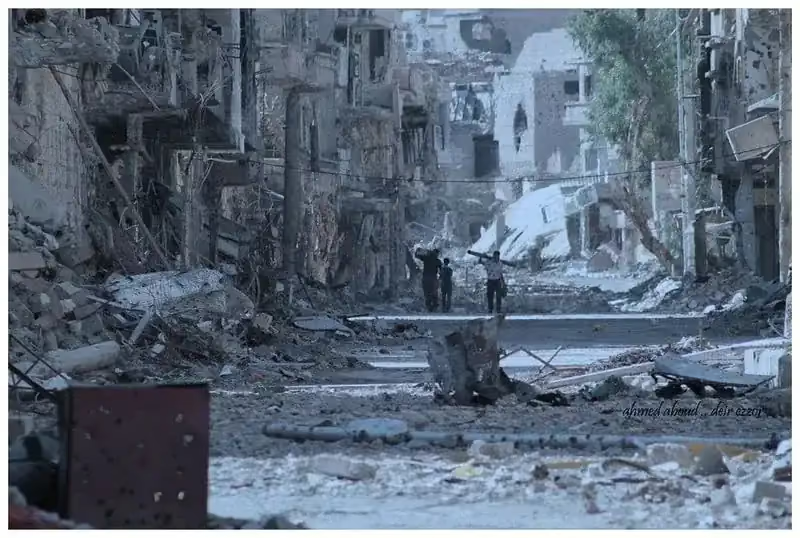
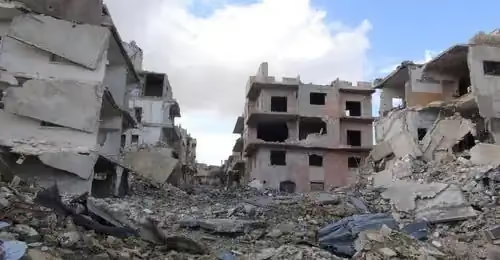
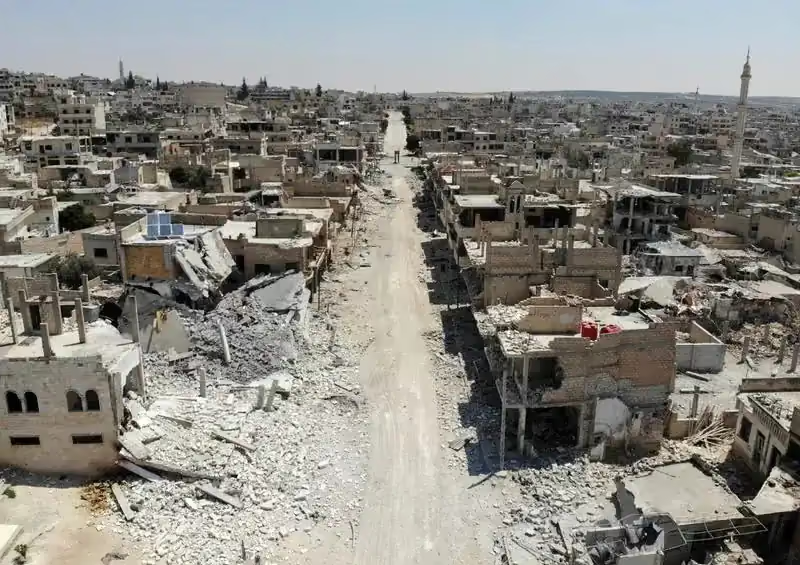
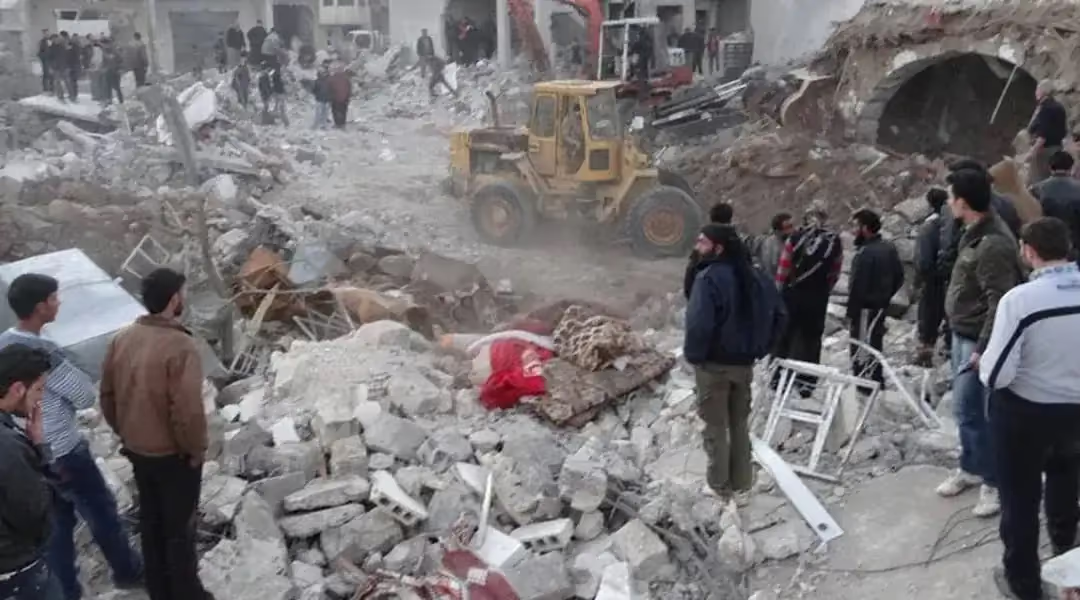
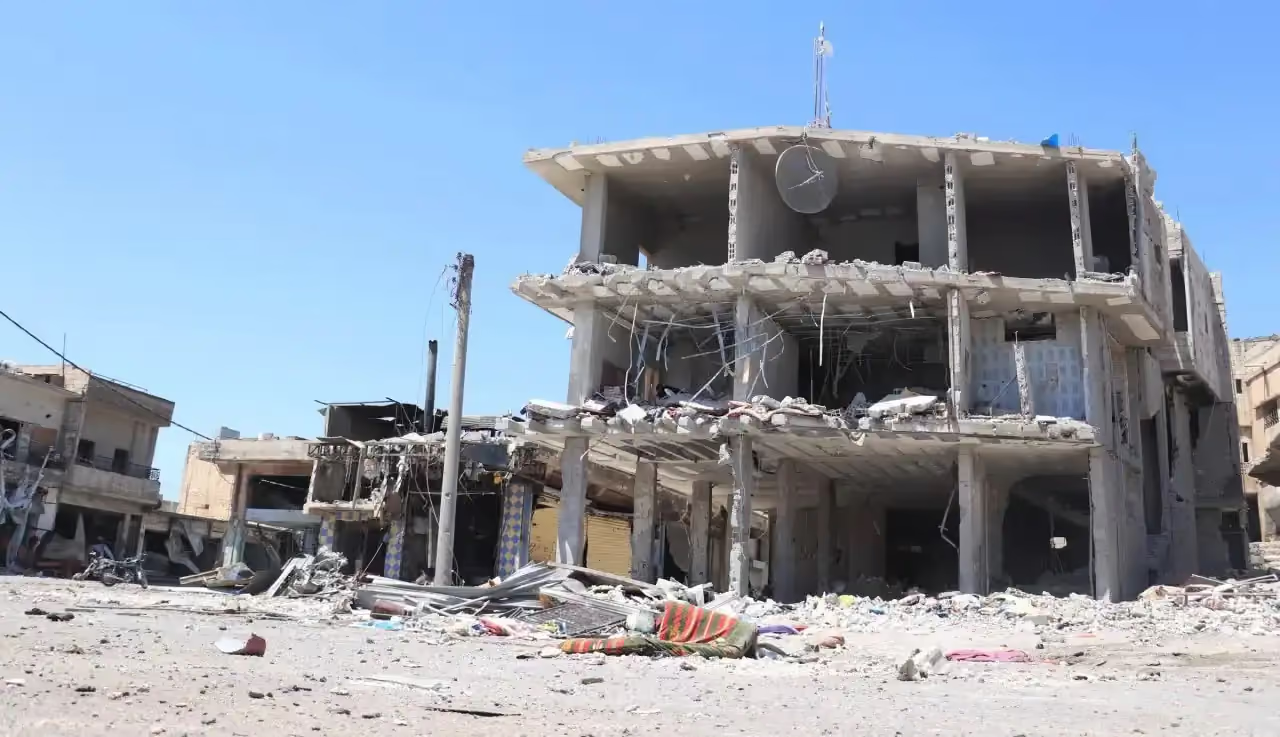
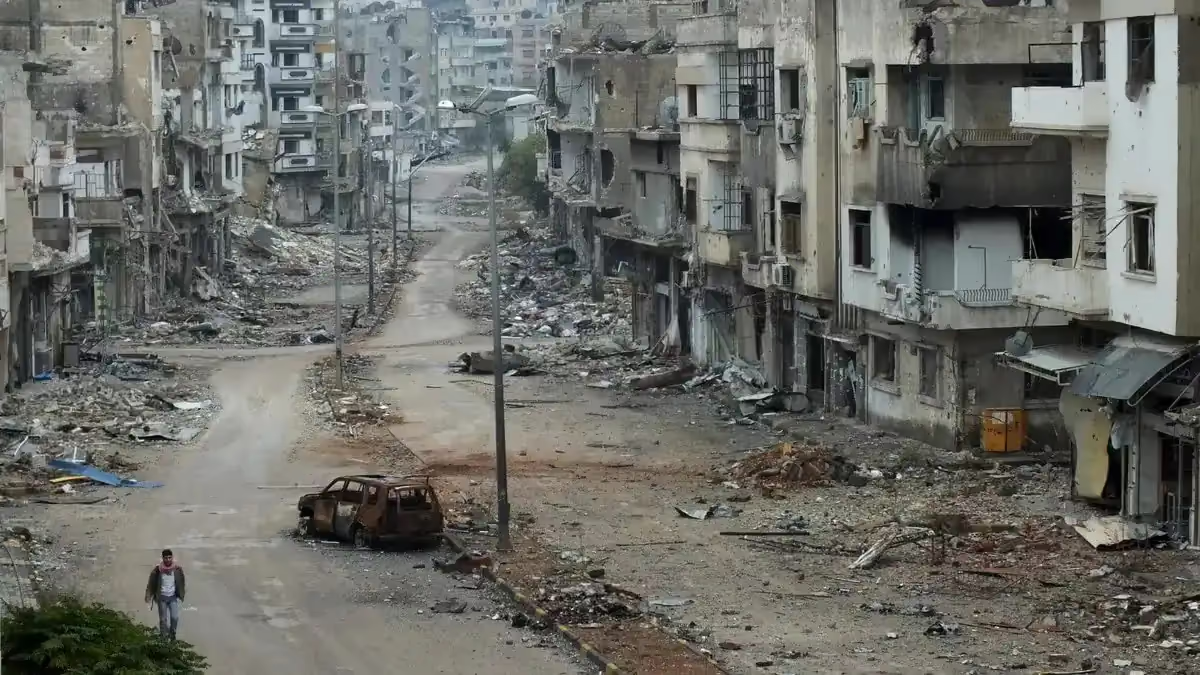
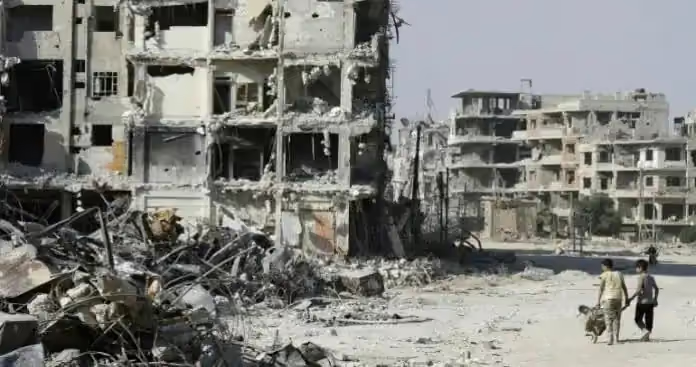
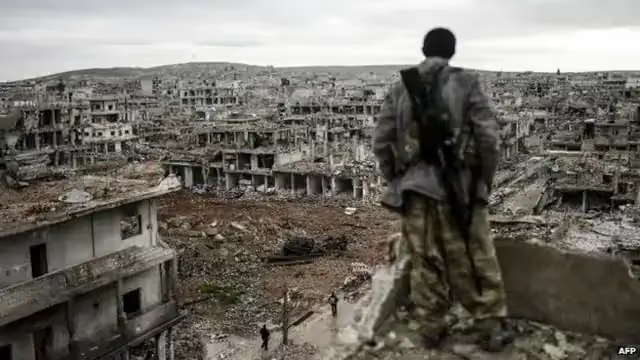
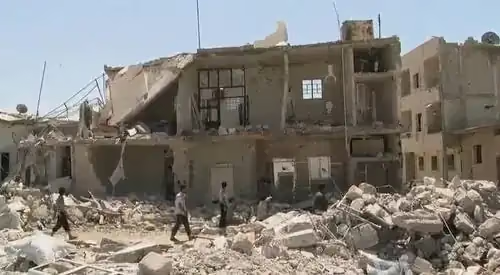
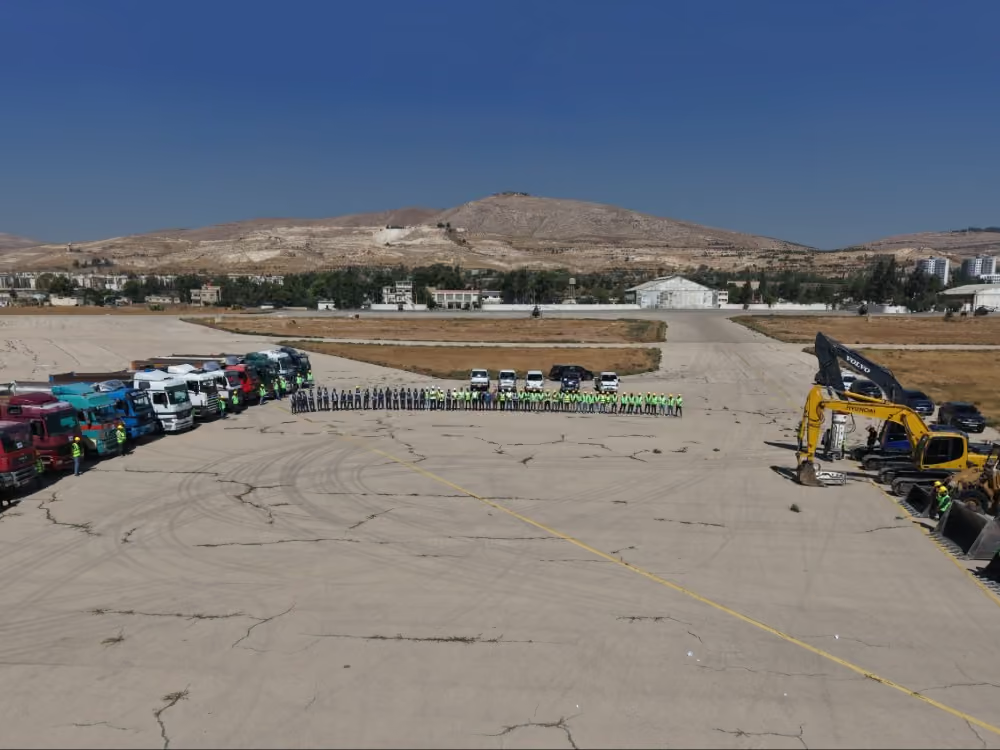
Preliminary rehabilitation works have started at Mezzeh Airport in Damascus, aiming to convert it from a military facility into a civilian airport for private aviation.
Read More ..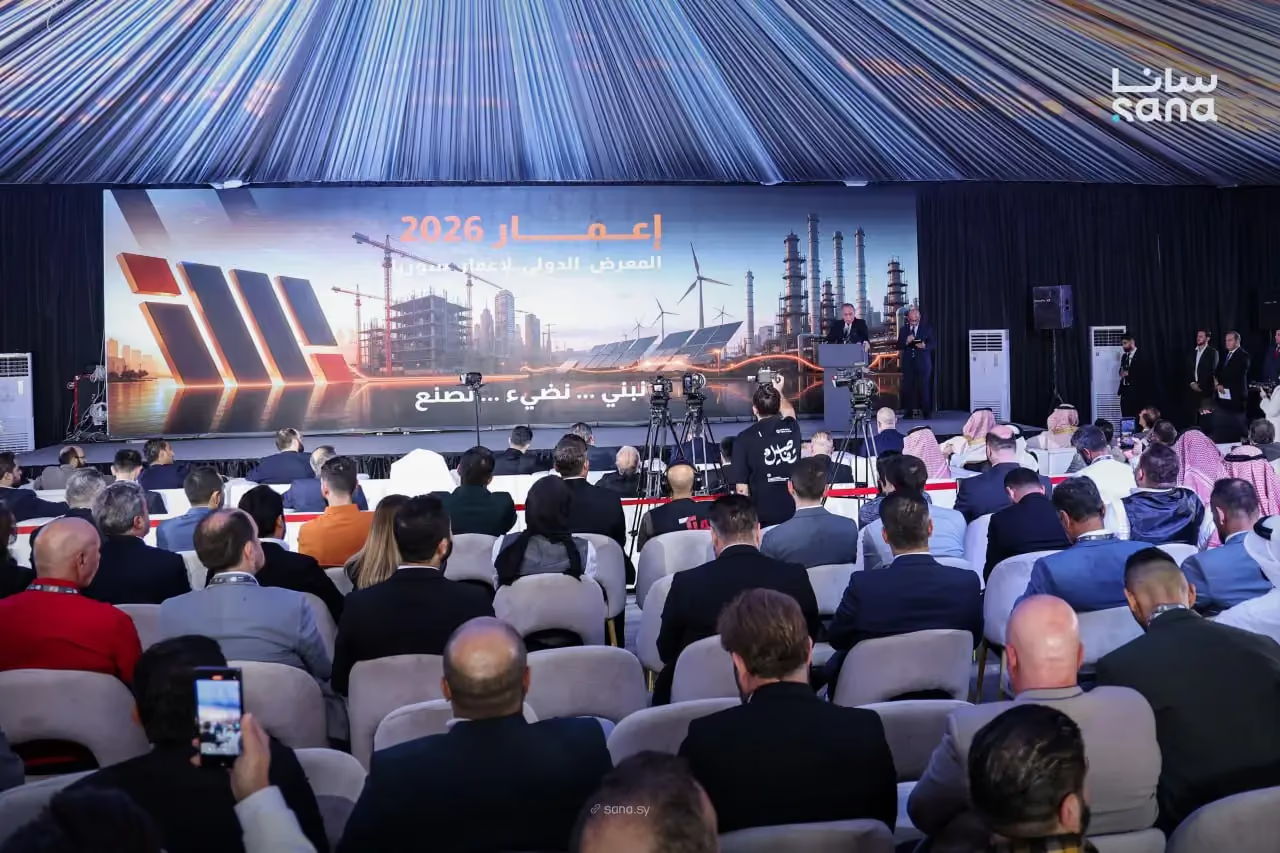
Syria's Rebuild 2026 exhibition closed in Damascus with 3,200 contracts and 412 memoranda of understanding worth over $1.756 billion in construction, infrastructure and industry.
Read More ..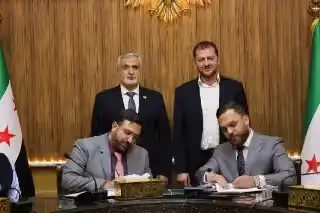
The Syrian Investment Authority and Aleppo City Council signed a contract with Abu Dan Holding to redevelop Al Kawakibi Park with a $2.5 million investment over 22,500 sqm.
Read More ..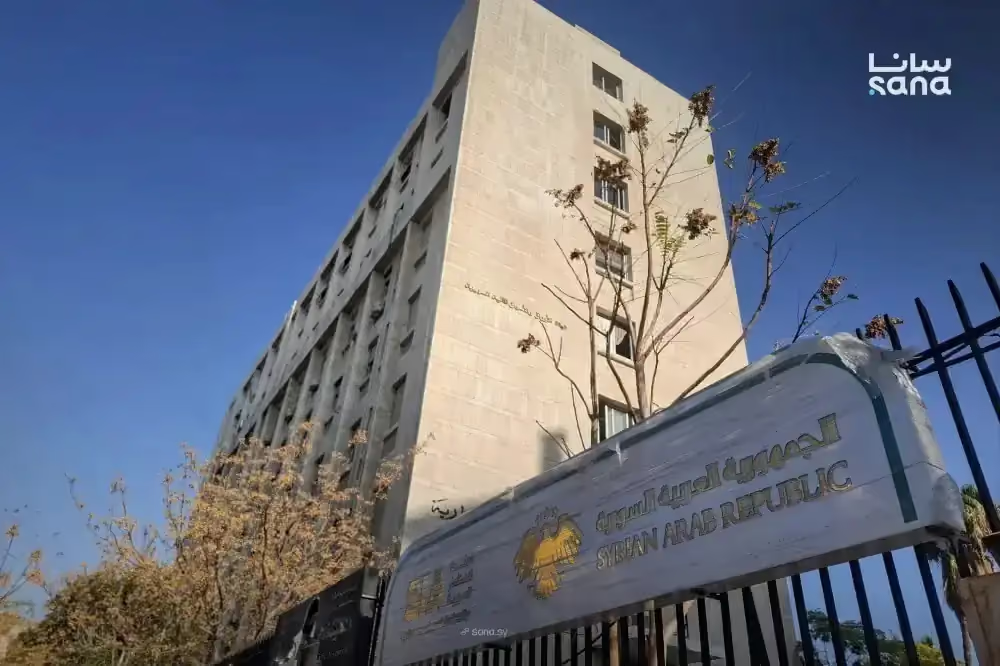
Syria's Investment Authority has issued a decision to establish a new branch in Homs, aiming to bring its services closer to investors and local projects.
Read More ..
The Ministry of Local Administration and Environment has released the first official edition of a unified procedural guide to regulate investment and contracting in Syrian municipalities and local…
Read More ..
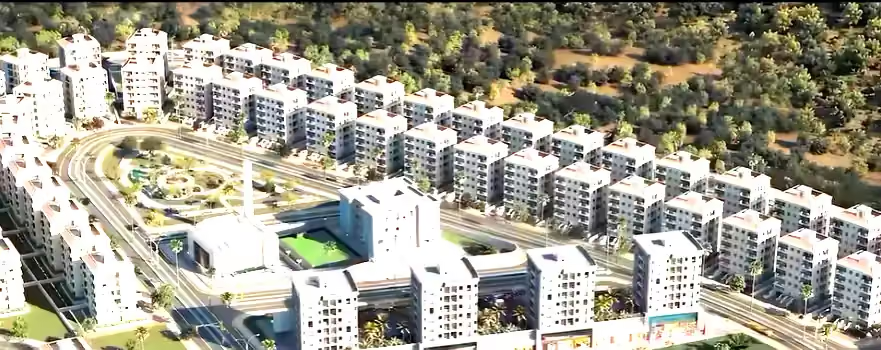
Syria's General Housing Establishment announces the opening of subscriptions for the Abyat Hills project in Qudsaya on 5 August, offering over 2,000 housing units across 380,000 square meters.
Read More ..
The Syrian Engineers Syndicate has announced a new package of measures including free initial inspections and 50% discounts on structural assessment reports to support the rebuilding of war-damaged…
Read More ..
Syria's Ministry of Economy and Industry has reported a notable increase in company registrations and commercial records issued during the first half of 2026, driven by streamlined procedures and an…
Read More ..
Damascus Governorate has launched a road paving and asphalting project through its directorates, with the Maintenance Directorate leading infrastructure rehabilitation efforts across the capital.
Read More ..
The Real Estate Finance Supervisory Authority's board held its third meeting of 2026, reviewing Law No.
Read More ..
The Syrian Petroleum Company held talks with a Czech business delegation on technical and investment cooperation in refining development, infrastructure modernisation, and carbon emissions reduction…
Read More ..
A joint Syrian-Jordanian technical delegation met at the Jaber border crossing on 29 July to review expansion and rehabilitation plans for the Nassib and Jaber crossings and coordinate their…
Read More ..
The Central Bank of Syria hosted a technical delegation from the Central Bank of Turkey to discuss payment system modernisation, digital transformation, and the opening of a joint interbank account…
Read More ..
A Belgian diplomatic delegation led by Ambassador Arnout Pauls toured Tartus Port on 28 July 2026, reviewing ongoing infrastructure development projects and discussing prospects for bilateral…
Read More ..
Jordan's Interior Ministry has extended entry facilitations to cover the families of Syrian investors, while the Irbid and Rural Damascus chambers of commerce signed a twinning agreement to deepen…
Read More ..
Three Aframax tankers loaded Iraqi fuel oil at Baniyas port in Tartus governorate between June and July 2026, marking the first such shipments from Syria destined for the United States following the…
Read More ..
Syria's authority for local production and export promotion met the EU delegation in Damascus to explore trade cooperation and ways to ease Syrian products' access to European markets through the REX…
Read More ..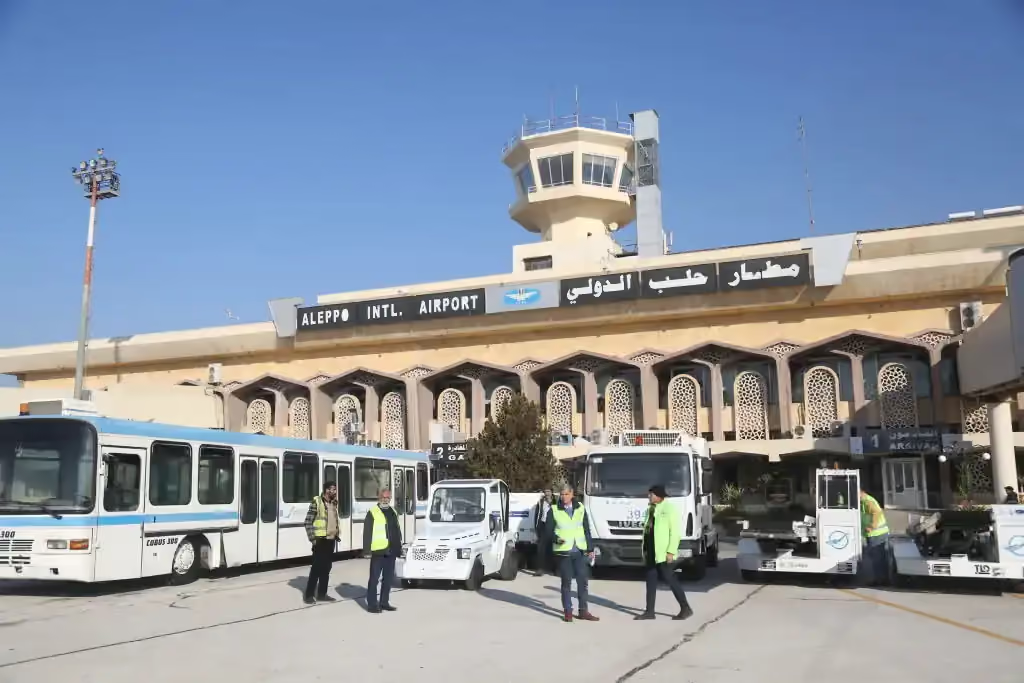
The head of Syria's General Authority for Border Crossings and Customs has directed improvements to infrastructure and technical equipment at Aleppo International Airport's customs directorate…
Read More ..
Rif Dimashq Governorate has approved 11 sanitation projects and 3 drinking water well projects totalling 116 million Syrian pounds, following a service coordination meeting held by the Qatifah…
Read More ..
Damascus will host the second edition of the Imar International Exhibition 2026, a specialized economic forum bringing together local and international companies in construction, energy, and industry…
Read More ..
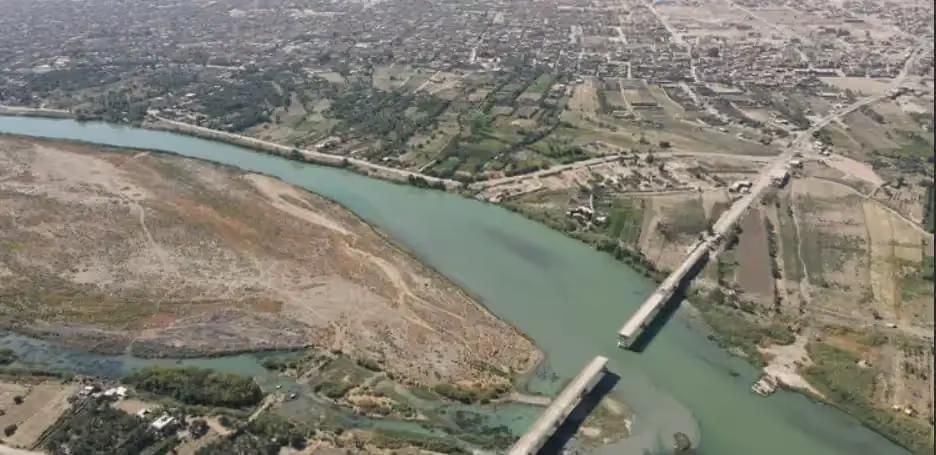
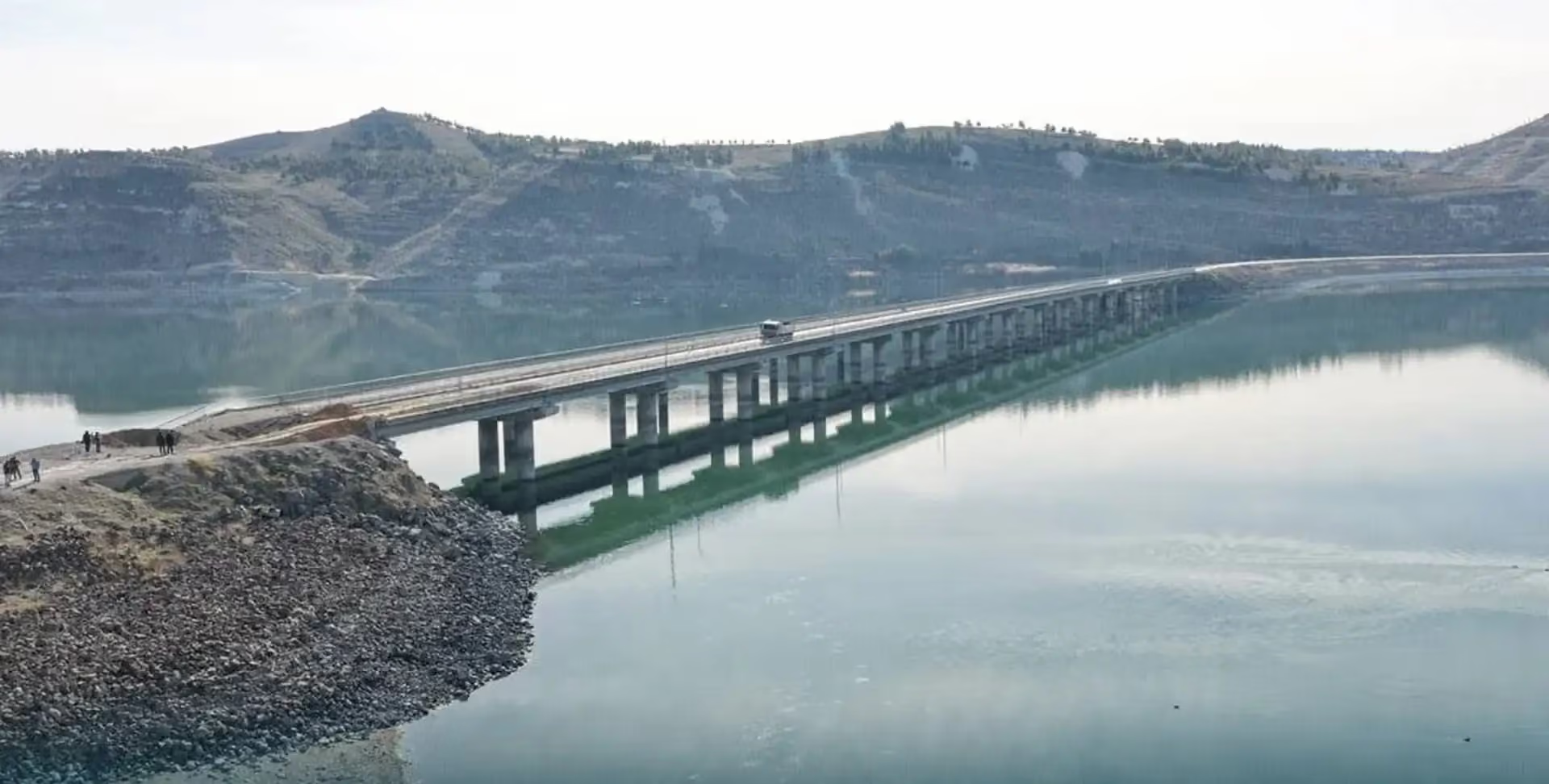
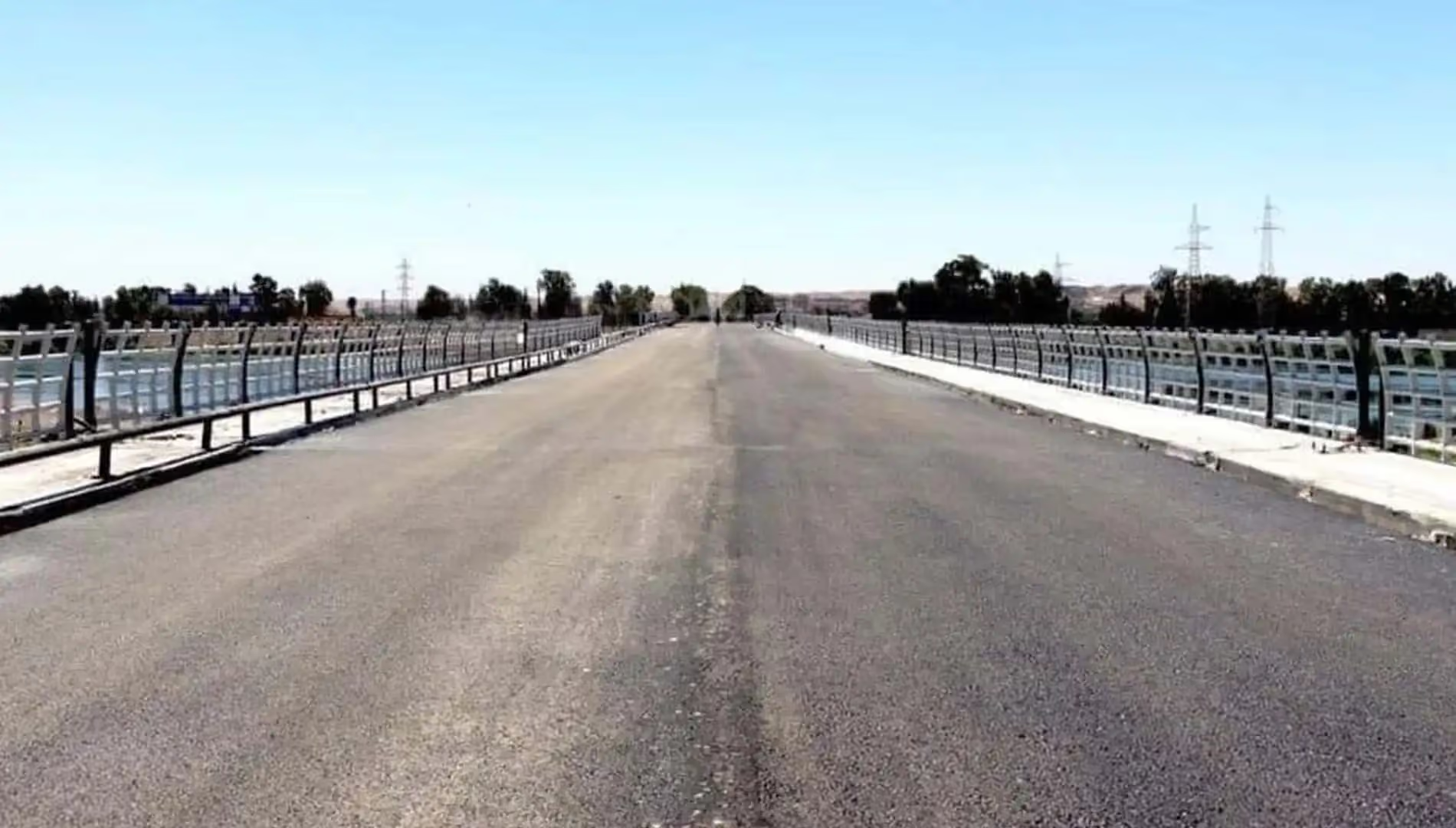
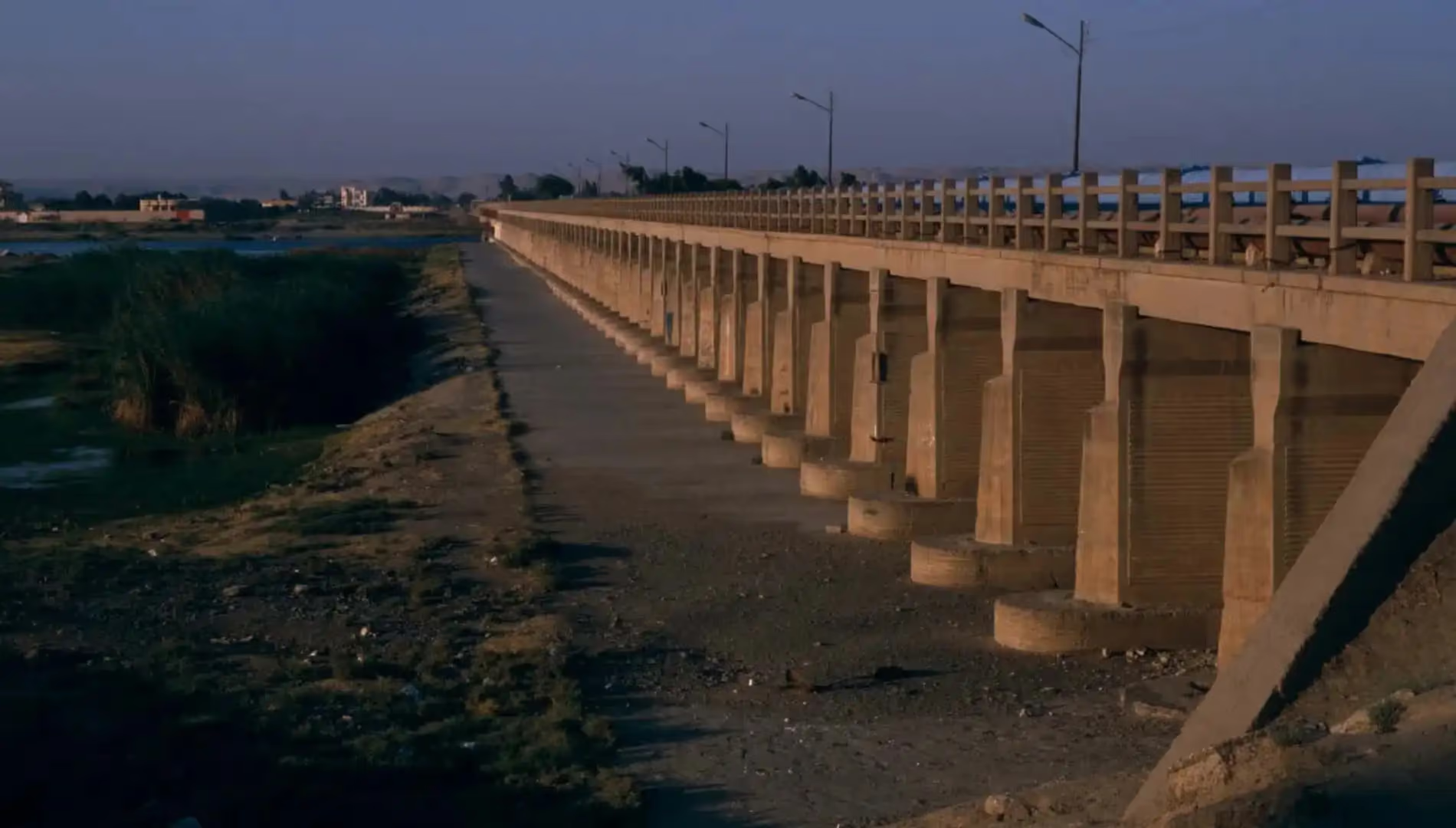
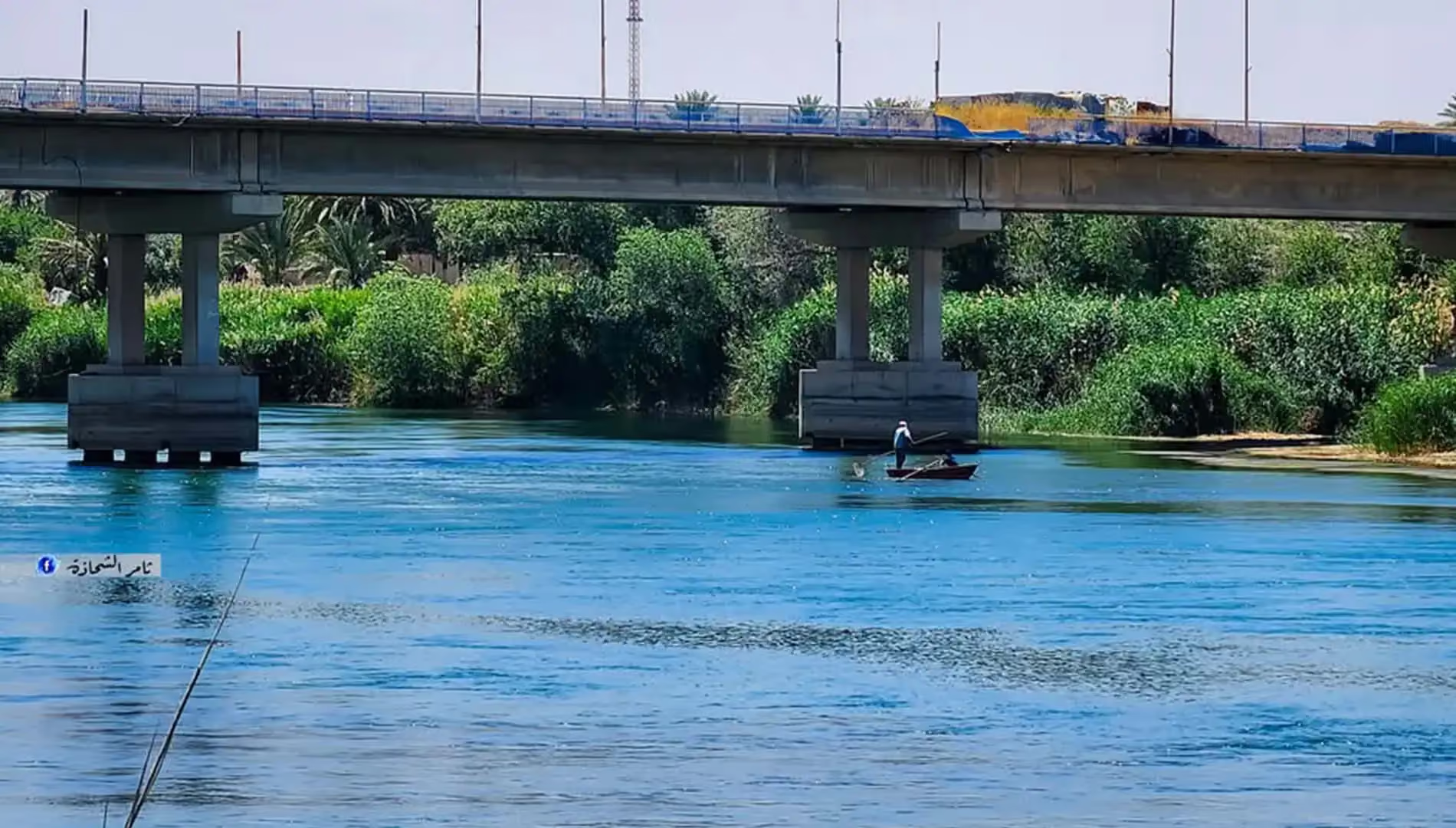
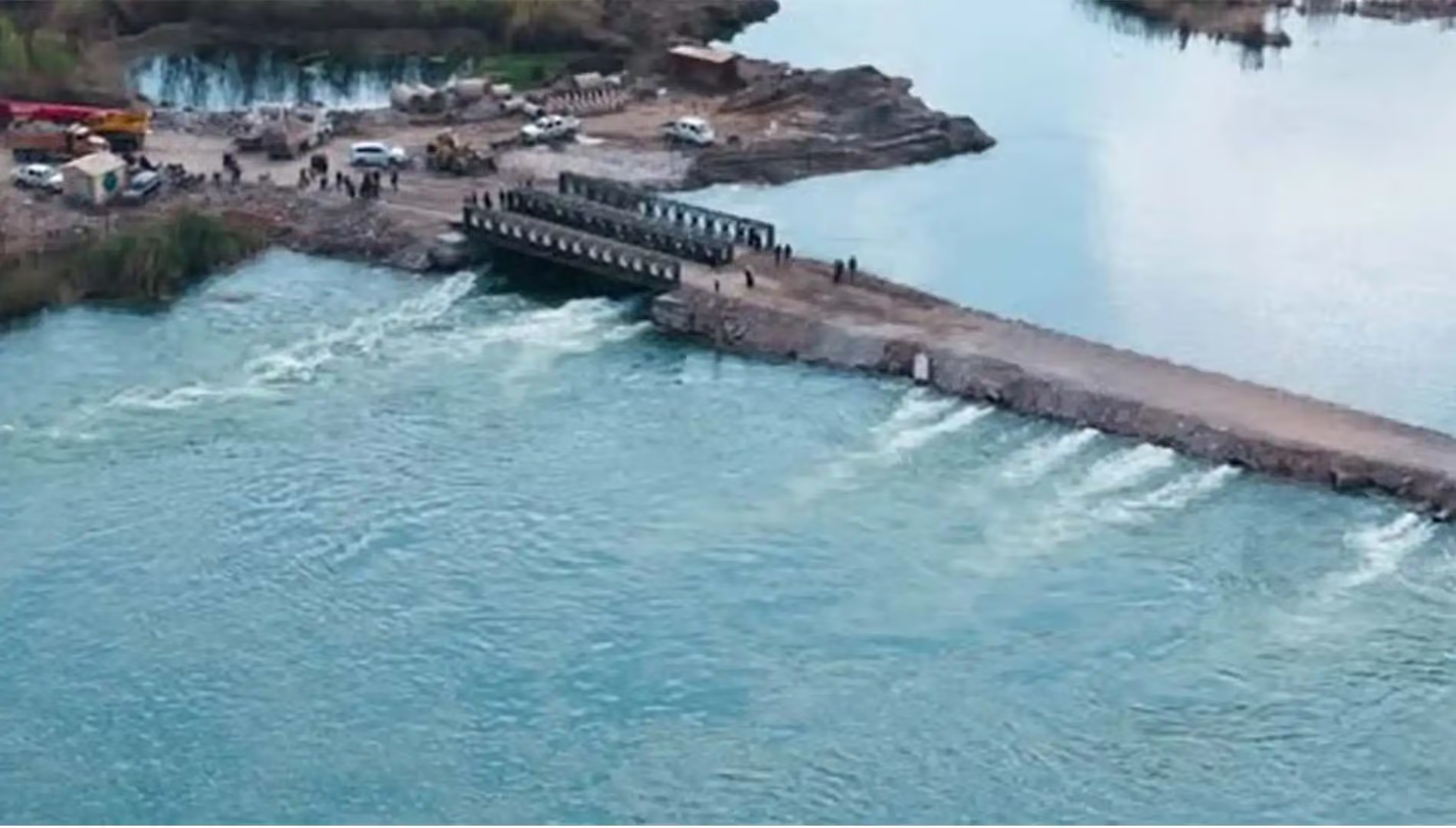
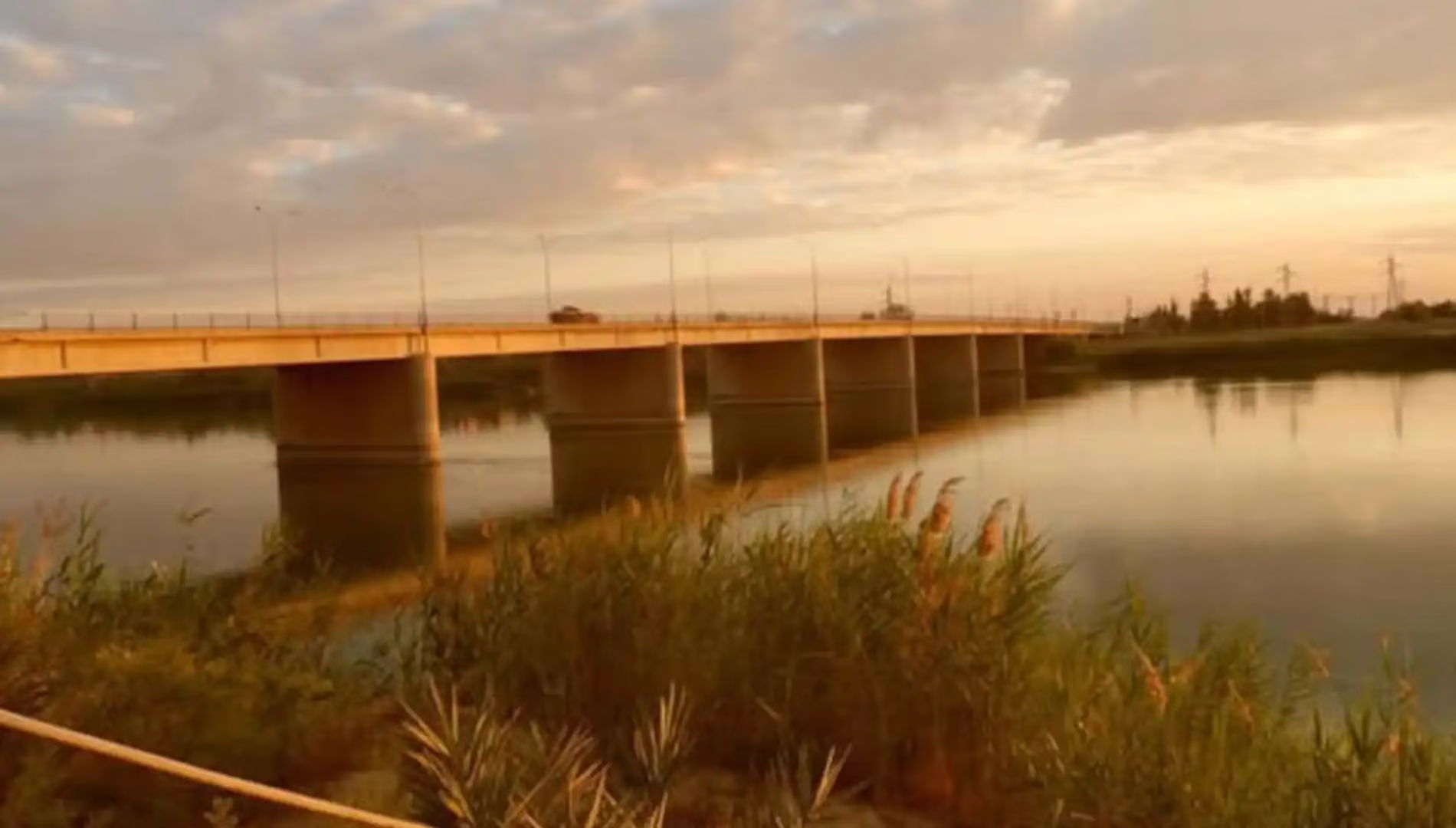
Emergency teams in Deir ez-Zor have begun rehabilitating the Euphrates earthen bridge after flooding rendered it unusable, providing a temporary crossing while the permanent Al-Siyasiya bridge is comp
Read More ..
Idlib Governorate reopened 50 schools following the completion of restoration works funded by the "Wafa li-Idlib" campaign, in a central ceremony held at Dhi Qar Secondary School in Kafrnabel.
Read More ..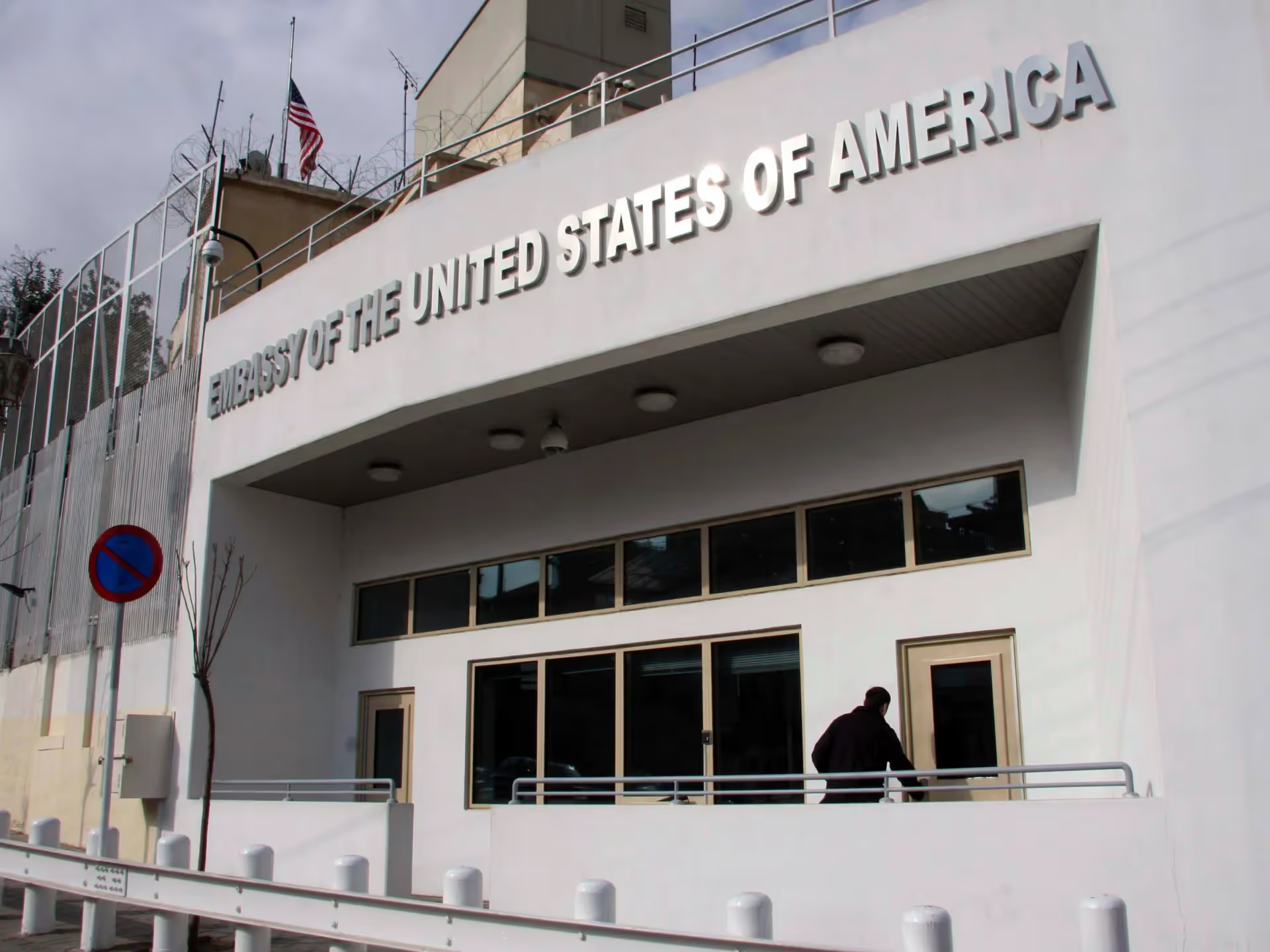
The U.S. Embassy in Damascus has published a comprehensive investor handbook covering key economic sectors.
Read More ..
The Turkish province of Şanlıurfa has announced the resumption of passenger crossings at the Akçakale border gate opposite Tel Abyad, ending a twelve-year closure dating back to 2014.
Read More ..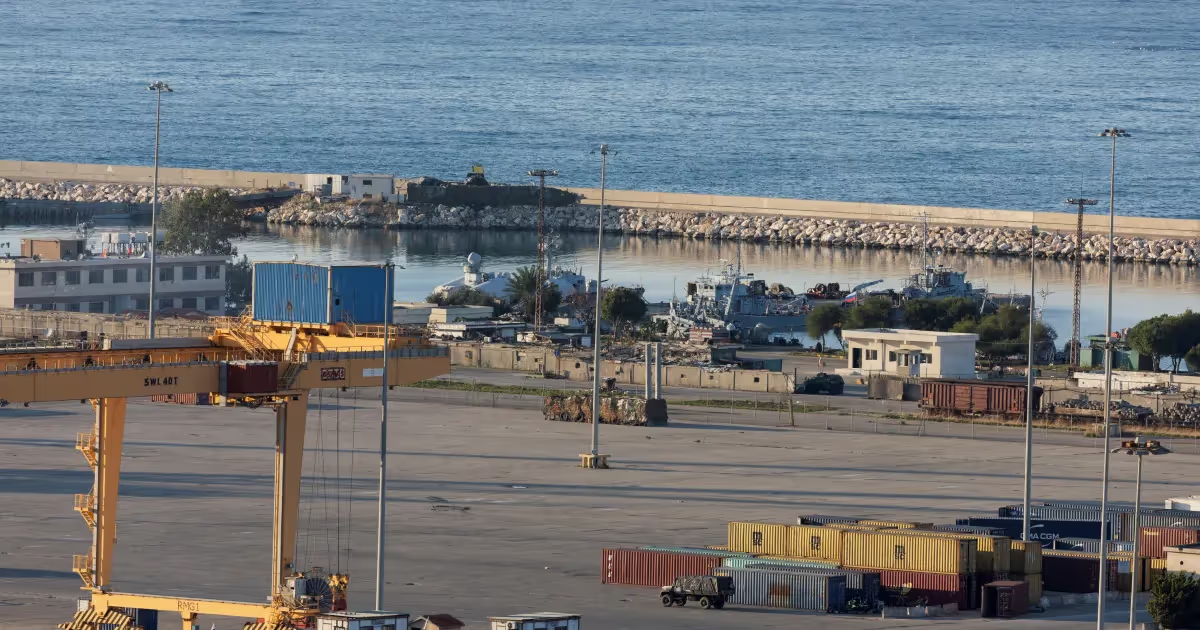
Tartus Governor Ahmad al-Shami met with DP World CEO Fahad al-Banna to discuss upgrading Tartus port's infrastructure and operational efficiency under an 800-million-dollar, 30-year concession agreeme
Read More ..
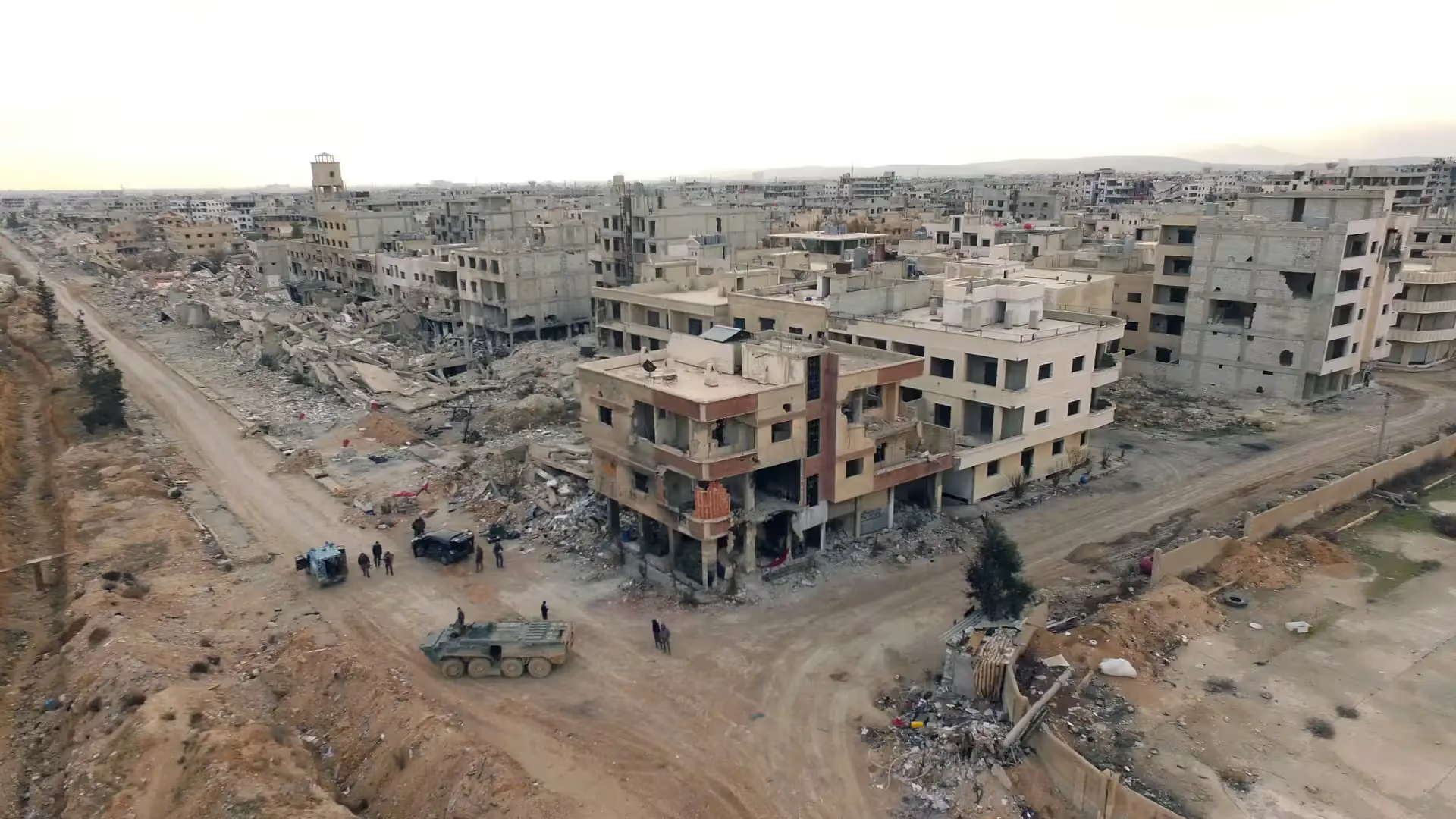
The Emergency and Disaster Management Directorate, in coordination with Rif Dimashq Governorate, has completed the removal of 15,000 cubic metres of rubble from the towns of Bassima and Ain al-Fijeh,
Read More ..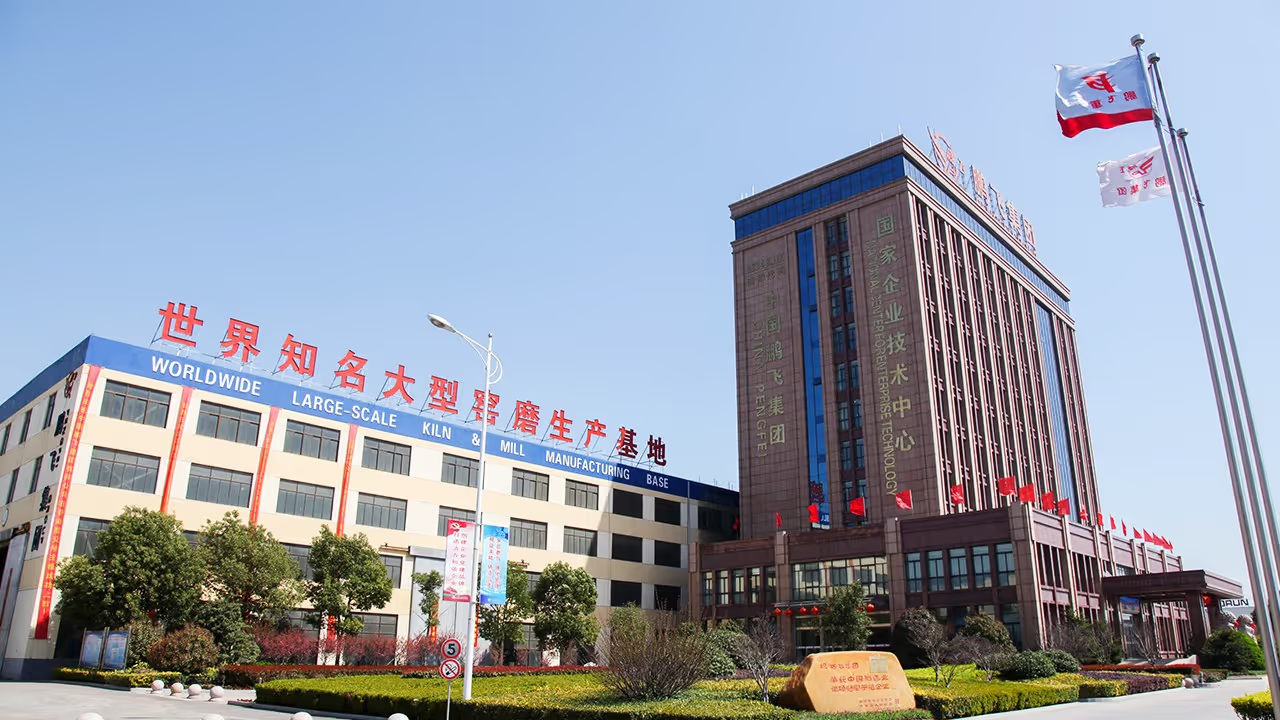
Al-Hassan Holding Group and China's Jiangsu Pengfei Group have signed an agreement to establish a cement and clinker production plant in Raqqa Governorate, with a daily capacity of 7,000 tonnes
Read More ..
Damascus Governorate and the Ministry of Tourism officially launched the "Qassioun Journey" development project
Read More ..
Syria and Iraq officially reopened the Yarubiyah-Rabia border crossing on Monday, ending a forced closure of over 13 years and completing the restoration of all three bilateral land crossings.
Read More ..
Syria's General Authority for Civil Aviation and Air Transport continues upgrading Qamishli International Airport to full international technical standards, as part of a comprehensive plan to restore
Read More ..
The Syrian Petroleum Company has announced the arrival of multiple gas shipments at the Baniyas marine terminal in Tartus, totalling more than 20,000 metric tonnes, as part of an ongoing supply progra
Read More ..
Syrian and Saudi officials met via video conference to review implementation arrangements and the operational timeline for the Aleppo International Airport development and management agreement signed
Read More ..
Syria's Ministry of Transport has initiated a comprehensive technical assessment of the international road linking the Nassib and Bab al-Hawa border crossings, implementing a trilateral MoU with Jorda
Read More ..
An investment agreement was signed today, Monday, April 13, 2026, to establish the “Idlib Business Tower” project in the center of Idlib city.
Read More ..
Minister of Energy Mohammad Al-Bashir announced the start of the 1000 MW Zeizun thermal plant project in Hama, part of a 5000 MW strategic agreement with UCC.
Read More ..
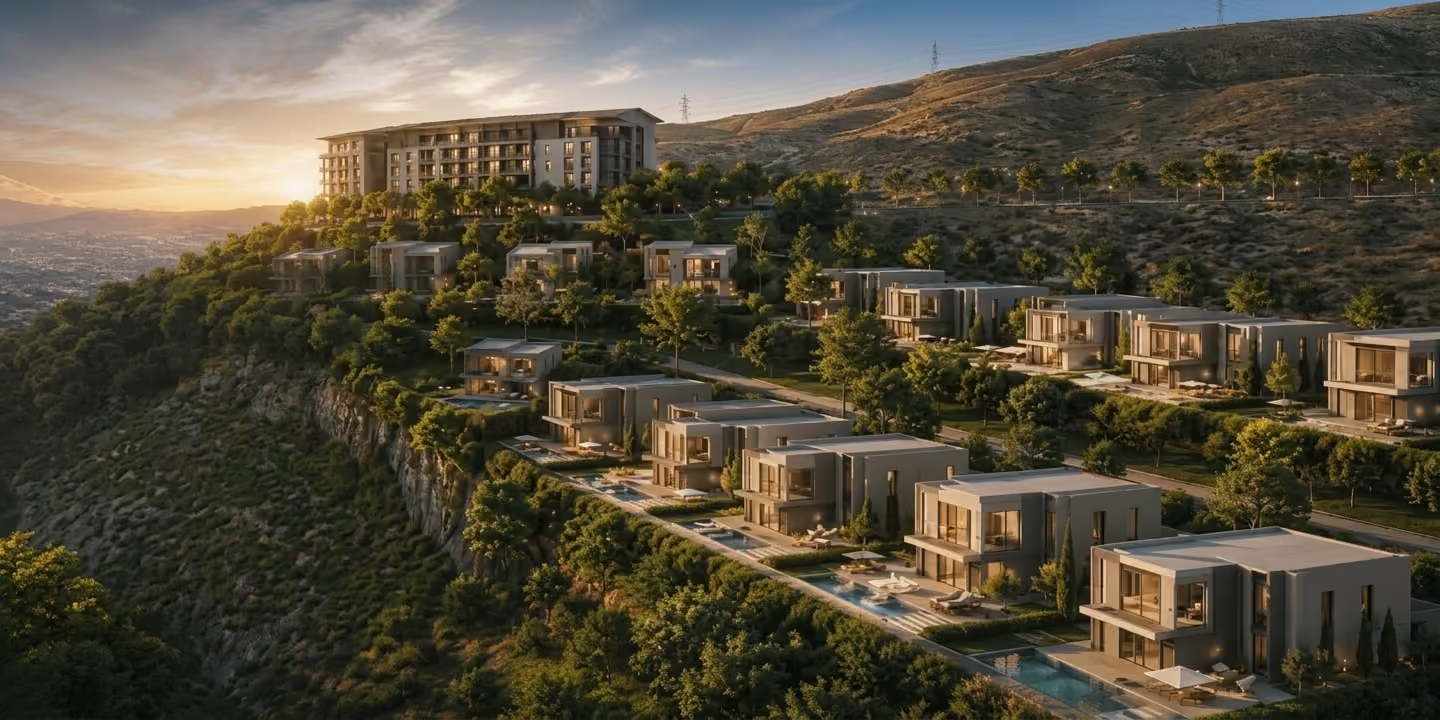
Syria launches the $300M "The Beaumont" mega-project in Damascus. The development features a hotel, luxury homes, and creates thousands of jobs
Read More ..
Twelve Arab and foreign companies submitted offers to invest in Al-Muslimiyah and Adra cement plants, undergoing strict evaluation for reconstruction.
Read More ..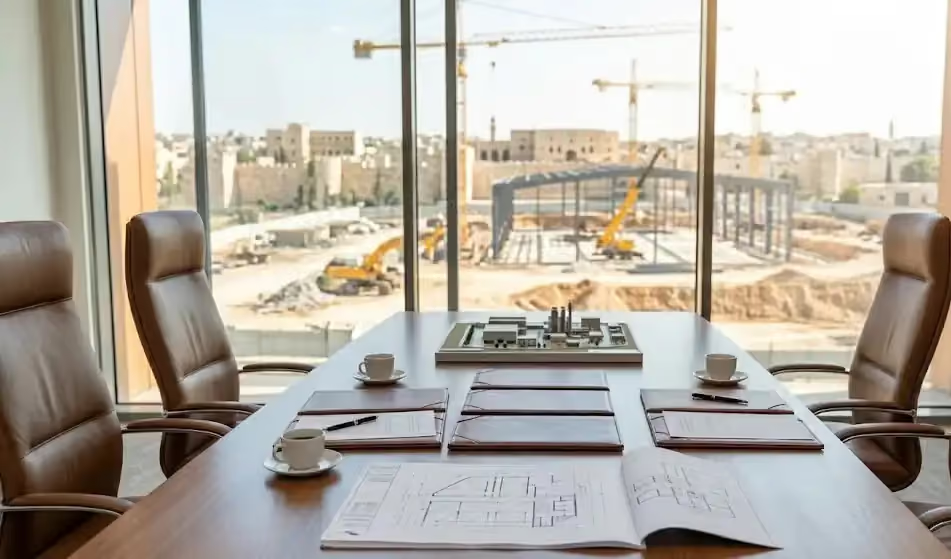
Signing of 4 investment MoUs by the Ministry of Economy to establish and develop industrial zones in Aleppo, supporting economic recovery and development
Read More ..
Damascus Governorate finishes the study for Syria's longest tunnel (1900m) linking Al-Fahama and Bab Musalla to resolve traffic and upgrade infrastructure by 2026
Read More ..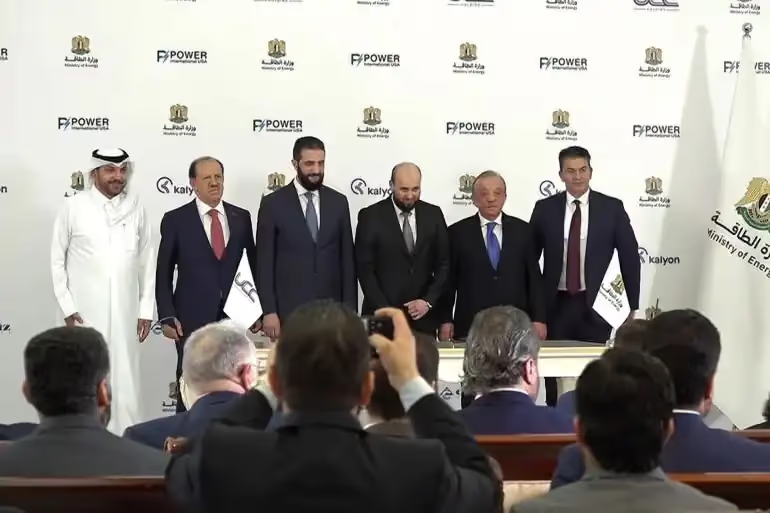
Int'l consortium (QA, US, TR) signs a $7B deal with Syria to build 5,000 MW of gas and solar power generation infrastructure.
Read More ..
Saudi Arabia signs $6.4B in reconstruction deals at the Damascus Forum, creating 50,000 jobs
Read More ..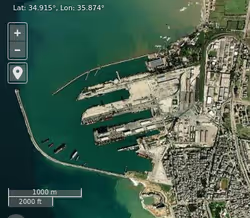
Syria's only inhabited island, three kilometres off Tartus. Phoenician city-state of Arwad, later a Crusader and Mamluk stronghold, with continuous maritime occupation across four millennia.
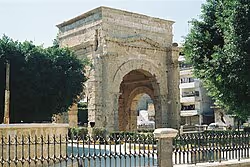
Monumental Roman four-arched gateway in the heart of modern Latakia, surviving relic of ancient Laodicea ad Mare. A second-century CE landmark visible within the modern urban grid.
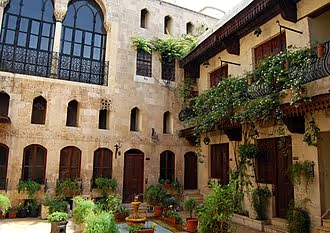
Late seventeenth-century Aleppine courtyard house in the Christian Jdeideh quarter. Renowned for its richly carved wooden iwan now displayed at the Pergamon Museum in Berlin.
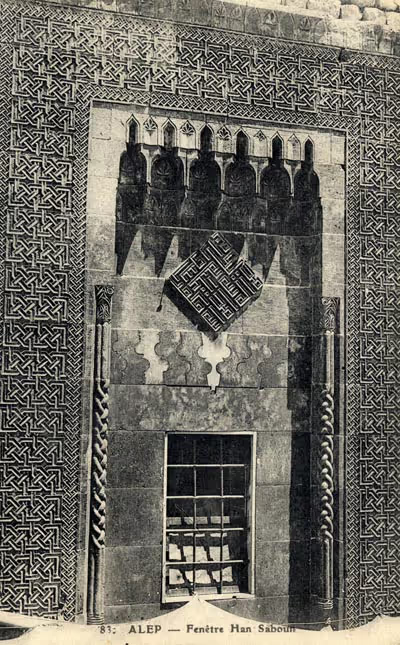
Late Mamluk caravanserai in Aleppo's Old City souks, historically associated with the trade of Aleppo's famed laurel-oil soap. A jewel of fifteenth-century commercial architecture.
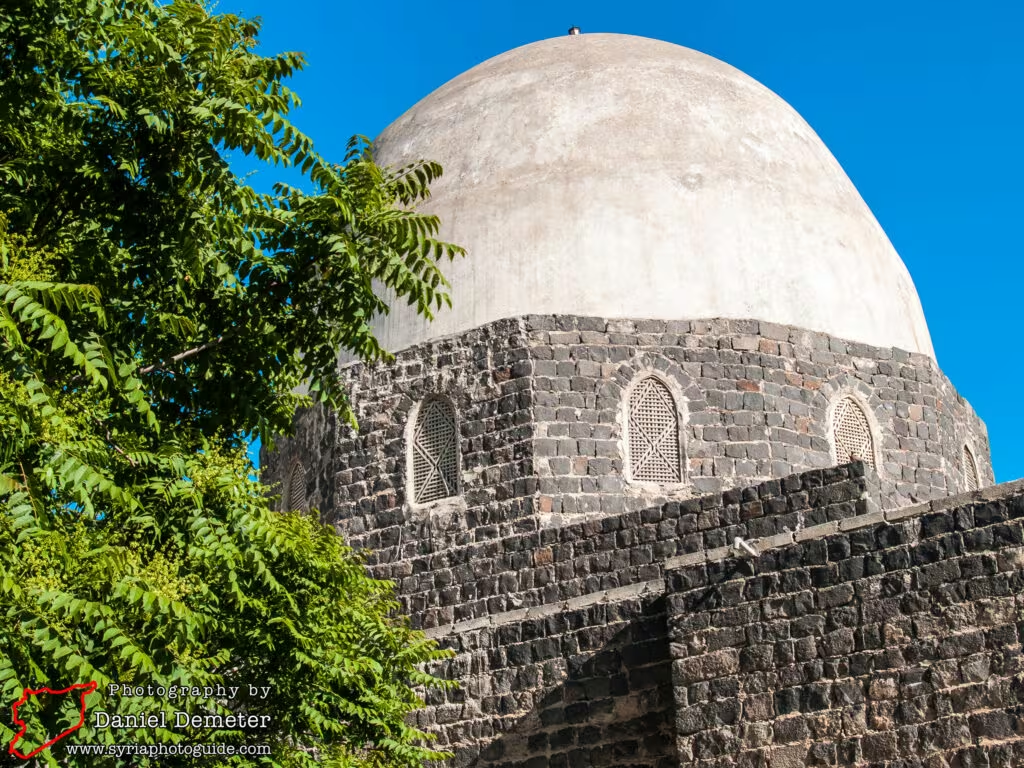
Cluster of historic shrines in the city of Salamiyah east of Hama, central to the early Ismaili tradition and birthplace narratives of the Fatimid movement.
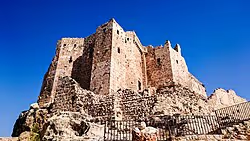
Medieval mountain citadel west of Hama, principal stronghold of the Nizari Ismailis in Syria. A landmark twelfth-century fortress conserved by the Aga Khan Trust for Culture.
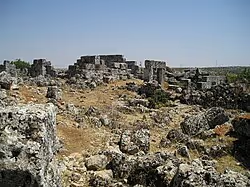
Largest of the UNESCO-inscribed Ancient Villages of Northern Syria, in Jabal Zawiya, Idlib. Preserves Byzantine churches, monumental pyramid tombs and dense limestone fabric.

Halabiya, also known as Zenobia, is a Roman-Byzantine fortified city on the Euphrates founded by Queen Zenobia of Palmyra in the third century CE and later reinforced by Justinian as a frontier stronghold against the Sasanians.

Resafa-Sergiopolis is a fortified Byzantine pilgrimage city in the Syrian desert, famous for the martyrium of Saint Sergius and its massive defensive walls of pale gypsum stone, listed on Syria's UNESCO Tentative World Heritage List.
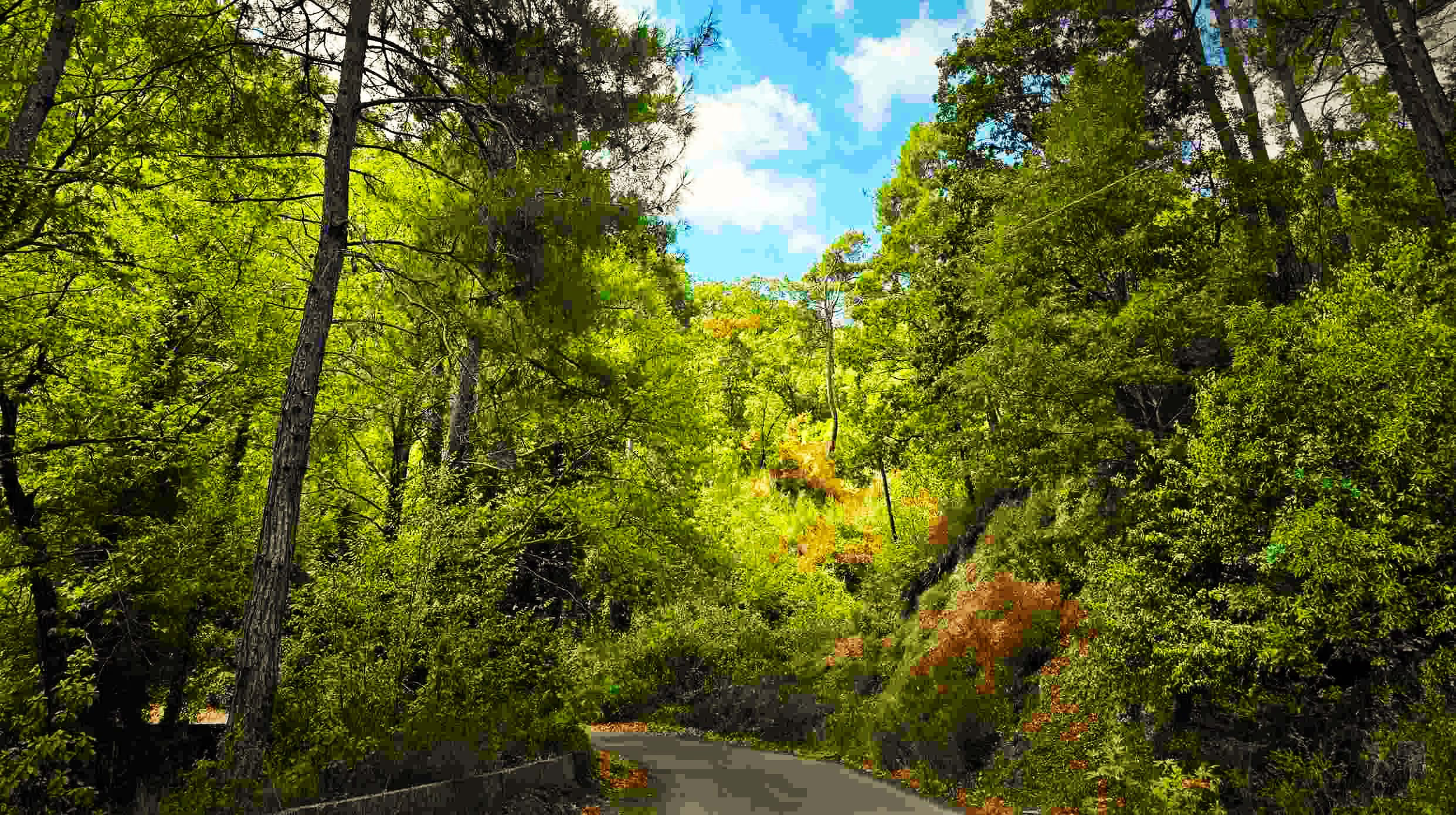
Frunloq Forest Reserve in the coastal mountains protects one of the largest oak forests in Syria, designated as a protected biosphere area for its biodiversity and watershed value.
%20(1).avif)
Wadi Qandil is a coastal valley north of Latakia where freshwater streams meet the Mediterranean, popular for its black-pebble beach and dense Mediterranean forest cover.
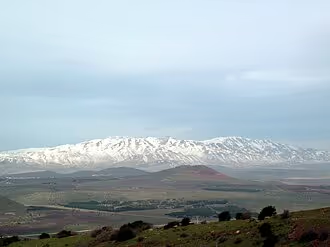
Mount Hermon, known in Arabic as Jabal al-Sheikh, is the highest peak in the Anti-Lebanon range, snow-capped most of the year and forming part of Syria's southwestern border with Lebanon.
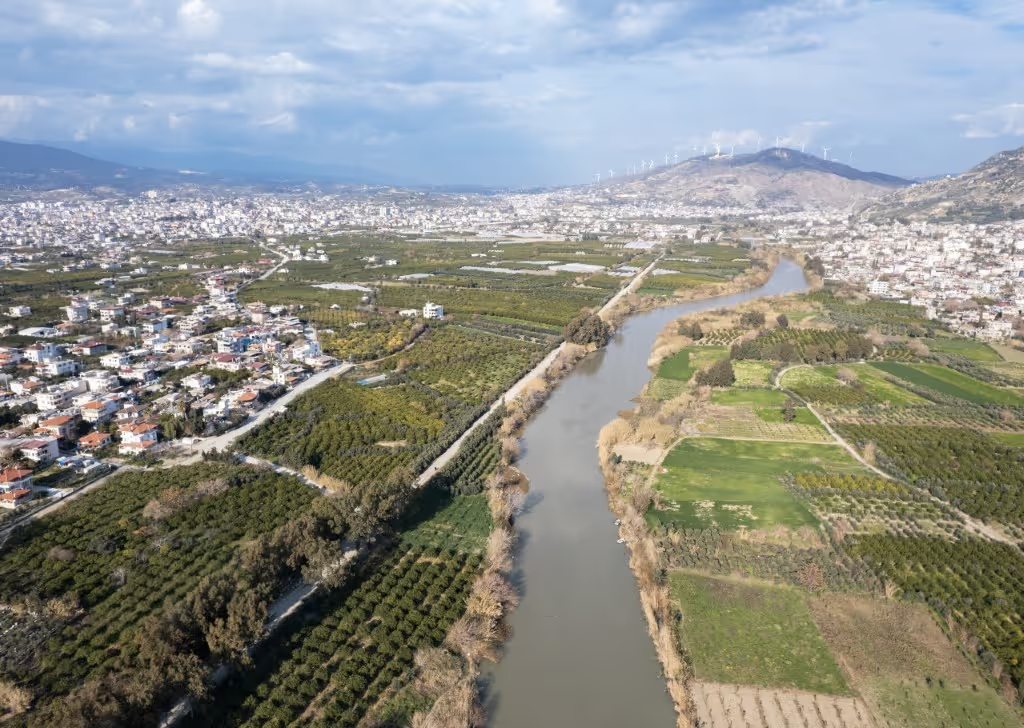
The Orontes (Asi) River flows northward through western Syria, passing the famous wooden norias of Hama and supporting agriculture across the Ghab plain before crossing into Turkey.
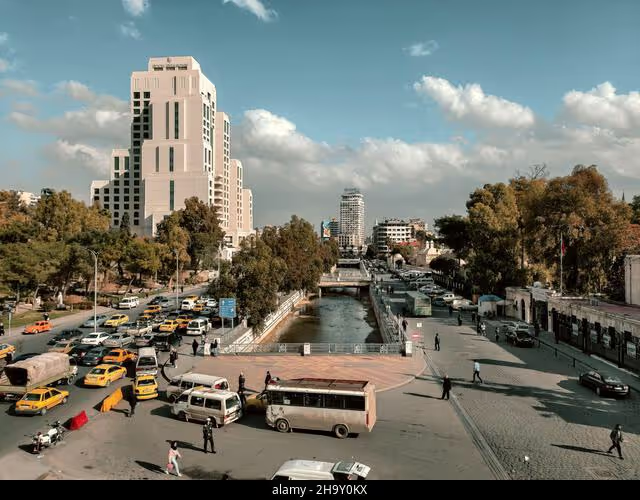
The Barada River rises in the Anti-Lebanon mountains and flows through Damascus, historically irrigating the Ghouta oasis that sustained the city for millennia, though its flow has decreased significantly due to drought and over-extraction.
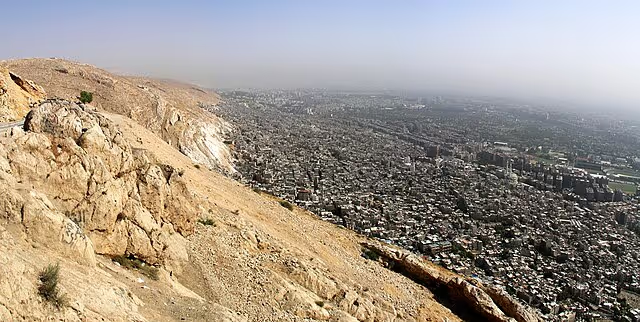
Mount Qasioun overlooks Damascus from the north and is one of the city's defining geographic landmarks, holding religious significance in Abrahamic traditions and panoramic viewpoints over the capital.
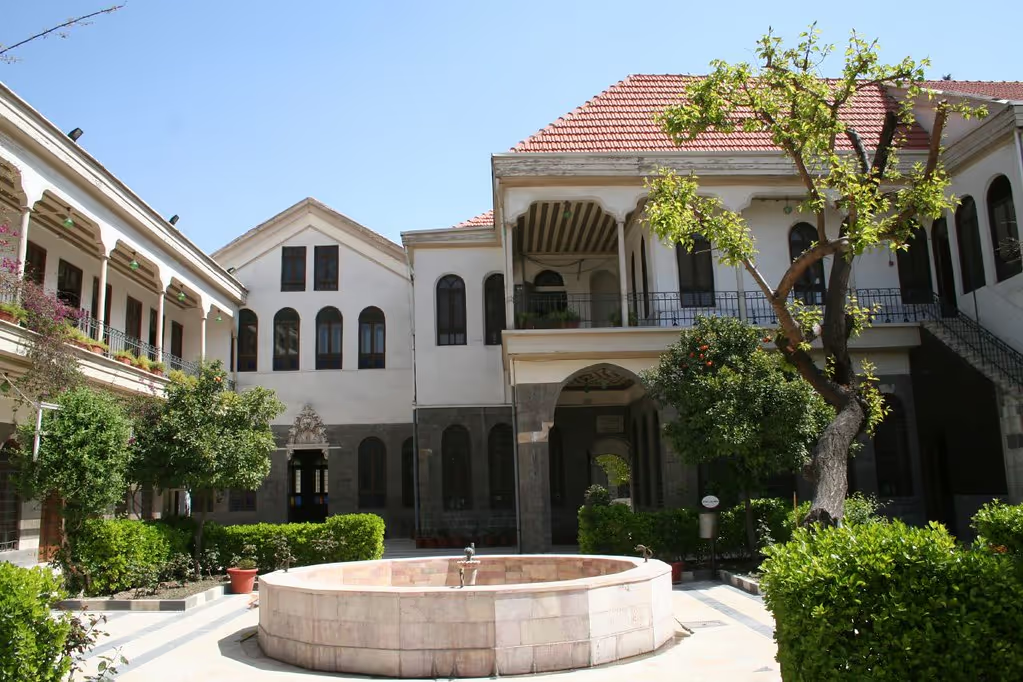
Maktab Anbar is a 19th century Damascene courtyard mansion in the old city, originally a Jewish merchant residence, later a school, and now a heritage cultural centre showcasing traditional Damascene architecture.
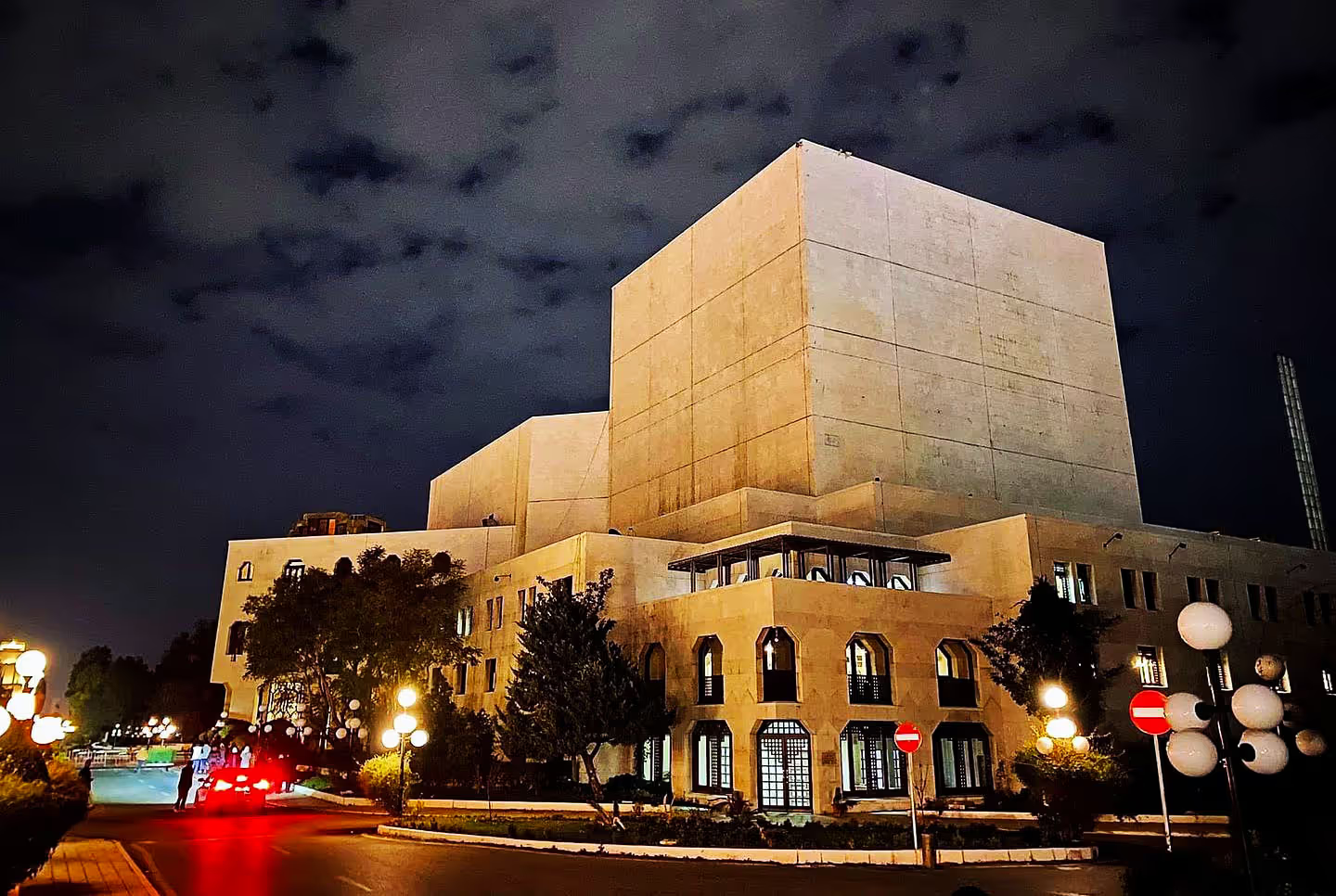
Damascus Opera House, for Culture and Arts, is the principal performing arts venue in Syria, hosting symphony orchestras, ballet and theatre on three stages since its opening in 2004.

Raqqa Museum displayed Abbasid-era ceramics, glassware and architectural elements from the city's golden age as a Caliphal capital under Harun al-Rashid; the building suffered severe damage during recent conflict.

Tartus Museum is set inside the medieval Cathedral of Our Lady of Tortosa, a Crusader-era church now serving as the principal archaeological museum of the central Syrian coast.
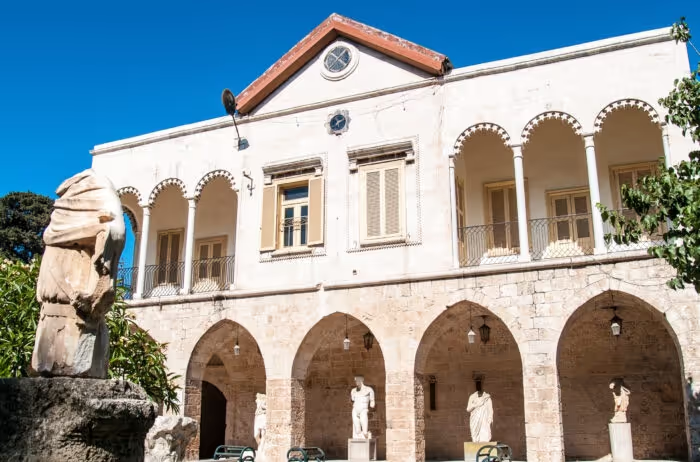
Latakia Museum is housed in a former Ottoman khan and exhibits coastal Syrian antiquities from Ugarit, Ras Shamra and the Phoenician period, alongside Greek, Roman and Byzantine collections.
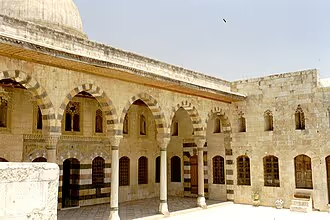
Hama Museum is housed in Azem Palace, an 18th century Ottoman governor's residence, and showcases mosaics, traditional crafts and ethnographic collections that document daily life in central Syria.
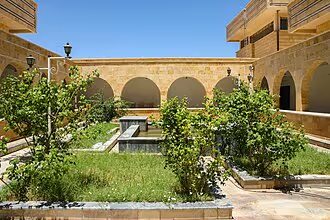
Deir ez-Zor Museum was inaugurated in 1996 and presented the archaeology of the middle Euphrates region including Mari, Dura-Europos, Halabiya and Terqa, with major Bronze Age and Roman-Byzantine collections.
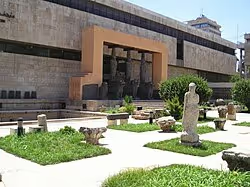
Aleppo National Museum holds one of the most important collections of pre-Islamic Syrian antiquities, including artifacts from Mari, Ebla, Tell Halaf and Ain Dara, with the basalt entrance gate from Tell Halaf as its iconic feature.
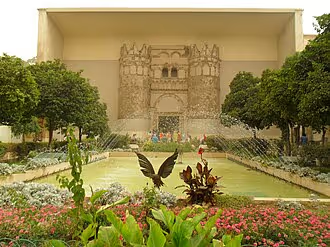
Damascus National Museum is the largest museum in Syria, founded in 1919, housing collections that span from prehistory through Islamic eras, including the famous Dura-Europos synagogue paintings and the Ugarit alphabet tablet.

Historic bathhouse in Old Damascus, dating to the Ayyubid-Mamluk era. One of the operating bathhouses in Syria, and part of the living heritage of traditional Arab hammams that continue to receive visitors.
_18.avif)
Historic souk in central Old Damascus, dating to Ayyubid and Mamluk eras. Famous for selling spices, herbs, perfumes and traditional soap, connecting the Hamidiyah Souk with the Umayyad Mosque.
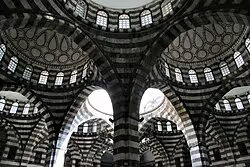
The most prominent Ottoman khan in Old Damascus, built by Governor Asaad Pasha al-Azm in 1751. Showcases the architecture of Levantine khans at its finest, with nine lead-clad domes and a wide courtyard. Part of the UNESCO Old City of Damascus property.
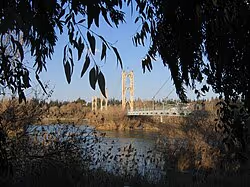
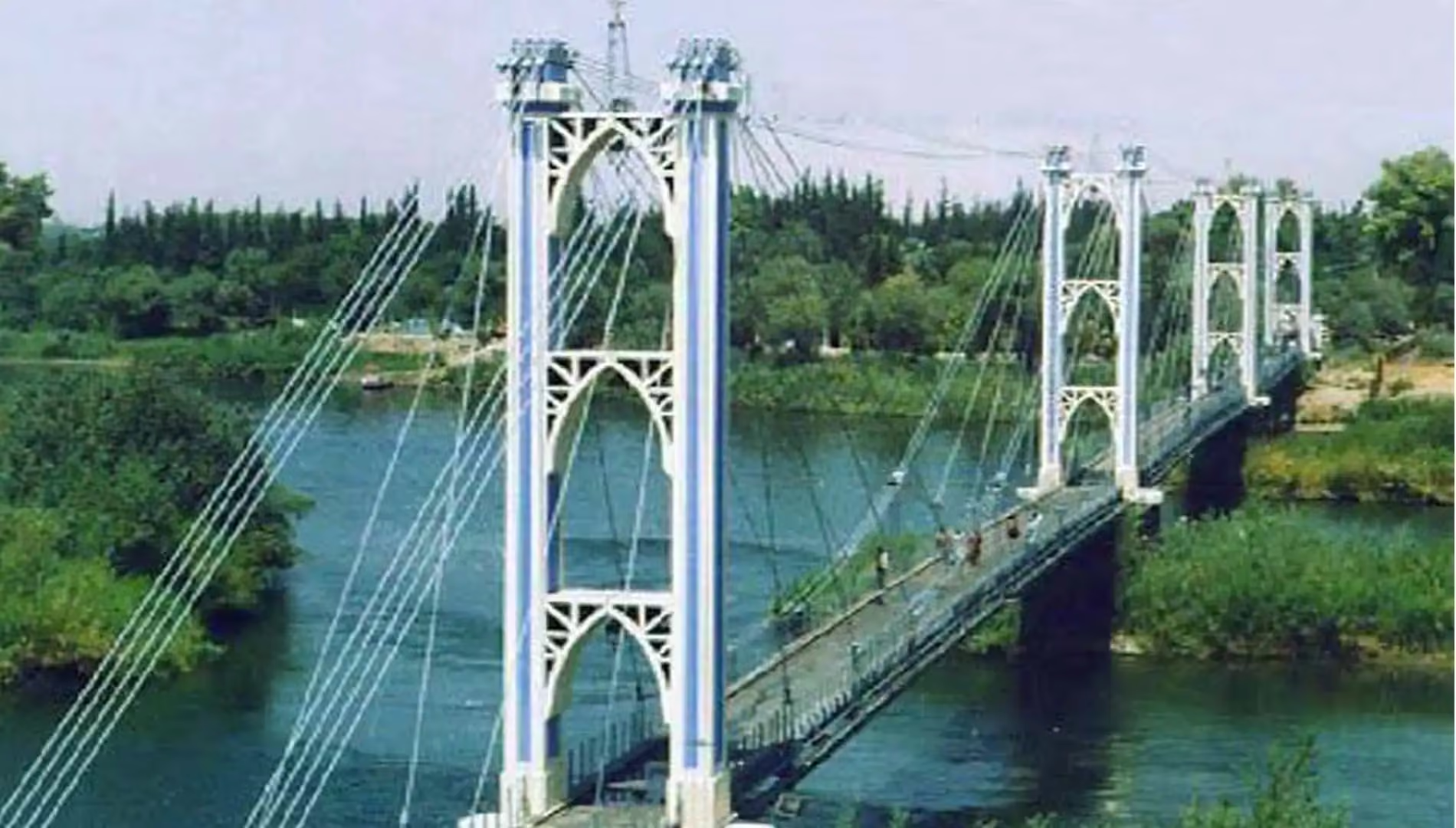
Historic suspension bridge over the Euphrates River in Deir ez-Zor city, built in 1927 and playing a symbolic and logistical role connecting the city's two banks. Destroyed in 2013 and rehabilitated later. Main symbol of Deir ez-Zor rebuilding.
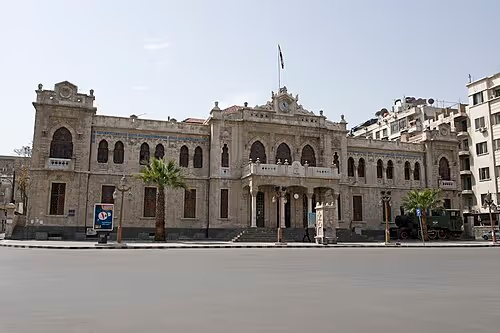
Historic railway station in central Damascus, established in 1908 as the principal terminus of the Ottoman Hejaz Railway. Its original Ottoman building is on the national heritage list with notable architectural features.
_AN2190526.avif)
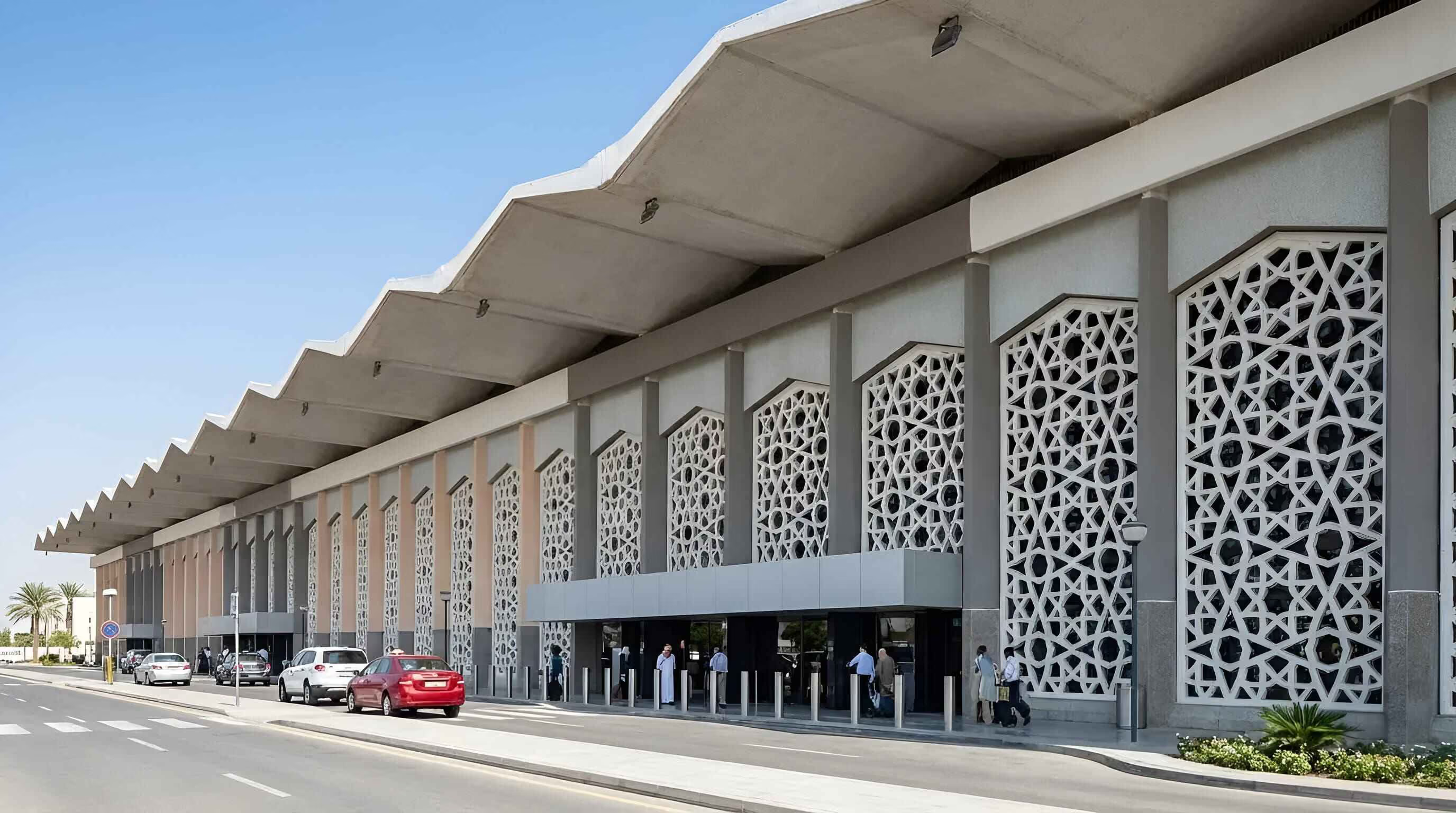
The largest airport in Syria, located southeast of Damascus city. Opened in 1973 and considered the main air gateway to the country. Suffered damage and service interruptions during periods of conflict, undergoing modernisation.
Second largest port in Syria, located in Tartus city, handling petroleum, industrial and general goods. Major logistics hub for the southern Syrian coast and key investment opportunity for expansion.
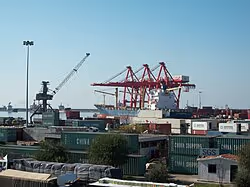
The largest commercial port in Syria, located in Latakia city, handling the largest share of Syrian foreign trade. Main gateway for imports and exports and primary logistics hub for Syrian rebuilding efforts.

Specialised cardiac hospital in Damascus, affiliated with the Syrian Ministry of Health. Performs cardiac catheterisation and open heart surgery operations, serving as the national reference for cardiac diseases and surgery in Syria.
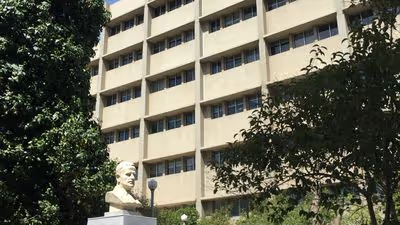
Specialised pediatric teaching hospital in Damascus affiliated with Damascus University. Covers all sub-specialties of pediatrics and neonatology, serving as the national reference in pediatric medicine in Syria.
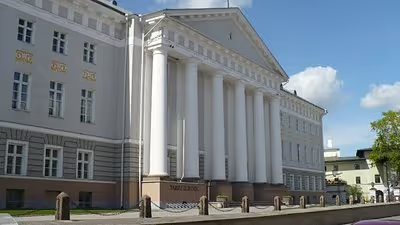
Government university in Tartus city, founded in 2015. Serves Tartus governorate and includes colleges of medicine, engineering and sciences, linked to the port and logistics infrastructure of the Syrian coast.
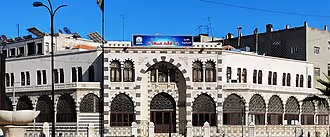
Government university in Hama city, founded in 2014. Serves Hama governorate and includes colleges of medicine, civil engineering and agriculture, and is a training reference for engineering staff in central Syria.

Government university in Deir ez-Zor city, founded in 2006. Serves the Euphrates governorates (Deir ez-Zor, Raqqa, Hasakah) and includes colleges of medicine, engineering and agriculture. Suffered severe damage during 2013-2017.
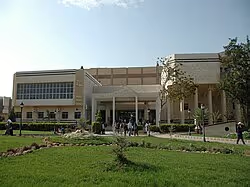
Government university in Homs, founded in 1979. Serves central Syria and includes colleges of medicine, pharmacy, petroleum engineering and chemical industries, and is a reference for petroleum studies in Syria.

Government university in Latakia city, founded in 1971. Serves the Syrian coast and includes colleges of civil engineering, architecture, marine logistics and pharmacy, and is the largest in western Syria.

The second largest Syrian government university, founded in 1958. Specialises in engineering, medical and agricultural sciences with more than 16 colleges. Its campus suffered severe damage during 2012-2016.
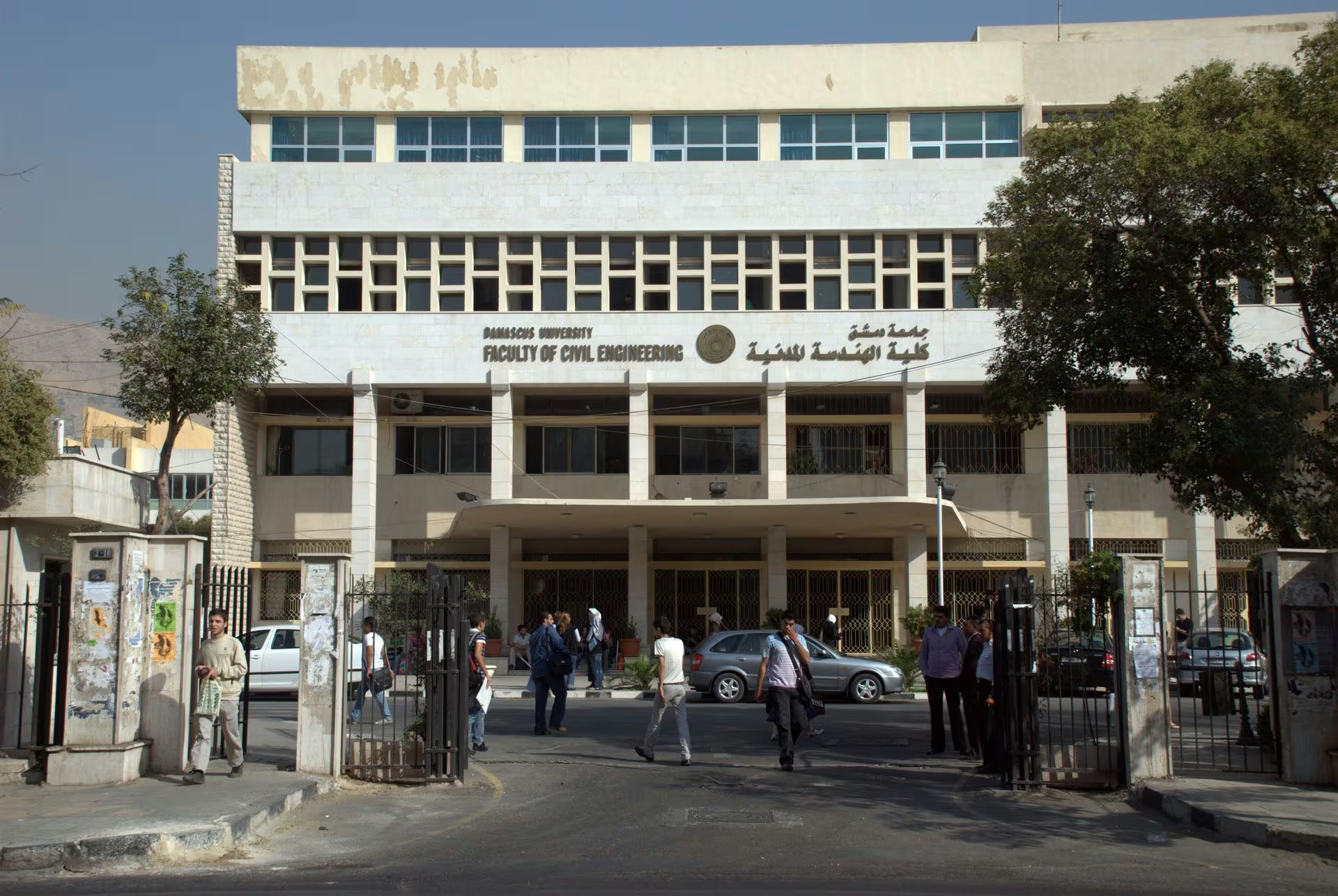
The oldest and largest Syrian universities, founded in 1923 by merging the schools of medicine and law. Comprises over 22 colleges spread across Damascus and branches elsewhere, and is one of the foremost academic centres in the Arab world.
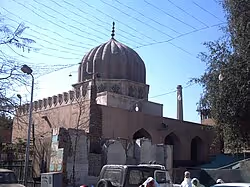
Shia religious shrine in Old Damascus near the Umayyad Mosque, housing the shrine traditionally attributed to Sayyida Ruqayya bint al-Husayn. Its current architecture was built in the 1970s in a distinctive Iranian style.
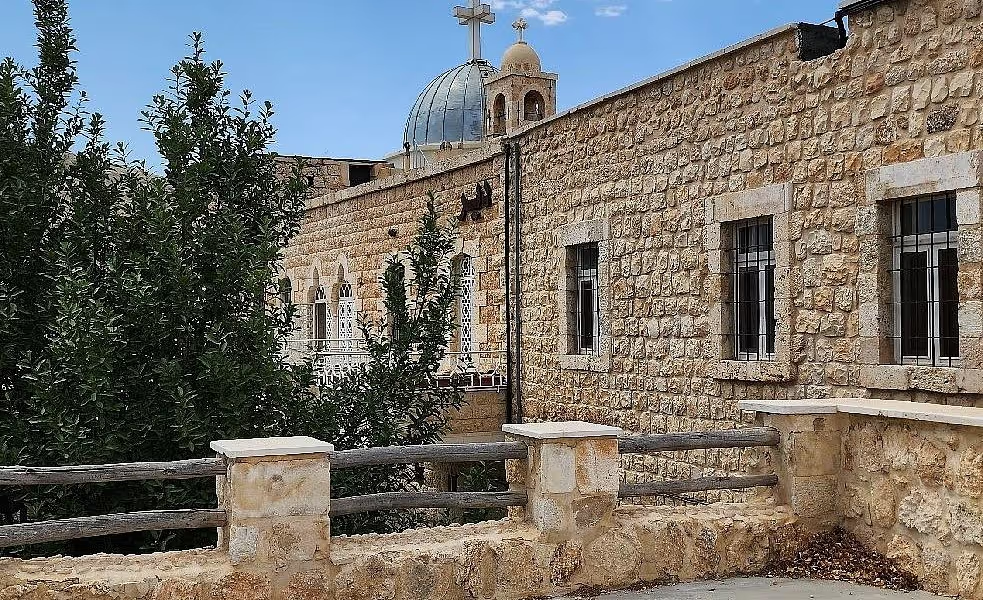
One of the oldest surviving archaeological churches in southern Syria, in Izraa town, Daraa Governorate. Dates to the sixth century CE (515 CE) and preserves its original basalt construction and unique octagonal plan. Continues its religious function today.
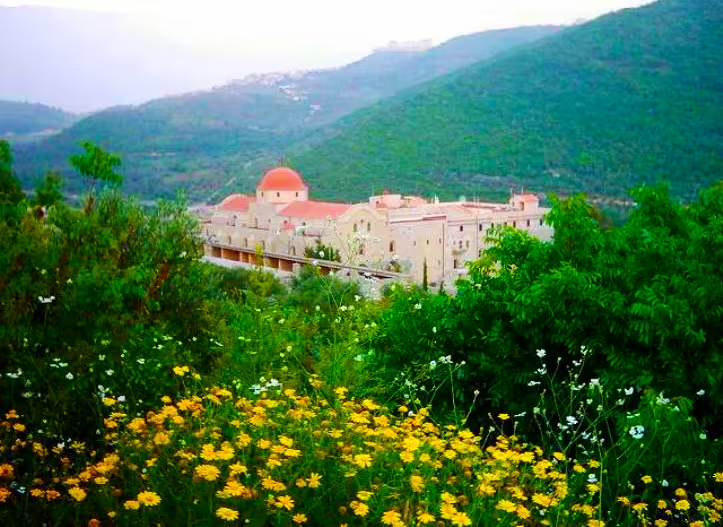
Antiochian Orthodox monastery in Wadi al-Nasara, Homs Governorate, dating to the sixth century CE. Holds historic icons and manuscripts, and is one of the foremost Christian pilgrimage sites in the historic Wadi al-Nasara region.

One of the oldest surviving Abbasid mosques in Syria, built in Raqqa under the Abbasid Caliph al-Mansur during the eighth century CE. Preserves sections of the original wall and an ancient minaret. Suffered severe damage during 2013-2017.
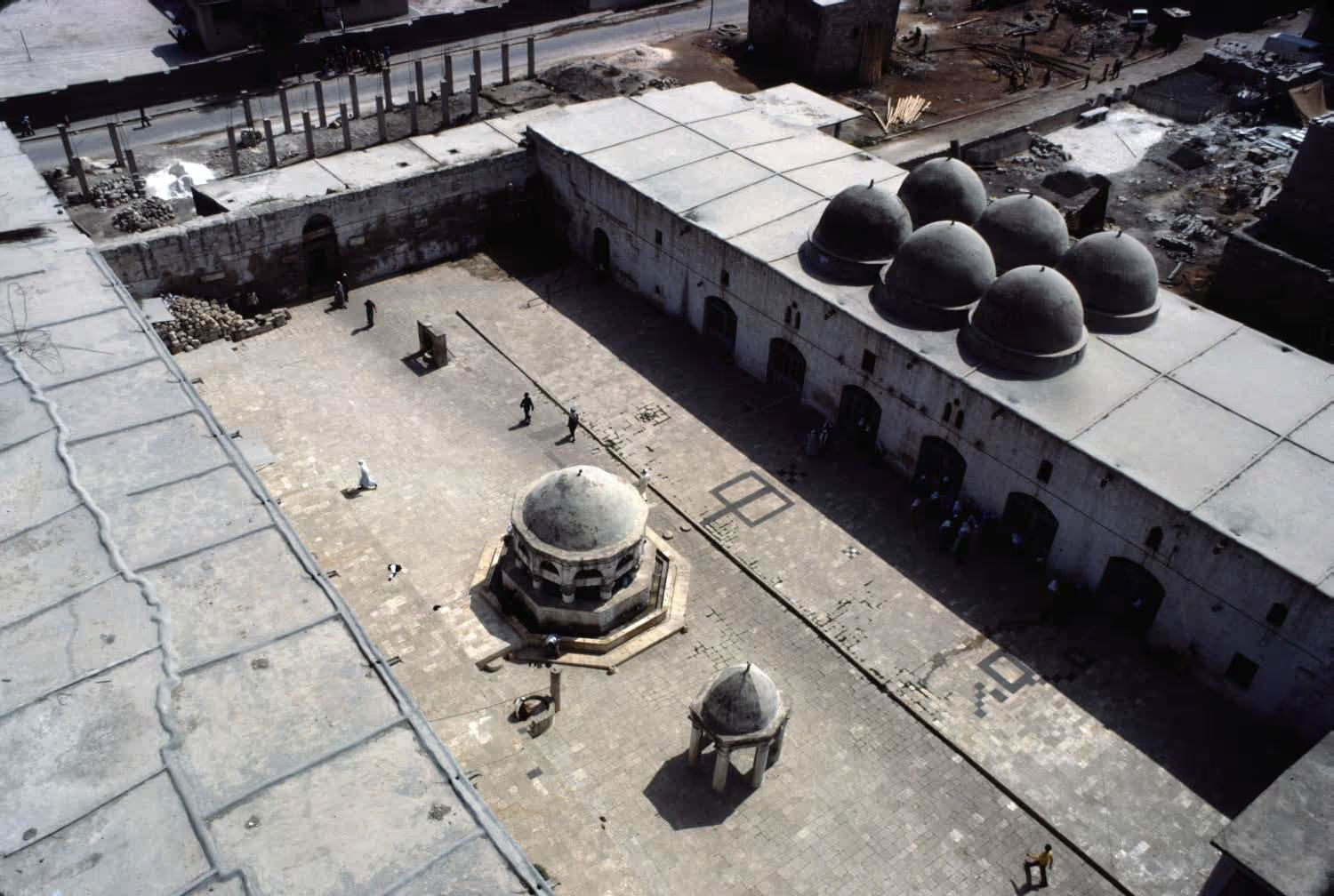
Historic mosque in Idlib Governorate, located in the centre of Maarat al-Numan, birthplace of the poet and philosopher Abu al-Ala al-Maarri. Built in the Ayyubid era in the twelfth century CE over a Byzantine church. Suffered damage during 2012-2020.
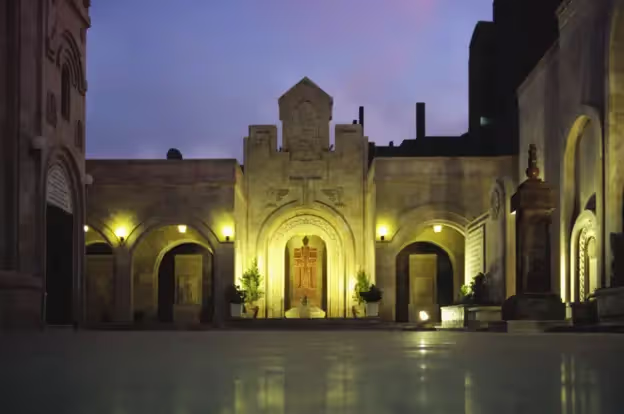
Armenian church and memorial complex in Deir ez-Zor, built in the 1990s to commemorate the victims of the Armenian Genocide who died in the Deir ez-Zor desert in 1915. Was a major pilgrimage site for Armenian communities worldwide. Completely destroyed in 2014 and remains pending reconstruction.
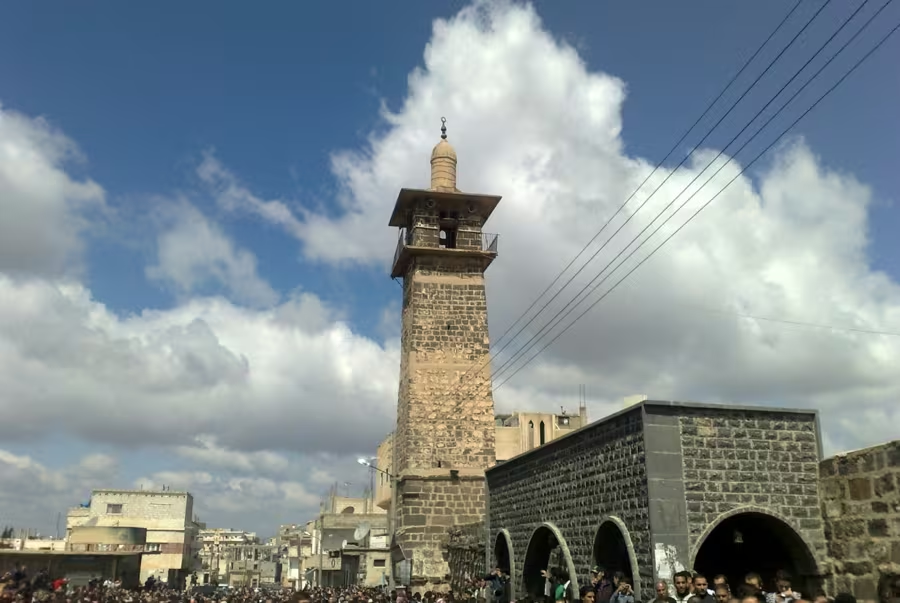
One of the oldest mosques in Syria and Islamic history, attributed to the era of Caliph Umar ibn al-Khattab in the seventh century CE. Located in Daraa al-Balad and distinguished by its black basalt construction. Suffered damage during 2012-2018.
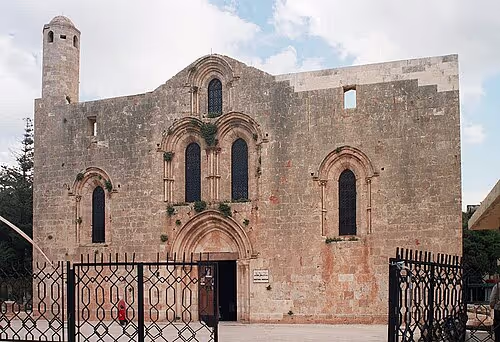
Crusader cathedral in Tartus, built in the twelfth century CE by the Knights Templar. One of the foremost surviving Crusader architectural examples in the East. Converted after the Islamic conquest into a barracks, then a national museum displaying coastal antiquities.

Armenian Orthodox cathedral in al-Jdeideh quarter of Old Aleppo, dating to the fifteenth century CE. One of the oldest Armenian churches in the Middle East. Suffered damage during 2012-2016 and underwent subsequent restoration.
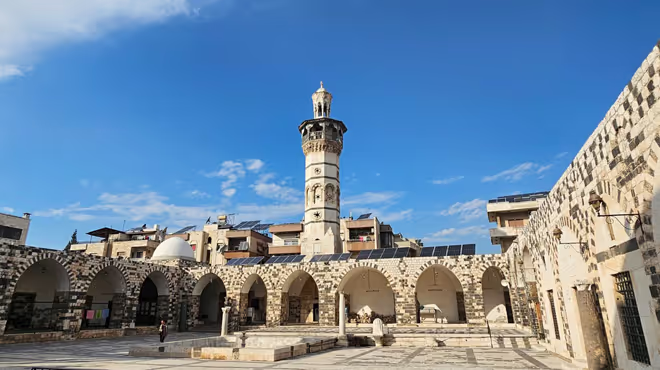
One of the oldest mosques in Syria, founded in the Umayyad era in the eighth century CE over a Byzantine church built on a Roman temple. Suffered severe damage in the 1982 events and was subsequently restored.

The principal historic mosque in central Old Homs, built over the site of a Roman sun temple and Church of Saint John. Established in Islamic form during the era of Nur al-Din Zengi in the twelfth century CE.
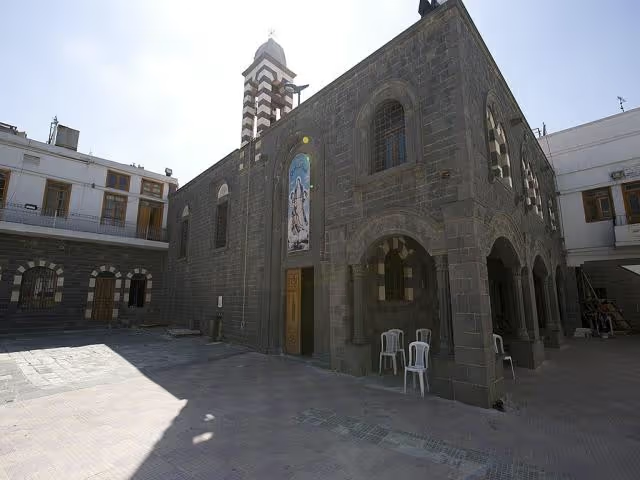
Syriac Orthodox church in Homs, traditionally founded in the first century CE. Houses a belt traditionally attributed to the Virgin Mary, discovered in the church in 1953. Suffered damage during 2012-2014 and underwent subsequent restoration work.
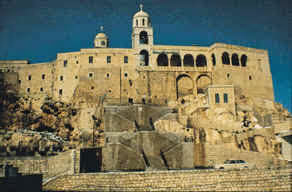
Byzantine convent in the town of Saidnaya, Rural Damascus Governorate, founded in the sixth century CE under Emperor Justinian. Holds the Shaghura icon attributed traditionally to Saint Luke, and is one of the most important Christian pilgrimage sites in the East.
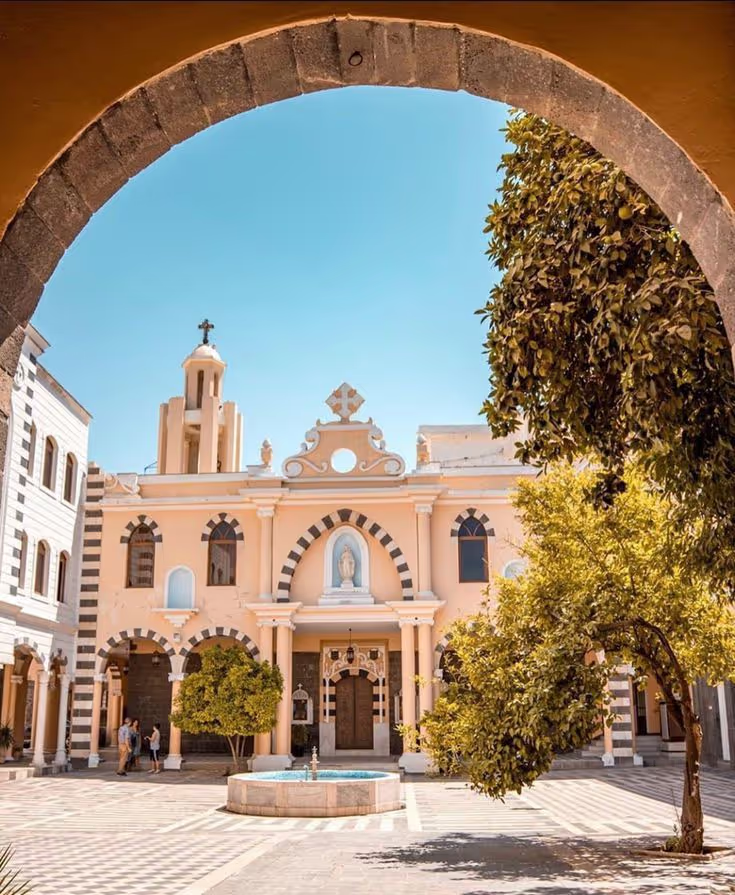
Greek Orthodox cathedral in Bab Sharqi quarter of Old Damascus, with origins dating to the second century CE. Seat of the Patriarchate of Antioch for the Greek Orthodox Church, and one of the oldest continuously operating Christian centres in the East.
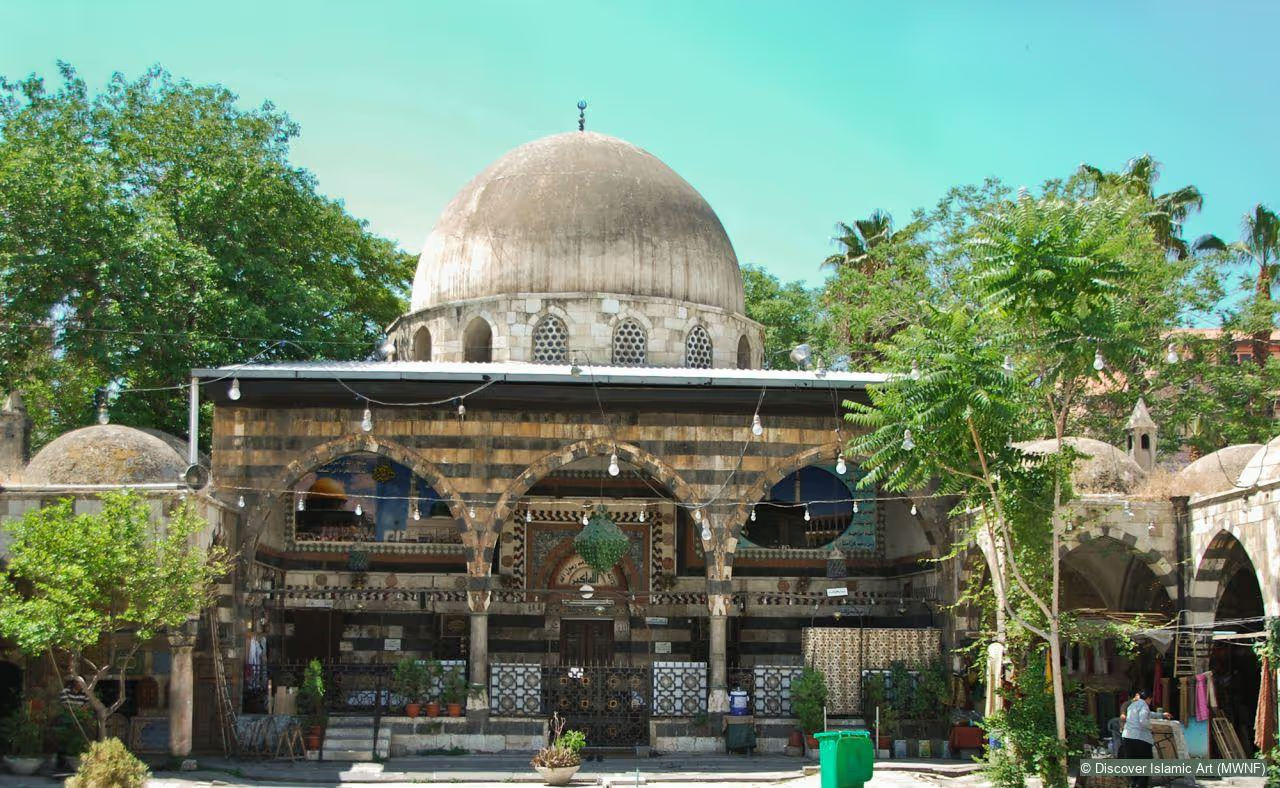
An Ottoman complex on the bank of the Barada River in Damascus, established by Sultan Suleiman the Magnificent in 1554 CE, with design attributed to architect Sinan. Includes a mosque, school and pilgrim hospice; one of the foremost classical Ottoman architectural ensembles in the Levant.

An abandoned Byzantine village in Idlib Governorate within the Ancient Villages of Northern Syria (the Dead Cities). Serjilla preserves residential houses, baths and stone agricultural complexes from the fourth to sixth centuries CE, and is among the best-preserved examples of rural Byzantine architecture.
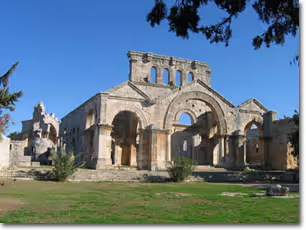
A Byzantine ecclesiastical complex in northwestern Aleppo, built in the fifth century CE around the column on which Saint Simeon the Stylite resided. It was the largest religious structure in the Christian world before the construction of Hagia Sophia, and is among the foremost examples of Byzantine ecclesiastical architecture in the Levant.
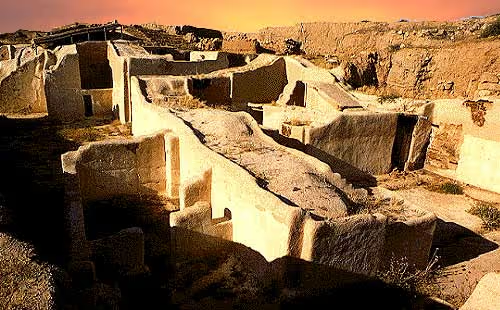
A Bronze Age city south of Aleppo in Idlib Governorate, where one of the oldest written archives in the Near East was discovered, dating to the third millennium BCE. The Kingdom of Ebla was a trading and political power in Syrian Mesopotamia before extensive destruction during the twenty-fourth century BCE.
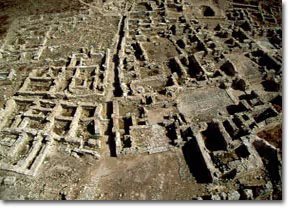
An ancient Canaanite city in Latakia Governorate, inhabited since the seventh millennium BCE. Famous in the Late Bronze Age as the birthplace of the first known alphabet in history, the thirty-letter Ugaritic cuneiform alphabet, developed around the fourteenth century BCE.
.avif)
A historic castle on the shore of Lake Assad in Raqqa Governorate, with Islamic-period construction dating to the Nurid and Ayyubid eras. Notable for its cylindrical minaret and the shrine of Emir Malik ibn Ali al-Aqili. Raised to its current elevation before the original site was flooded by the Euphrates Dam in the 1970s.
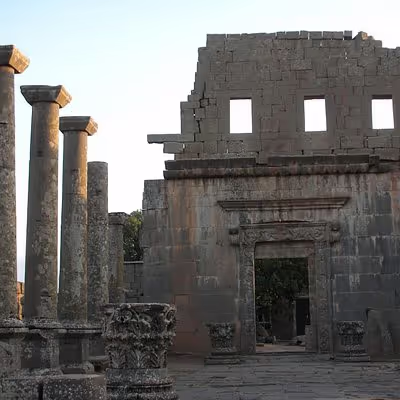
A regional museum in Sweida city, displaying archaeological discoveries from Jabal al-Arab and Hauran, including Roman and Byzantine basalt sculptures and mosaics that reflect the rich southern Syrian heritage.
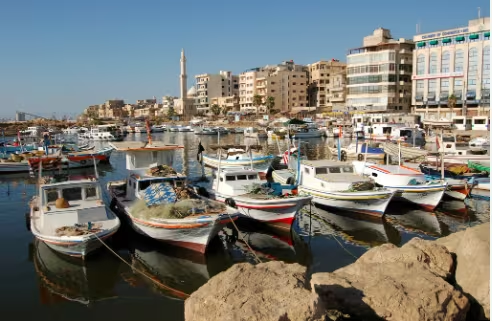
Tartus Governorate is Syria's southern coastal province, hosting the second main Mediterranean port, the medieval Cathedral of Our Lady of Tortosa, Margat Castle and the offshore island of Arwad.
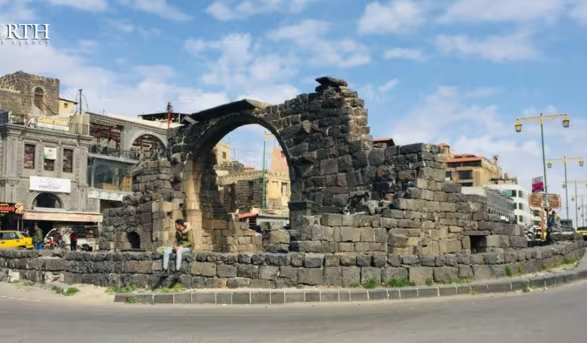
Sweida Governorate occupies the volcanic Jabal al-Arab massif in southern Syria, with traditional Druze villages, basalt architecture, ancient Nabataean and Roman remains and a distinctive highland climate.
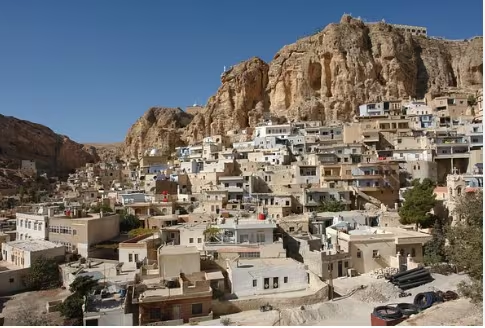
Rural Damascus Governorate surrounds the capital, encompassing the Ghouta oasis, the Christian villages of Maaloula and Saidnaya, the Bloudan summer resort area and the Anti-Lebanon mountain range.
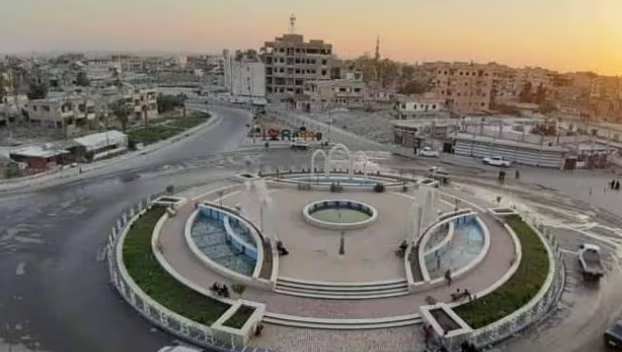
Raqqa Governorate sits along the Euphrates and was once the Abbasid capital under Harun al-Rashid; today it hosts the Tabqa Dam, Lake Assad and major irrigation infrastructure for Syria's eastern agricultural belt.
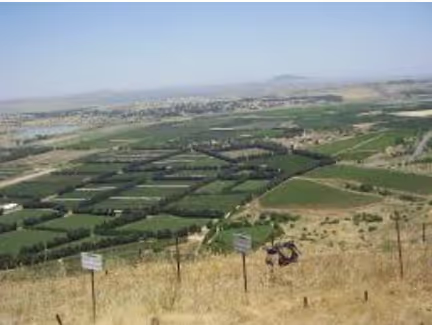
Quneitra Governorate borders the Golan Heights and Mount Hermon, marked by volcanic basalt plateaus and historically agricultural villages; the city of Quneitra was destroyed in 1974 and remains a UN-monitored zone.
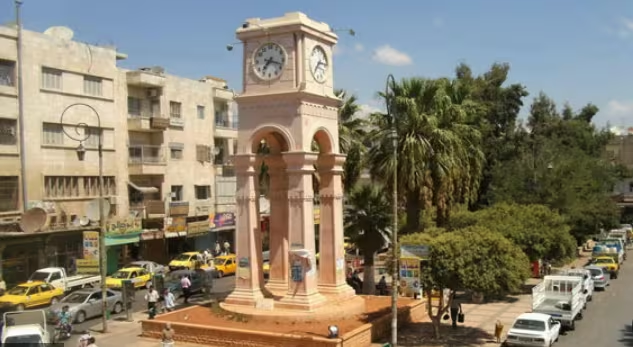
Idlib Governorate in northwestern Syria contains the UNESCO-listed Ancient Villages (the Dead Cities), the Bronze Age archive of Ebla and a transitional landscape between coastal mountains and interior plains.
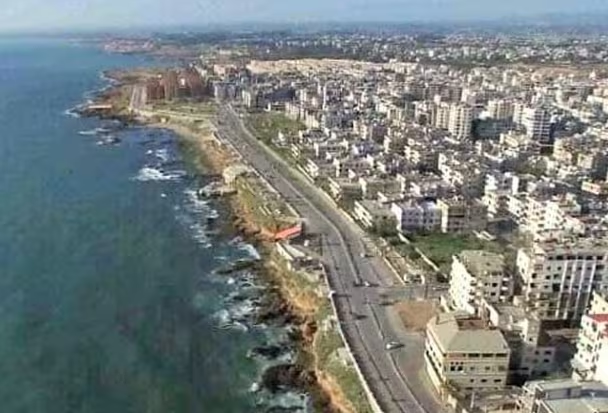
Latakia Governorate is Syria's main coastal province, hosting the principal Mediterranean port, the UNESCO archaeological site of Ugarit (Ras Shamra), Citadel of Saladin and the coastal mountain forests of Frunloq.
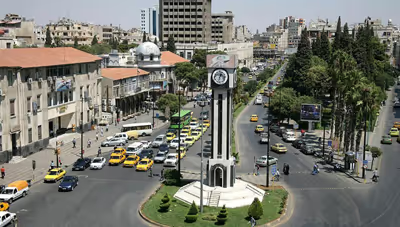
Homs Governorate is Syria's largest by area, encompassing the UNESCO-listed Krak des Chevaliers, the ancient city of Palmyra, Saint George Monastery in Wadi al-Nasara and the Homs Gap connecting the coast to the interior.
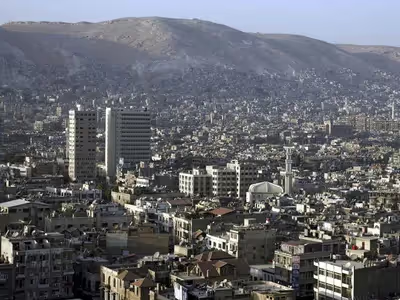
Damascus Governorate is Syria's capital and one of the oldest continuously inhabited cities in the world, hosting the Umayyad Mosque, the Old City walls, the Hamidiyah souq and the National Museum.
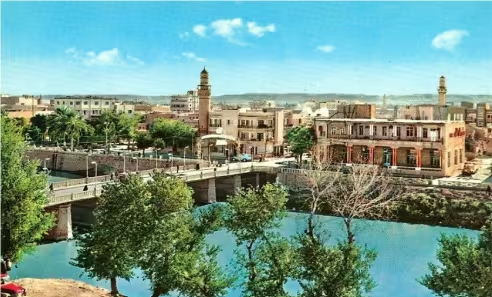
Deir ez-Zor Governorate sits along the middle Euphrates, with archaeological treasures from Mari, Dura-Europos, Halabiya, and the famous suspension bridge that became the city's architectural icon.
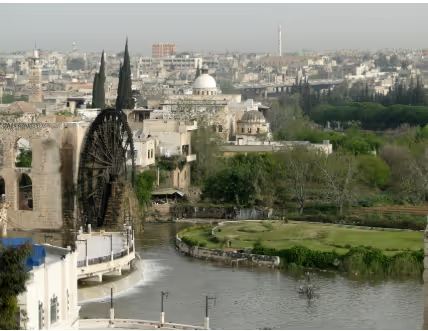
Hama Governorate is famous for its ancient wooden water-wheels (norias) along the Orontes River, the archaeological site of Apamea, Shayzar Castle and Azem Palace, with the Ghab Plain as its agricultural backbone.
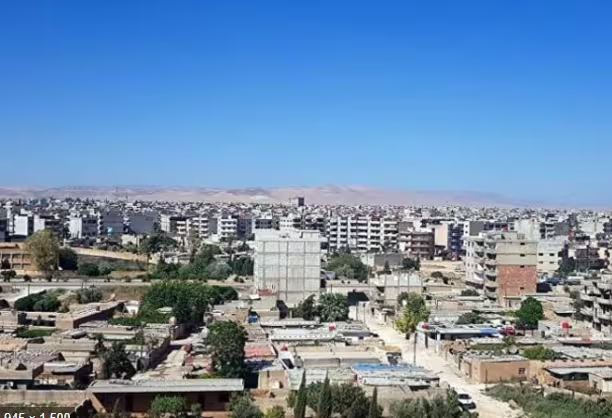
Hasakah Governorate is Syria's northeastern province along the Khabur and Euphrates basins, with major archaeological sites including Tell Halaf, Tell Brak and Tell Mozan, and key oil and agricultural resources.
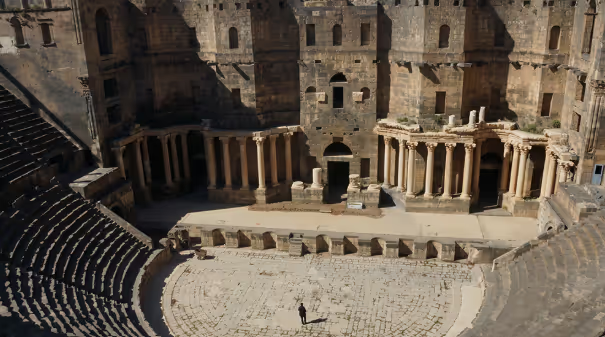
Daraa Governorate in southern Syria contains the UNESCO-listed ancient city of Bosra with its black basalt Roman theatre, and the volcanic Hauran plain that has been an agricultural heartland since antiquity.
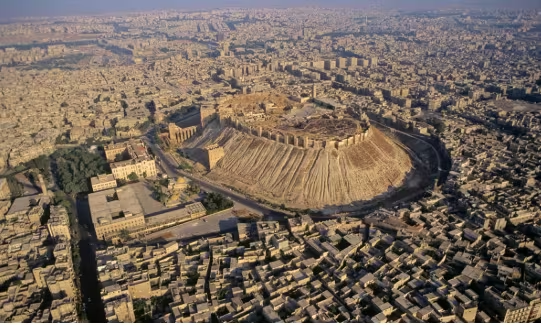
Aleppo Governorate is Syria's largest by population, home to the ancient city of Aleppo (UNESCO World Heritage), the citadel, the medieval souqs, the dead cities to the west, and Saint Simeon Stylites complex.
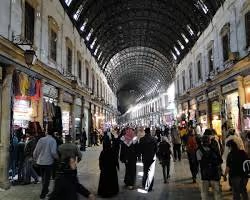
The principal covered market of Old Damascus, leading directly to the Umayyad Mosque. Approximately six hundred metres long, with its current iron-arched roof installed in the late nineteenth century under Sultan Abdulhamid II. Part of the UNESCO Ancient City of Damascus property since 1979.
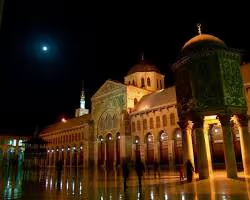
One of the oldest and most architecturally significant mosques in the world, built between 705 and 715 CE within the Old City of Damascus (UNESCO 1979). Renowned for its golden mosaics, three minarets and the shrine traditionally identified with the head of John the Baptist.
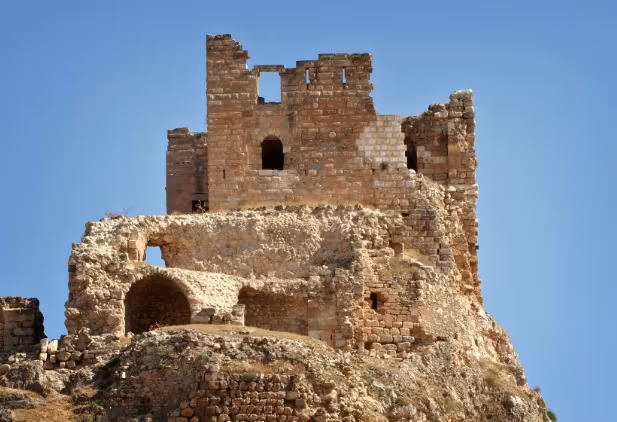
A medieval Arab fortress on a rocky spur above the Orontes River in Hama Governorate, famous for the chronicles of its twelfth-century lord and warrior-poet Usama ibn Munqidh.
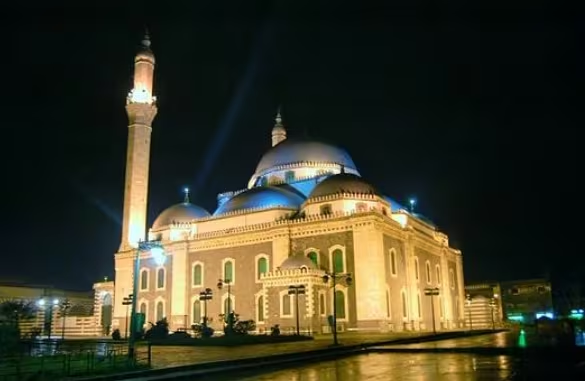
A landmark late-Ottoman mosque in central Homs containing the shrine traditionally identified as the tomb of the early Islamic commander Khalid ibn al-Walid. The current structure was rebuilt at the turn of the twentieth century in a distinctive Ottoman style with twin minarets.

The historic wooden water wheels of Hama on the Orontes River, dating from the medieval period and still operating as the city's signature heritage. Approximately seventeen norias survive of an originally larger system used for irrigation and water supply.
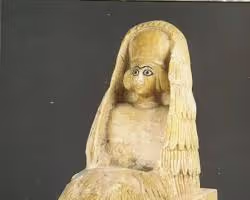
A Bronze Age city on the Euphrates in Deir ez-Zor Governorate, capital of an early Mesopotamian kingdom in the third and early second millennia BCE. Famous for its royal palace and the cuneiform Mari archives.
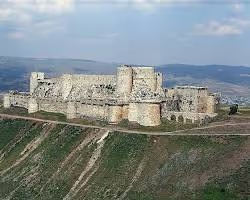
The best-preserved Crusader castle in the world, on the strategic Homs Gap between the Mediterranean coast and the Syrian interior. Inscribed by UNESCO in 2006 jointly with the Citadel of Salah al-Din. Damaged during the 2012 to 2014 conflict and undergoing phased conservation under DGAM oversight.
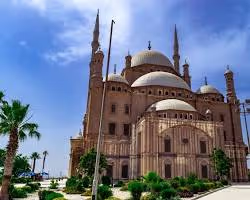
A mountaintop fortified castle east of Latakia, inscribed by UNESCO in 2006 jointly with Krak des Chevaliers. The site preserves Byzantine, Crusader and Ayyubid phases, and is famous for its monumental rock-cut moat. Saladin took the castle in 1188 after a brief siege.
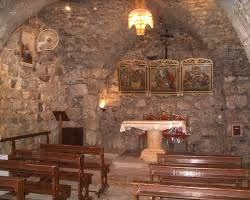
كنيسة صغيرة في دمشق القديمة قرب باب شرقي، تُنسب تقليدياً إلى منزل القدّيس حنانيا الذي عمّد الرسول بولس وفقاً لرواية العهد الجديد. تقع تحت مستوى الشارع وتُعدّ من أقدم بيوت العبادة المسيحية الموثّقة في الشرق.
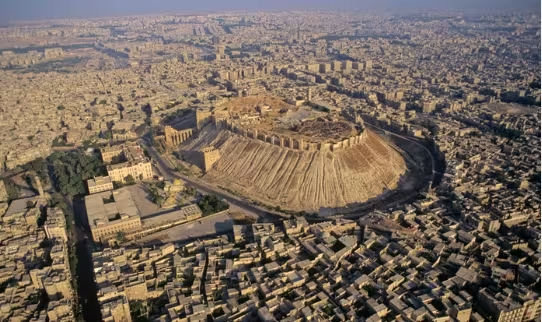
One of the oldest continuously inhabited urban centres in the world, the Ancient City of Aleppo (UNESCO 1986) is a dense fabric of covered suqs, khans, madrasas, mosques and churches around the citadel. Substantial damage during the 2012 to 2016 conflict placed it on the List of World Heritage in Danger in 2013.
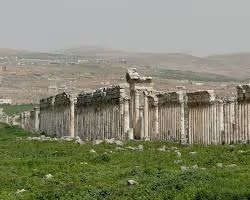
An ancient Greco-Roman city in Hama Governorate famed for its nearly two-kilometre colonnaded street, founded by Seleucus I in the third century BCE. Suffered significant looting during the 2011 to 2018 period.
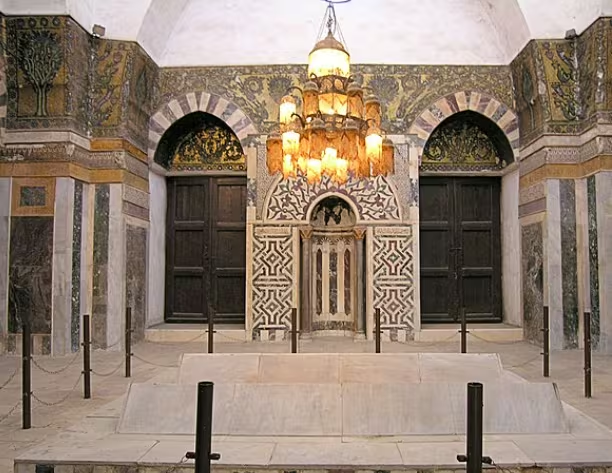
مكتبة تاريخية في دمشق القديمة، تقع ضمن مجمّع المدرسة الظاهرية المملوكية التي بُنيت في القرن الثالث عشر الميلادي. تضمّ مخطوطات نادرة في العلوم الشرعية والأدب واللغة العربية، وتحتوي ضريح السلطان الظاهر بيبرس.
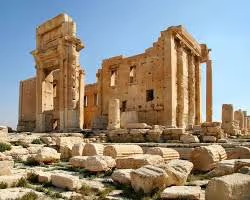
A UNESCO World Heritage Site (1980) in the central Syrian steppe, the caravan oasis city of Palmyra was a major Greco-Roman trade hub in the first to third centuries CE. Its monumental ruins suffered severe deliberate destruction between 2015 and 2017 and have been on the List of World Heritage in Danger since 2013.
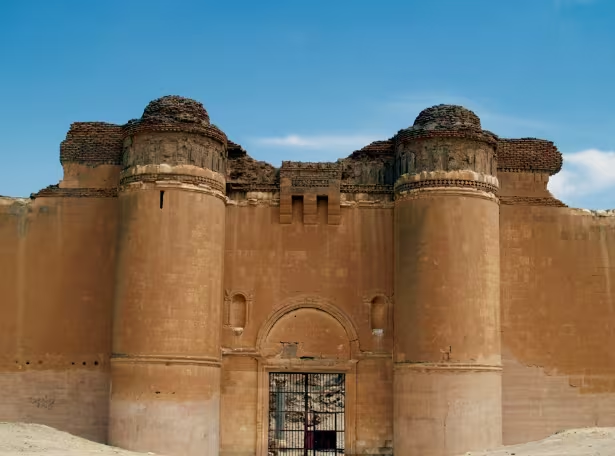
An Umayyad desert complex east of Palmyra in Homs Governorate, dated to around 728-729 CE under the Caliph Hisham. One of the most important early-Islamic civic and agricultural ensembles in the Syrian steppe.
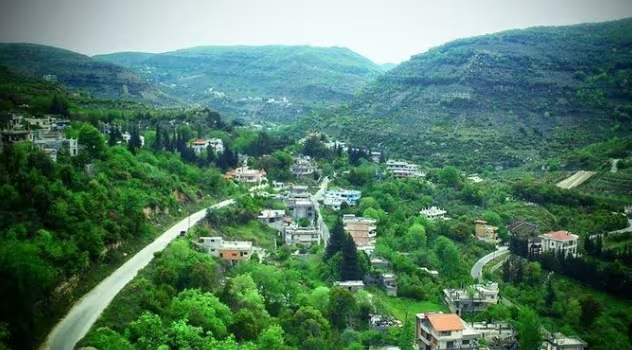
وادٍ في محافظة حماة يشتهر بنبعه ومياهه الجارية، يشكّل منطقة طبيعية وسياحية ترتبط بالمسار الجبلي بين حماة والساحل السوري.
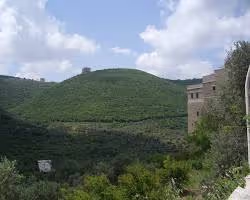
منطقة طبيعية وثقافية في محافظة حمص، تضمّ مجموعة قرى مسيحية تاريخية. تشتهر بمشهدها الجبلي ومناخها المعتدل، وتحتضن قلعة الحصن ومجمّعات تراثية دينية.
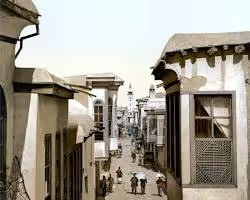
The historical decumanus maximus of Roman Damascus, running roughly fifteen hundred metres east-west across the Old City. Mentioned in the New Testament (Acts 9:11), the street remains a major commercial axis with continuous occupation since the first century BCE.
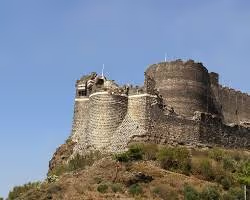
A massive black-basalt Crusader-Mamluk castle on the Syrian coast in Tartus Governorate, perched on a volcanic hilltop overlooking the Mediterranean. A major Hospitaller stronghold taken by Sultan Qalawun in 1285.

An ancient Christian-majority town in Rural Damascus Governorate, one of the few places where Western Aramaic, the language of Jesus, is still spoken in daily life. Home to the monasteries of Saint Sergius (Mar Sarkis) and Saint Thecla (Mar Takla).
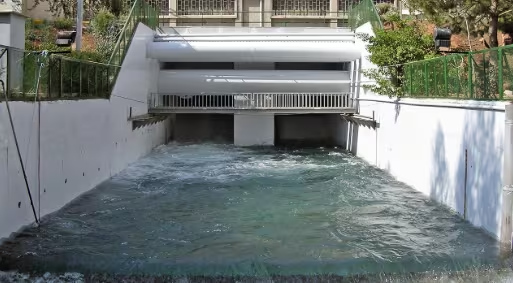
نبع رئيسي يُغذّي مدينة دمشق بمياه الشرب، يقع في وادي بردى بريف دمشق. أُنشئت محطّة الفيجة في النصف الأوّل من القرن العشرين، وما تزال المصدر الرئيسي لمياه العاصمة.
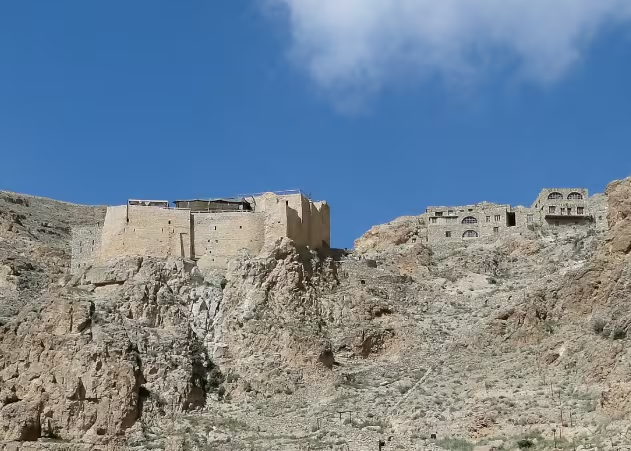
A historic Syrian Catholic monastery in the desert mountains north of Damascus, with a church preserving rare eleventh- and twelfth-century frescoes. A renowned centre for Christian-Muslim dialogue.
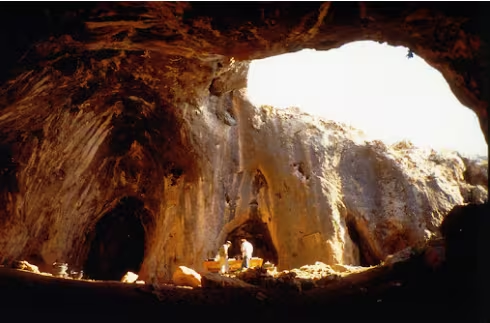
A prehistoric cave in the Afrin region of Aleppo Governorate where the remains of a Neanderthal child dating to approximately fifty thousand years before present were discovered. One of the most important Neanderthal-era sites in the Middle East.
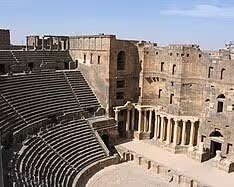
A UNESCO World Heritage Site (1980) in Daraa Governorate, ancient Bosra preserves one of the best-preserved Roman theatres in the world, built of black basalt and reused as a citadel under the Ayyubids. The city also contains the Mosque of Omar, an early-Islamic structure of significant religious importance.
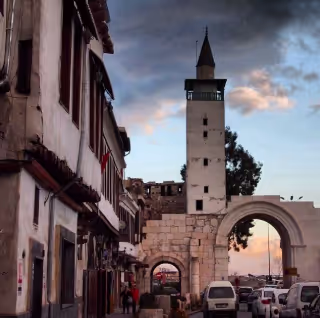
The eastern Roman gate of Damascus, the only one of the city's seven historic gates that retains its original Roman tripartite arrangement. Anchors the eastern end of Straight Street and the historic Christian quarter of the Old City.


































































































Access requires sign-in

Access requires sign-in

Access requires sign-in
Access requires sign-in
Access requires sign-in

Access requires sign-in


Access requires sign-in
Access requires sign-in

Access requires sign-in

Access requires sign-in
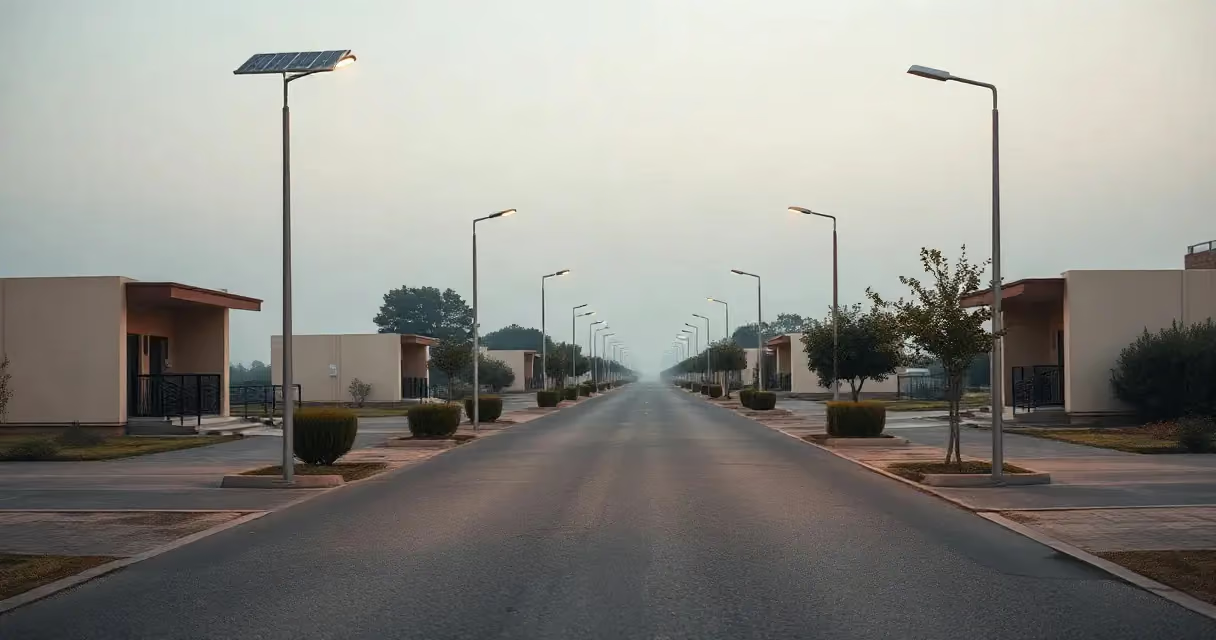
Access requires sign-in
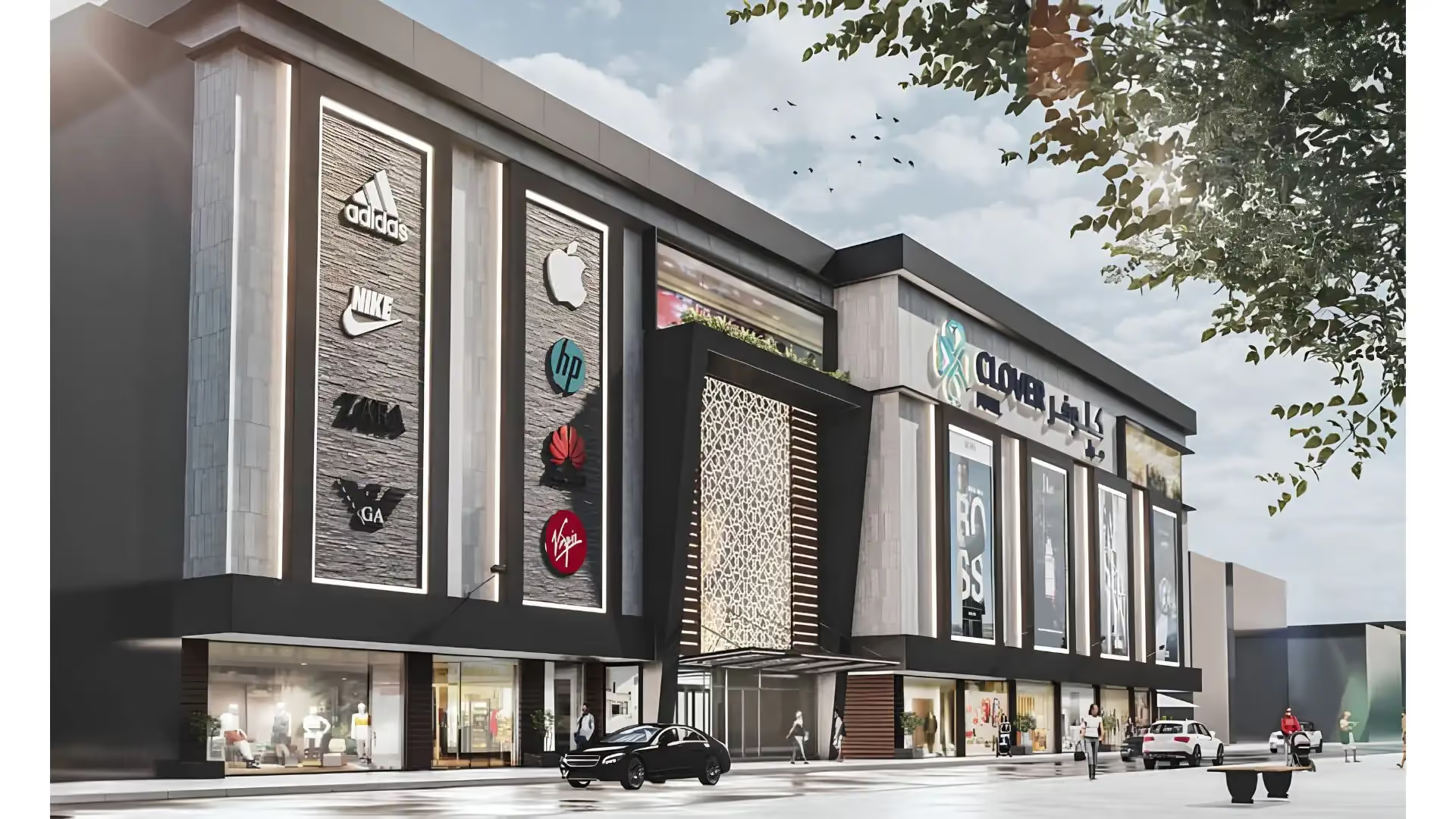
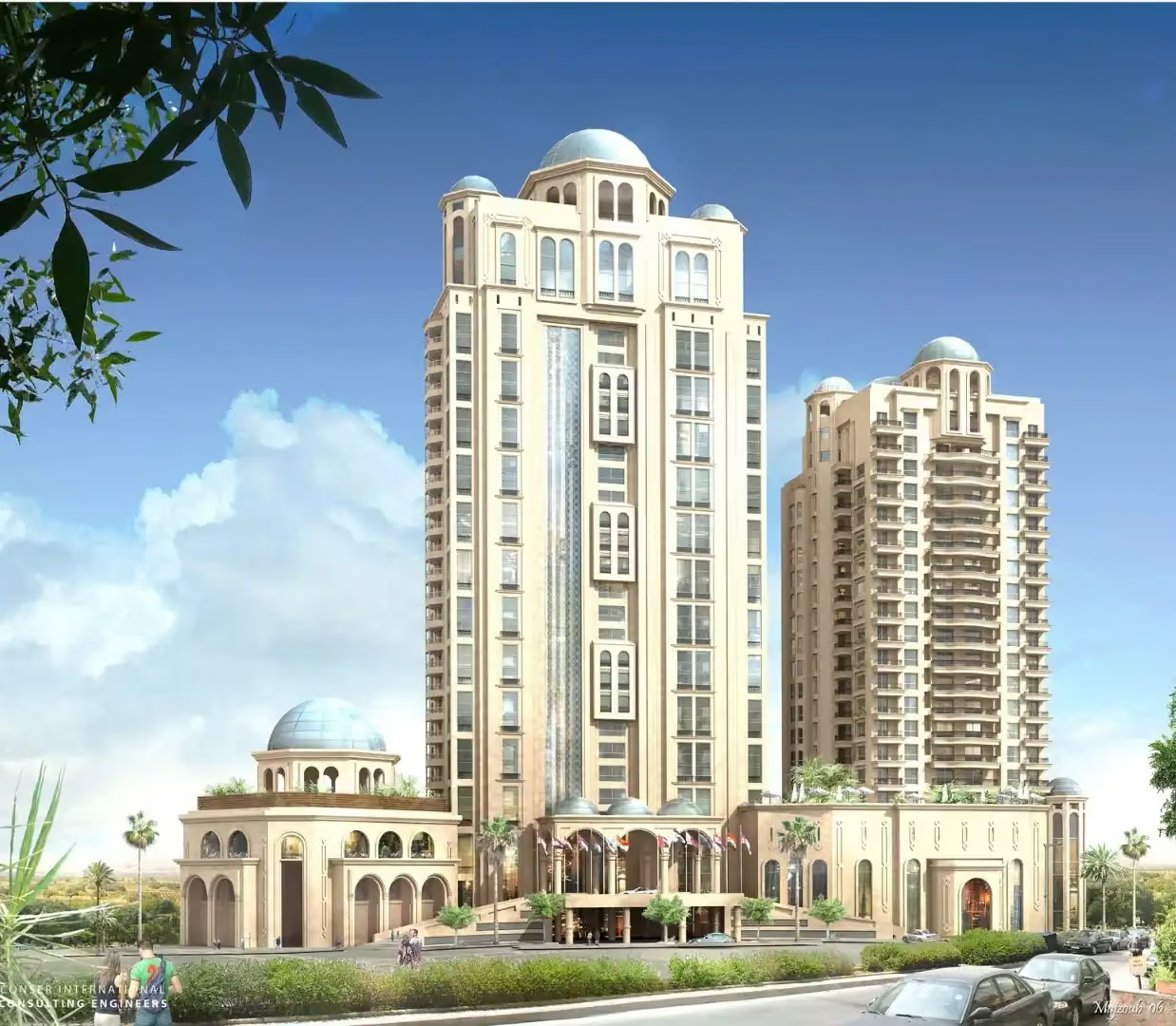
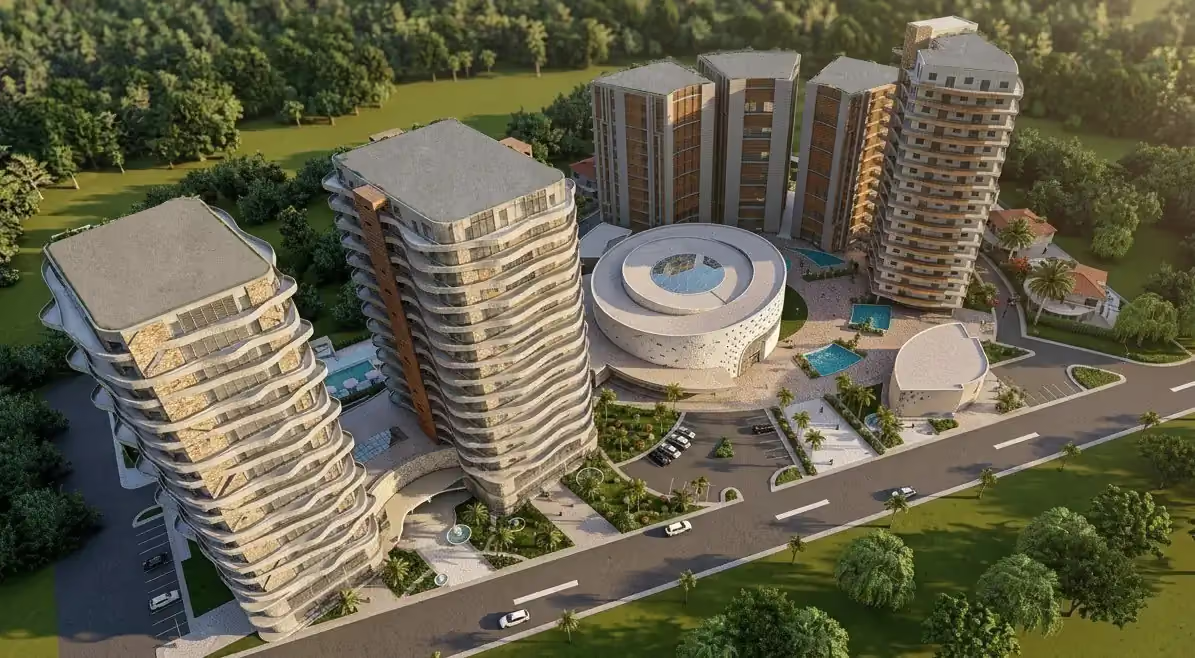
Access requires sign-in
Access requires sign-in
Access requires sign-in

Access requires sign-in

Access requires sign-in

Access requires sign-in

Access requires sign-in
Access requires sign-in
.avif)
Access requires sign-in

Access requires sign-in
Access requires sign-in

Access requires sign-in

Access requires sign-in

Access requires sign-in

Access requires sign-in

Access requires sign-in

Access requires sign-in
Access requires sign-in
Access requires sign-in

Access requires sign-in
Access requires sign-in

Access requires sign-in
Access requires sign-in
Access requires sign-in

Access requires sign-in

Access requires sign-in

Access requires sign-in

Access requires sign-in
Access requires sign-in

Access requires sign-in

Access requires sign-in
Access requires sign-in
Access requires sign-in
Access requires sign-in

Access requires sign-in
Access requires sign-in

Access requires sign-in
Access requires sign-in
Access requires sign-in

Access requires sign-in

Access requires sign-in
Access requires sign-in
Access requires sign-in
Access requires sign-in
Access requires sign-in
Access requires sign-in


Access requires sign-in

Access requires sign-in
Access requires sign-in
Access requires sign-in
Access requires sign-in

Access requires sign-in
Access requires sign-in
Access requires sign-in
Access requires sign-in
Access requires sign-in
Access requires sign-in
Access requires sign-in
Access requires sign-in
Access requires sign-in
Access requires sign-in
Access requires sign-in
Access requires sign-in
Access requires sign-in
Access requires sign-in
Access requires sign-in
Access requires sign-in
Access requires sign-in
Access requires sign-in

Access requires sign-in

Access requires sign-in

Access requires sign-in
Access requires sign-in

Access requires sign-in
Access requires sign-in
Access requires sign-in
Access requires sign-in

Access requires sign-in
Access requires sign-in
Access requires sign-in
Access requires sign-in
Access requires sign-in

Access requires sign-in
Access requires sign-in

Access requires sign-in

Access requires sign-in

Access requires sign-in

Access requires sign-in

Access requires sign-in

Access requires sign-in

Access requires sign-in
Access requires sign-in
Access requires sign-in

Access requires sign-in

Access requires sign-in

Access requires sign-in
Access requires sign-in

Access requires sign-in

Access requires sign-in
Access requires sign-in

Access requires sign-in


Access requires sign-in

Access requires sign-in

Access requires sign-in

Access requires sign-in
Access requires sign-in

Access requires sign-in

Access requires sign-in
Access requires sign-in

Access requires sign-in
Access requires sign-in
Access requires sign-in

Access requires sign-in
Access requires sign-in
Access requires sign-in
Access requires sign-in
Access requires sign-in
Access requires sign-in
Access requires sign-in
Access requires sign-in
Access requires sign-in
Access requires sign-in

Access requires sign-in
Access requires sign-in

Access requires sign-in

Access requires sign-in

Access requires sign-in

Access requires sign-in

Access requires sign-in
Access requires sign-in

Access requires sign-in