.avif)

W3 Regulatory Zone (Al-Nasr Suburb)


.svg)


.avif)
.svg)

What is W3?
W3 is the designation of one of Aleppo's urban expansion areas, on the western side of the city, west of the Jamiyat al-Zahraa neighborhood. Al-Watan lists it with N1 and N4 among the city's expansion areas, and the Aleppo newspaper Al-Jamahir calls it the Al-Nasr residential suburb.
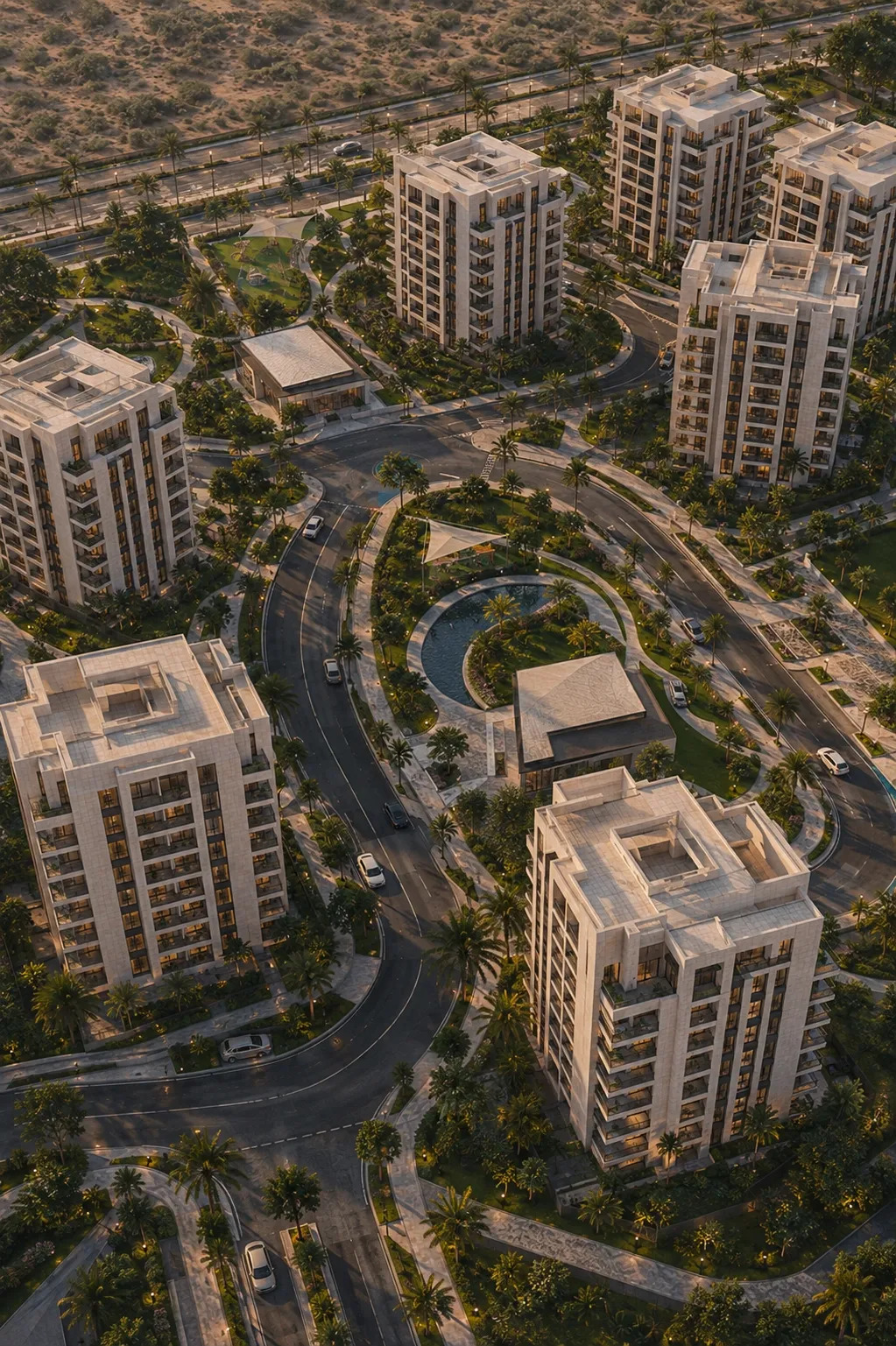
Al-Watan describes W3 as the first of the regulatory plots slated for development for housing cooperatives. A regulatory plot is land divided under the zoning plan into building plots: the city council prepares it with roads and utility networks, and the residential plots are allocated to housing cooperatives, which build homes for their members. W3 covers 240 hectares, with about 930 plots and room for about 14,000 apartments in four zones.
Legal and regulatory identity
- Owner and supervisor: The Aleppo City Council, in coordination with the Ministry of Local Administration and Environment.
- Infrastructure contractor: The Syrian Establishment for Building and Construction (SEBCO). Technical Reference reported at the start of February 2026 that infrastructure works had been launched under a contract concluded with SEBCO.
- Stated objective: According to the city council, as reported by Al-Watan and Technical Reference in April 2026, the zone is meant to meet the city's housing needs, absorb growing demand for homes and organise Aleppo's urban expansion. Technical Reference reported in February 2026 that the council had begun offering a number of regulatory plots to revive previously stalled projects, after a long pause in issuing detailed plans, and that W3 was the starting point for a series of projects to follow, including new zoning plans in eastern Aleppo and real estate development projects.
- Legal framework: The project is classified under the "General Master Plan of Aleppo City" as an approved and ministerially ratified urban expansion zone.
Location and area
- Location: On the western periphery of Aleppo, extending into the lands west of the Jamiyat al-Zahraa (Al-Zahraa Association) neighborhood.
- Distance from downtown: The project borders sit approximately 7.5 kilometers from Aleppo's city center.
- Total land area: The expansion zone covers a designated area of 240 hectares.
Scale, capacity, and design
- Total land plots: The master plan incorporates about 930 regulatory plots zoned for residential development.
- Zoning layout: The development area is divided into 4 adjacent sub-projects (zones or neighborhoods) numbered 1 through 4.
- Housing capacity: The planned maximum capacity is designed to accommodate approximately 14,000 apartments.
- Building types: Approved permits include detached villas, semi-detached twin houses, detached apartment blocks, and interconnected multi-family buildings.
- Height limits: Regulated building heights range between a minimum of 4 stories and a maximum of 8 stories.
- Earlier figures: In August 2024, the Aleppo newspaper Al-Jamahir gave the zone as 920 plots with about 9,355 apartments. In April 2026, Al-Watan, citing the city council, gave about 930 plots and about 14,000 apartments.
Infrastructure works
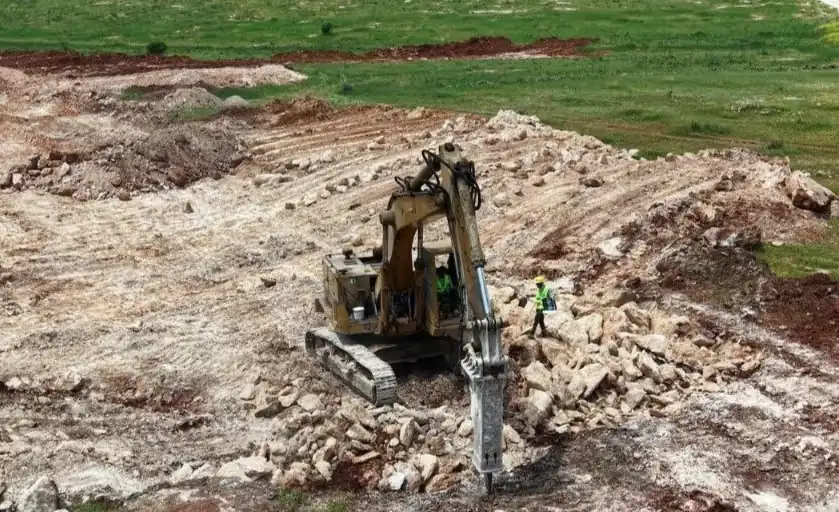
- Road works: Machinery work has concentrated on Zones 2 and 3, the closest to Jamiyat al-Zahraa, and is then to move to Zones 1 and 4. Al-Watan and Technical Reference reported on 28 April 2026 that about 70% of road preparation in Zones 2 and 3 was complete.
- Utility integration: Technical studies and field reviews are underway to begin laying underground networks for drinking water, electricity, telecommunications, and sewage. According to the same April 2026 reports, technical teams were still checking the studies for the water, sewage, electricity and stormwater networks before moving on to the next execution phases.
- Stormwater separation: The design separates the municipal sewage network from the rainwater drainage network. Collected rainwater is to be directed to irrigate the suburb's green belts and public parks, or drained toward Aleppo's southern countryside.
Timeline
- August 2024: Al-Jamahir reported on 5 August 2024 that infrastructure works were under way in neighborhoods 2 and 3, including an updated topographic survey, the placing of survey markers and the cutting of road beds, with neighborhoods 1 and 4 to follow gradually.
- January 2026: Al-Watan reported on 4 January 2026 that, at an expanded meeting in Aleppo, the Minister of Public Works and Housing said the bodies affiliated with his ministry were ready to contract the execution through SEBCO and to start work in W3 at the beginning of 2026.
- February 2026: Technical Reference reported on 1 February 2026 the launch of a new stage of infrastructure works in W3, under a contract concluded with SEBCO.
- April 2026: Al-Watan and Technical Reference reported on 28 April 2026 that about 70% of road preparation was done in Zones 2 and 3, and that work was under way on the allocation files of the housing cooperatives.
Planned public amenities
To serve the roughly 14,000 planned apartments, the W3 master plan reserves municipal blocks for community facilities, including:
- Public schools for various educational stages.
- Central mosques.
- Community healthcare clinics and medical centers.
- Public gardens, parks, and green spaces.
- Commercial markets and shopping areas.
- Public squares and designated parking lots.
Frequently Asked Questions
What does W3 mean?
W3 is the designation of one of Aleppo's urban expansion areas, in the west of the city. Al-Watan names it alongside the expansion areas N1 and N4, and the local press also calls it the Al-Nasr residential suburb.
Where is the W3 zone located?
It is on the western periphery of Aleppo, west of the Jamiyat al-Zahraa (Al-Zahraa Association) neighborhood, approximately 7.5 kilometers from the city center.
How large is the project and how many plots does it include?
The expansion zone covers 240 hectares and incorporates about 930 regulatory plots zoned for residential development.
What is the planned housing capacity?
The plan is designed to accommodate approximately 14,000 apartments across 4 zones numbered 1 through 4, with building heights from 4 to 8 stories.
Who supervises and builds the project?
The Aleppo City Council supervises the project in coordination with the Ministry of Local Administration and Environment, while the Syrian Establishment for Building and Construction (SEBCO) carries out the infrastructure works under contract. The residential plots are intended for housing cooperatives, which build the apartments for their members.
Update, 28 April 2026: about 70% of road preparation done in Zones 2 and 3
Al-Watan and Technical Reference reported on 28 April 2026 that the Aleppo City Council was continuing to open roads and prepare infrastructure in W3, which Al-Watan described as the first of the regulatory plots slated for development for housing cooperatives. Road preparation had reached about 70% in the second and third zones, while technical teams were still checking the studies for the water, sewage, electricity and stormwater networks before moving on to the next execution phases.
Both reports said work was also under way to settle the plot allocation files of the housing cooperatives. According to the city council, the zone comprises about 930 regulatory plots with room for nearly 14,000 apartments in four zones.
In early April 2026, at an expanded meeting attended by a delegation from the Ministry of Public Works and Housing, Aleppo Governorate's completion committee reviewed urban planning, cooperative housing and the expansion areas, among them W3, N1 and N4, according to Al-Watan.
Gallery :

Aleppo City Council, Facebook post on the W3 infrastructure works
Al-Watan (Arabic), W3 infrastructure and 14,000 units for housing cooperatives, 28 April 2026
Technical Reference (Arabic), Aleppo City Council continues W3 infrastructure works, 28 April 2026
Syria Property Hub (Arabic), Aleppo launches the W3 project for 14,000 housing units, 19 April 2026
Technical Reference (Arabic), launch of housing projects in Aleppo, 1 February 2026
Al-Watan (Arabic), Minister of Public Works and Housing meeting in Aleppo, 4 January 2026
Al-Jamahir (Arabic), infrastructure works in the Al-Nasr residential suburb (W3), 5 August 2024