.avif)
Al-Naser Boulevard
.svg)


.avif)
.svg)

Overview
Al-Naser Boulevard is an urban redevelopment project in Homs, presented by its developers as the first major urban project in the city. It is located on land extending between the Al-Qarabis neighborhood, the wholesale market (Souq al-Hal), the dyehouses (al-Masabegh), and Al-Naser Park.
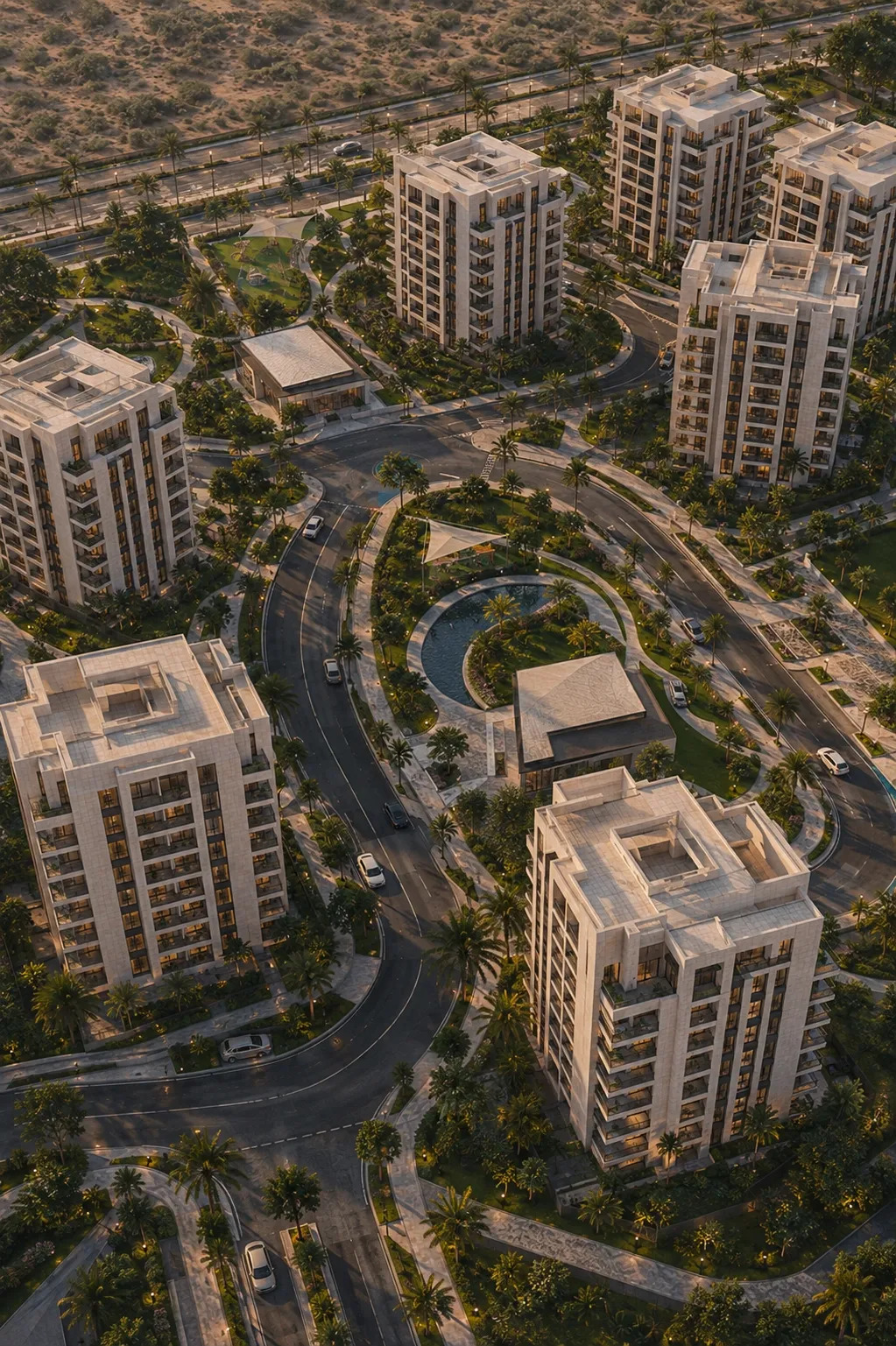
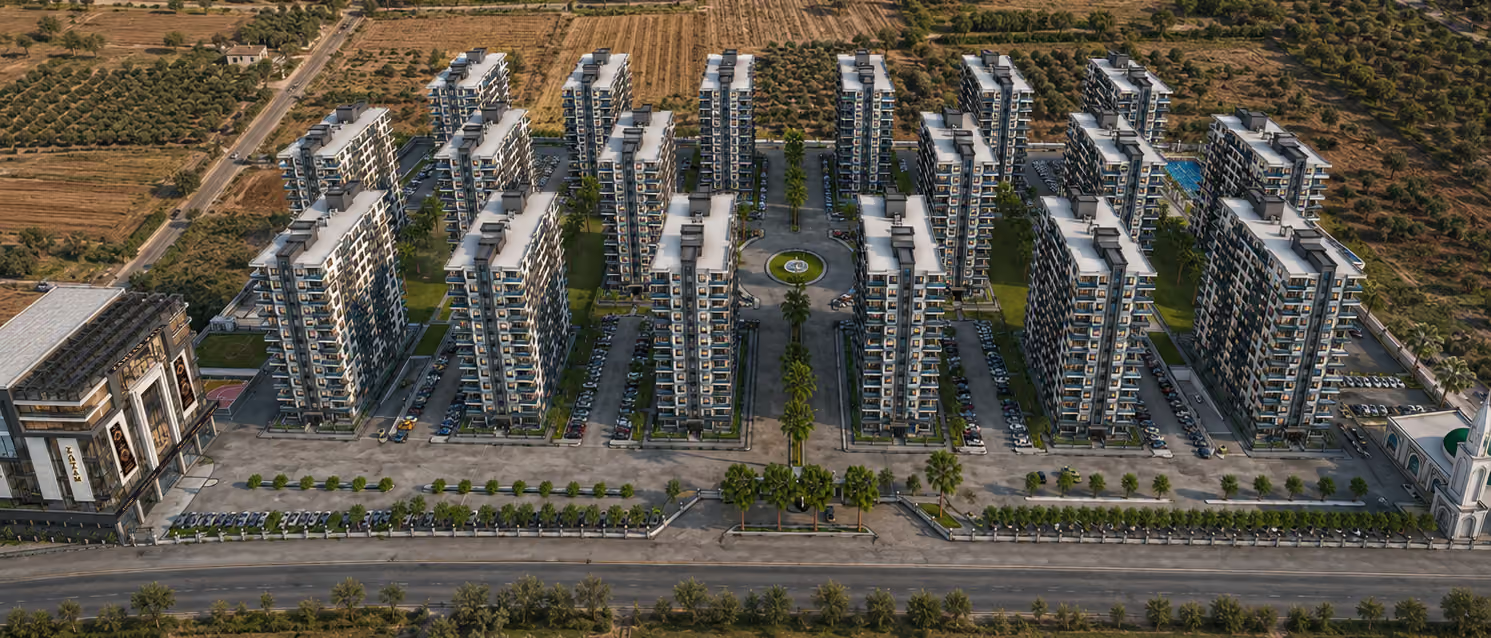
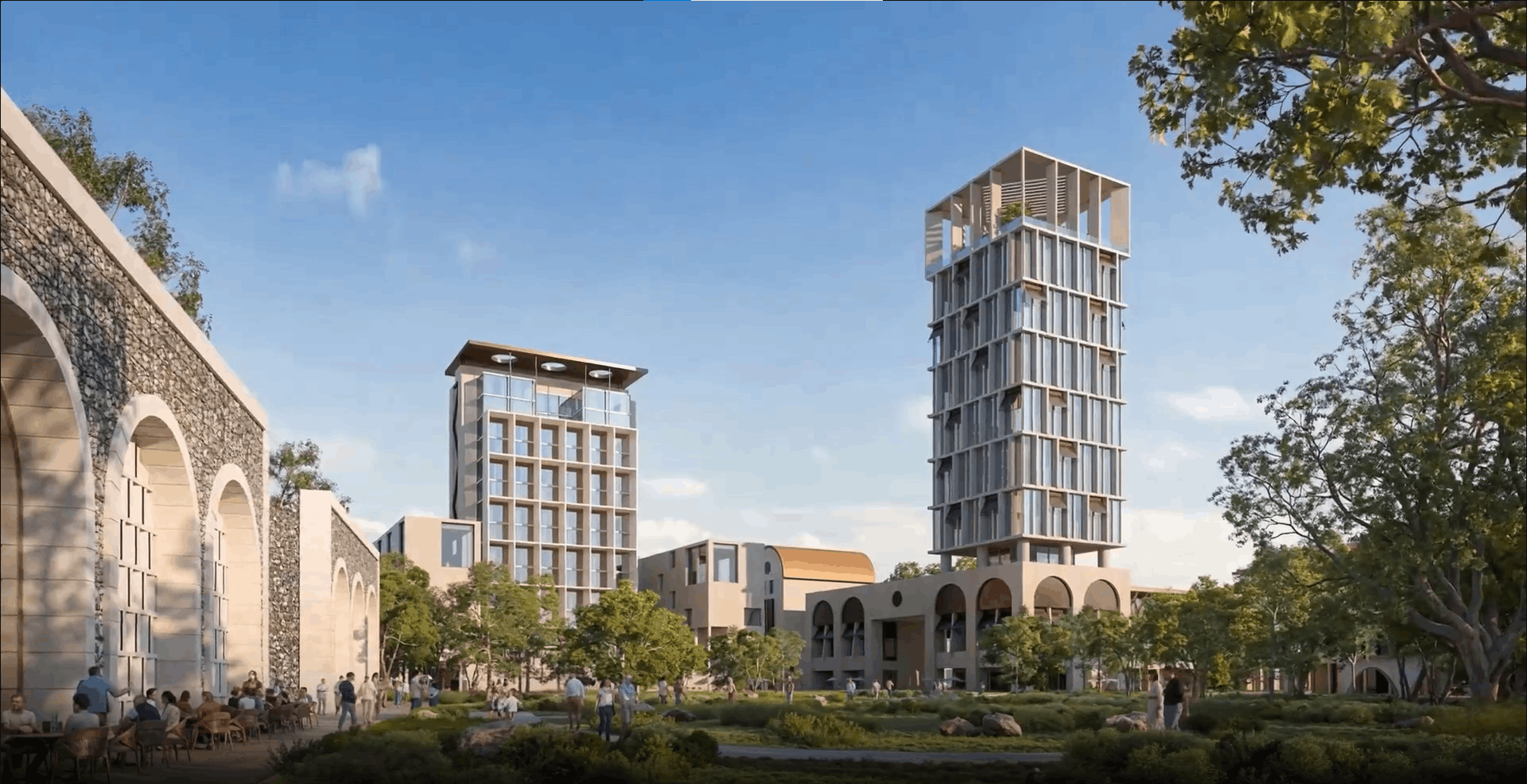
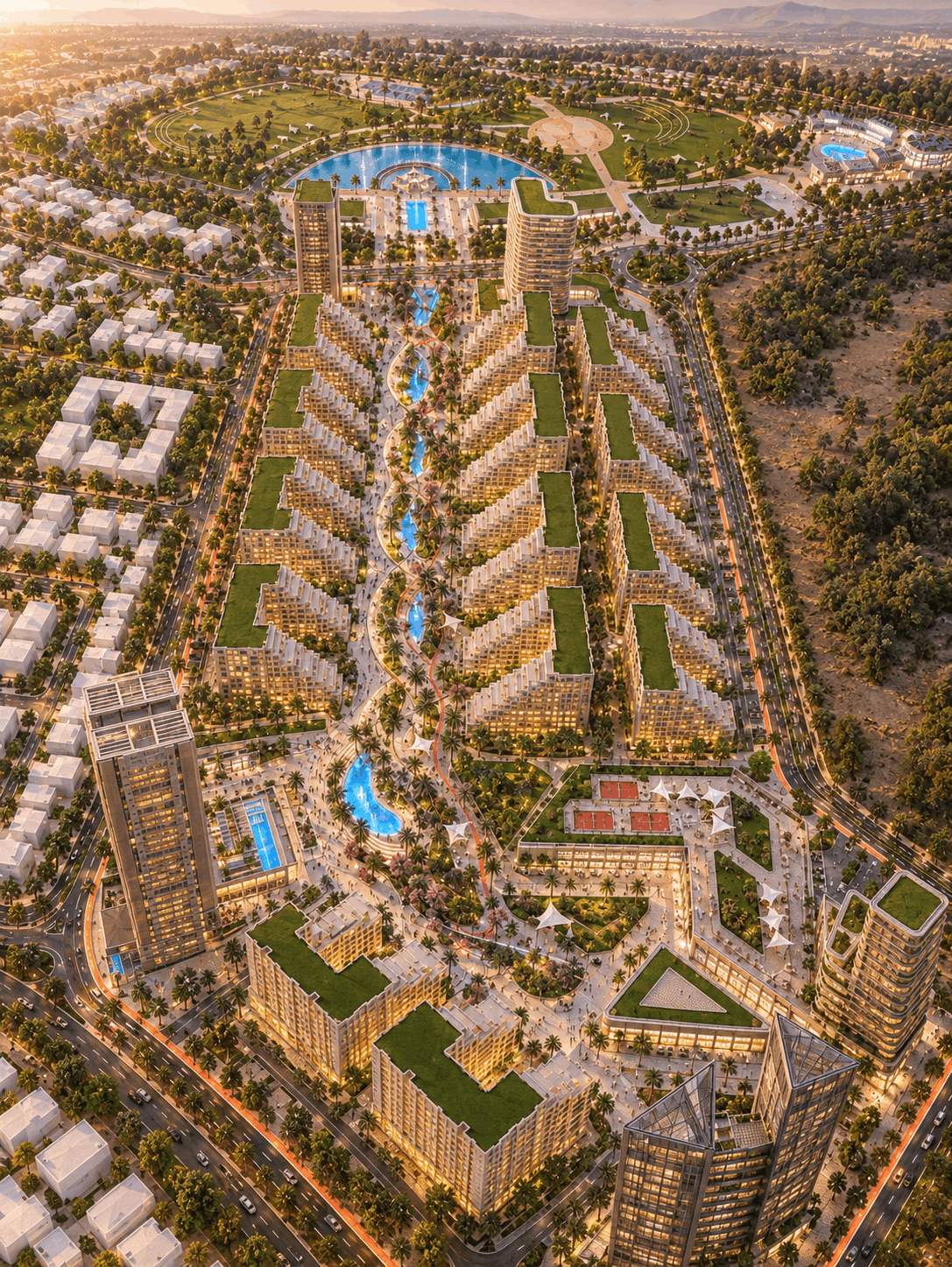
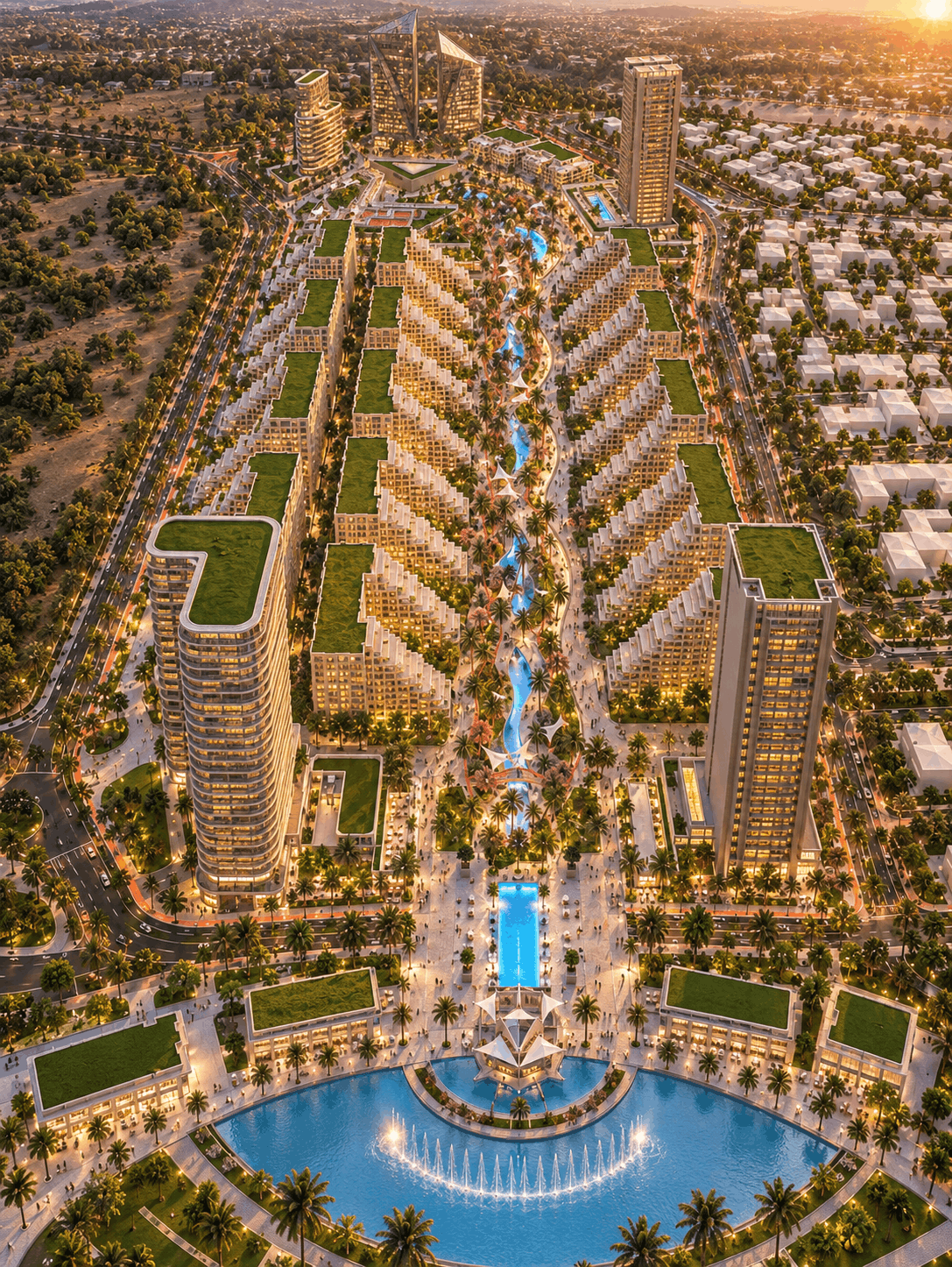
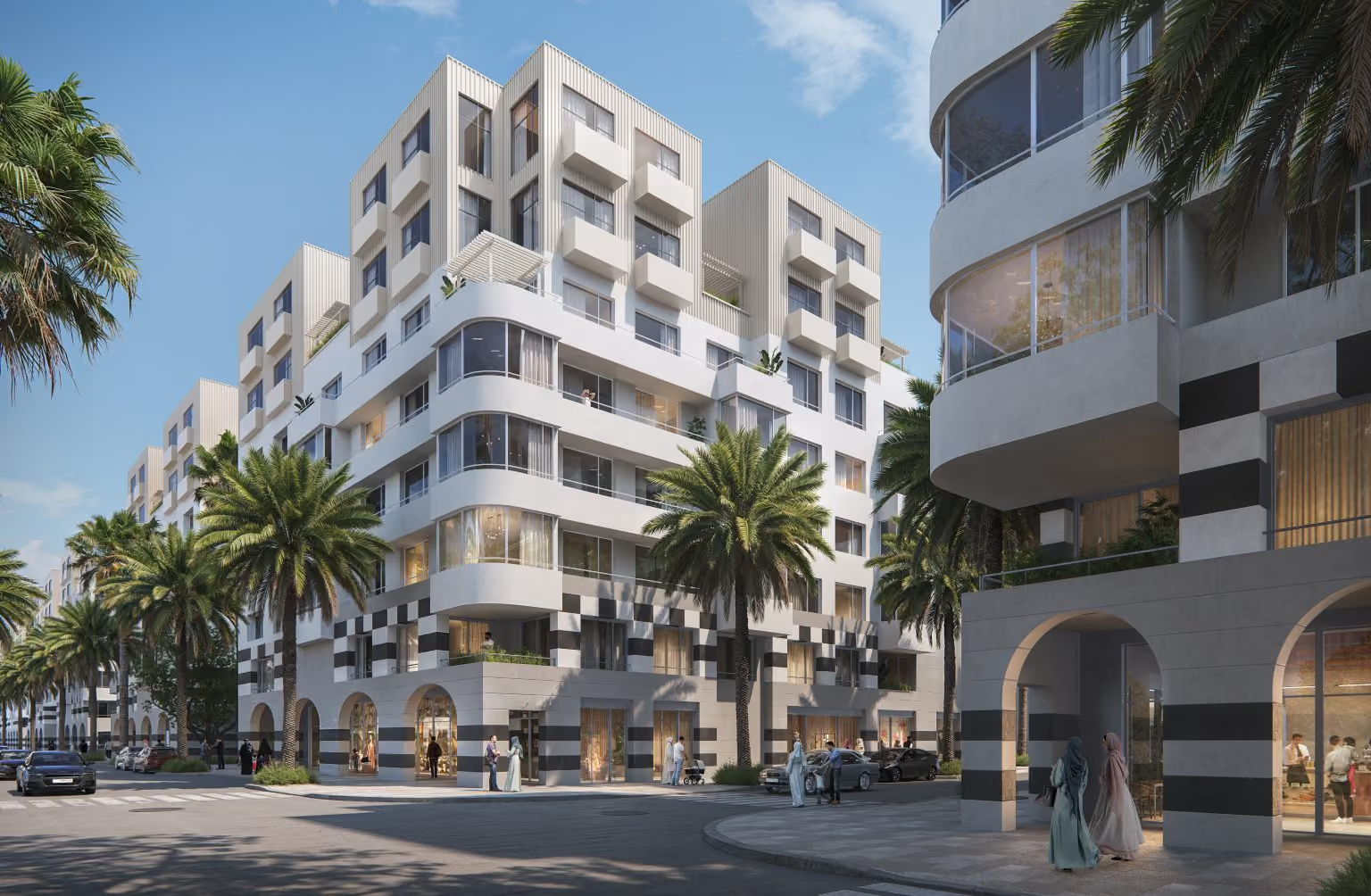
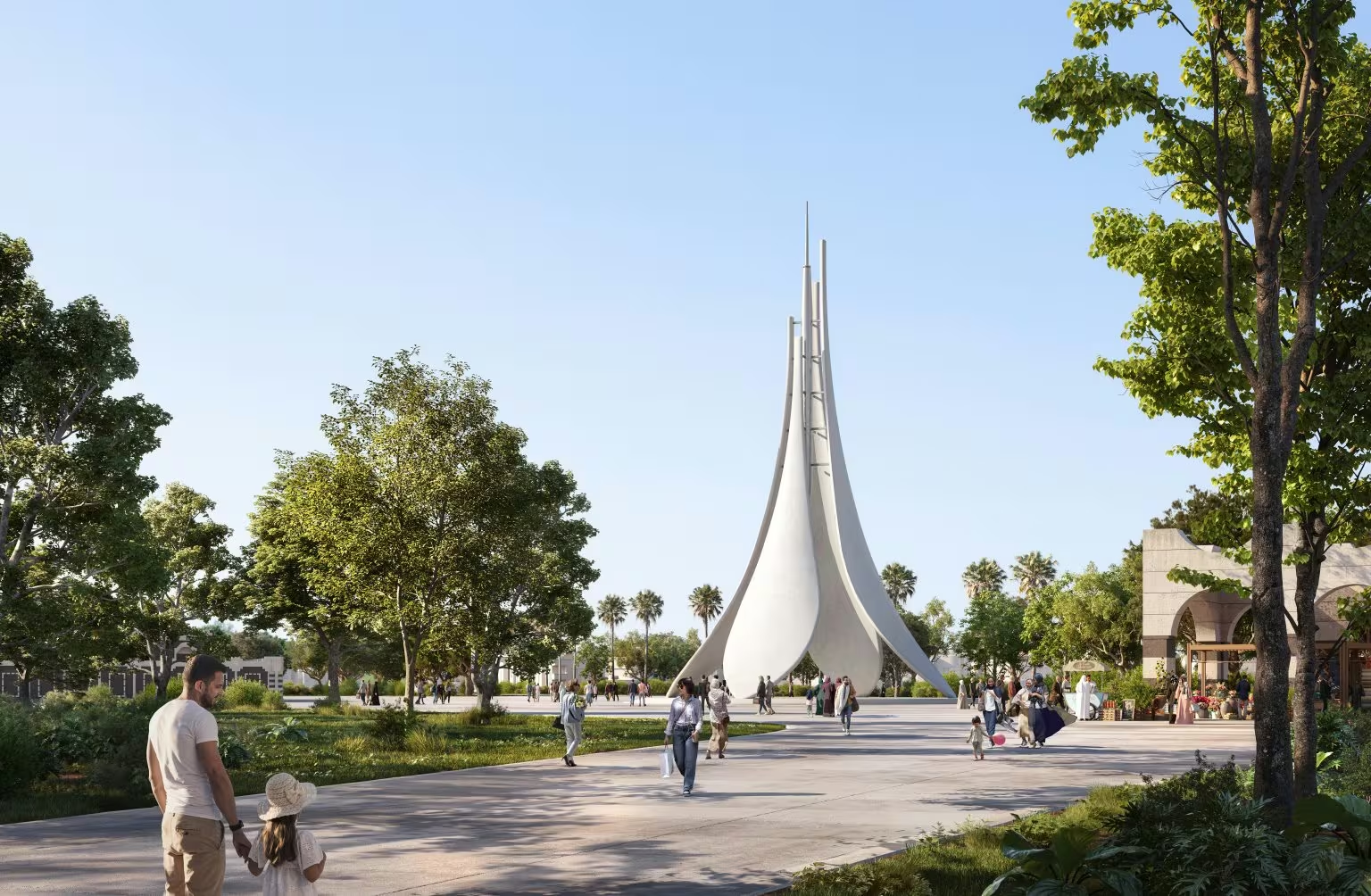
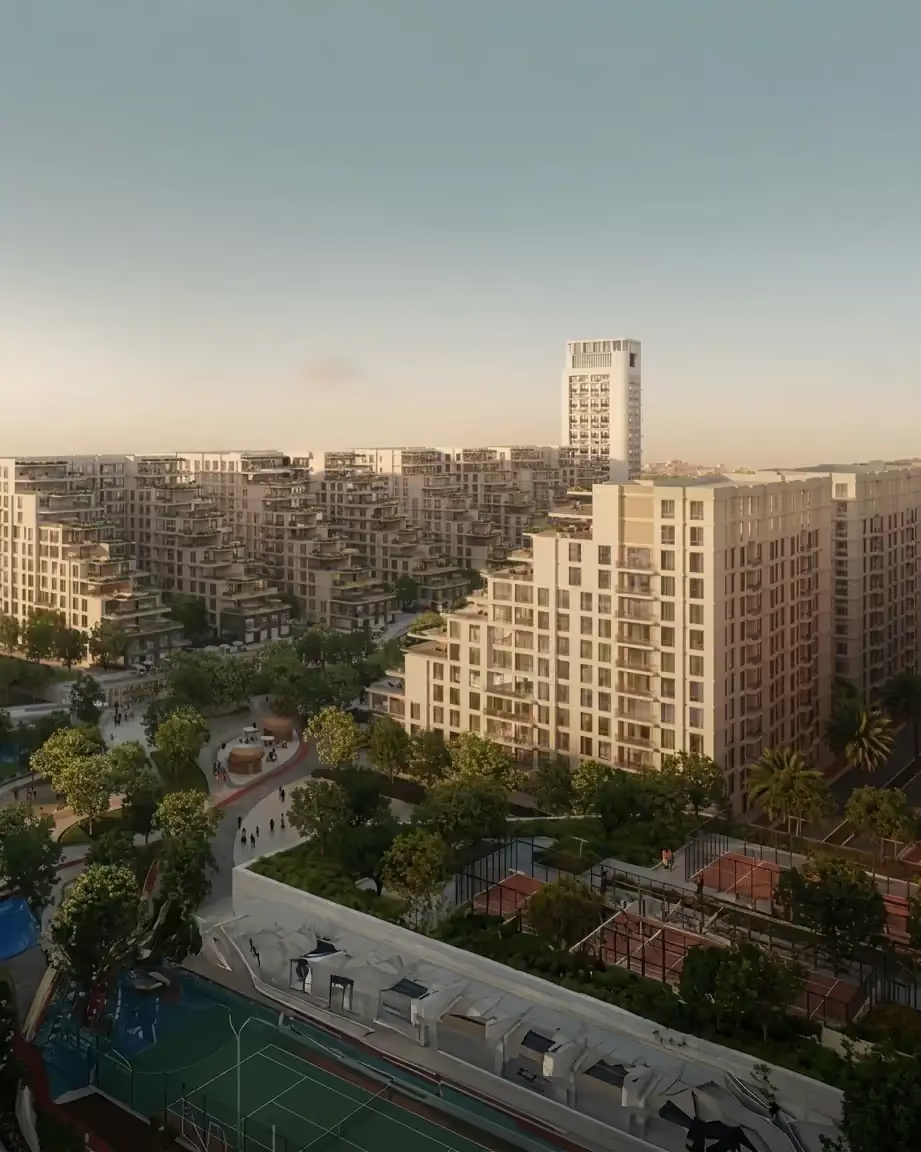
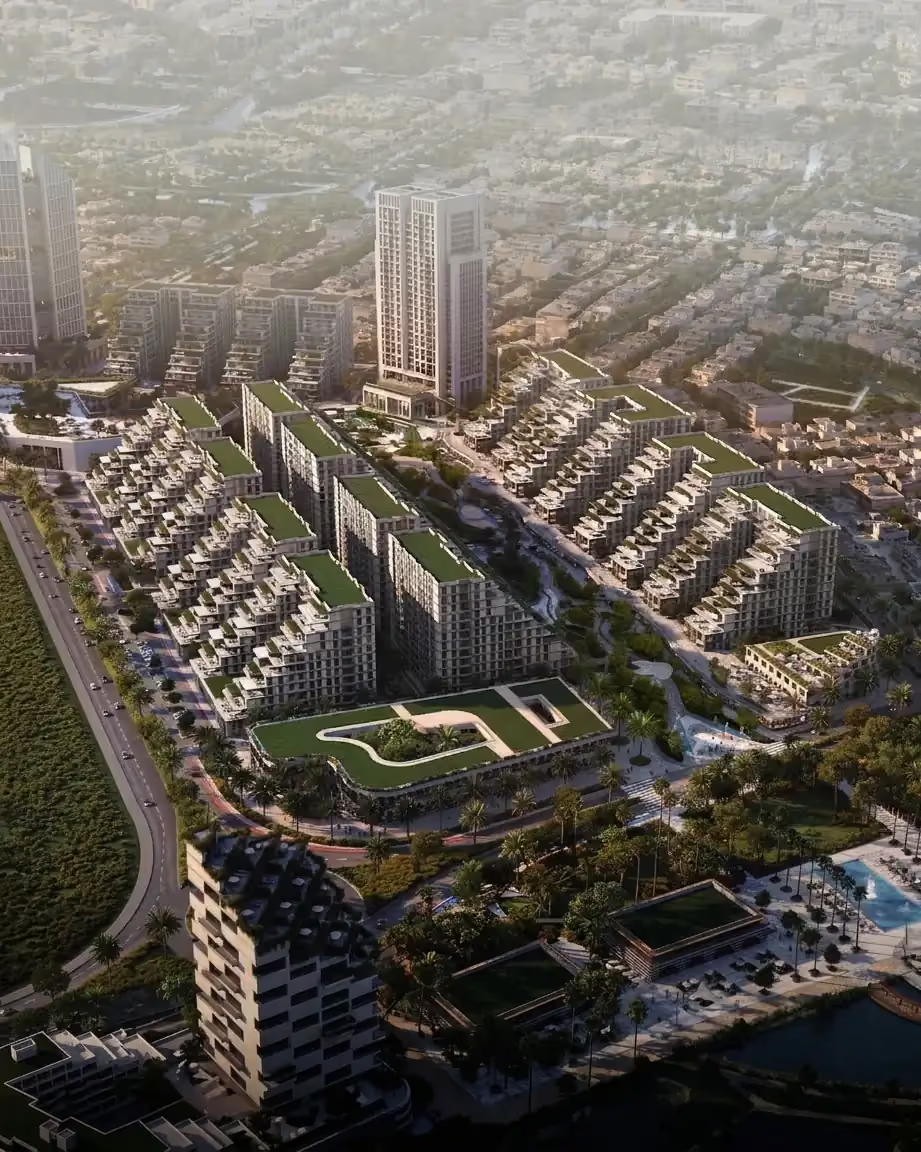
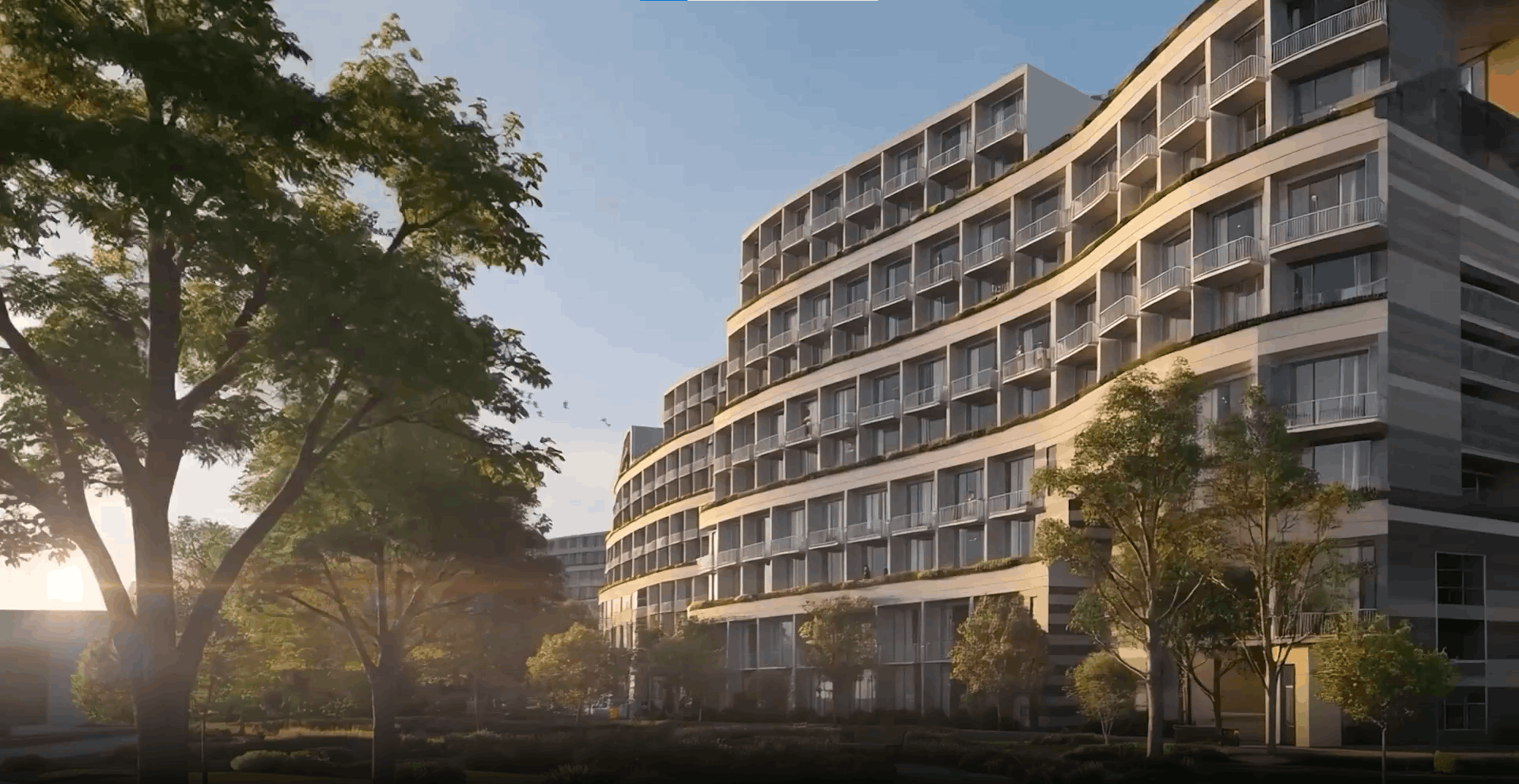
The project is multi-purpose, combining residential, commercial, and recreational uses around a large public park.
Project Definition
The project is described as an integrated real-estate and urban development scheme in central Homs, positioned by its developers as a starting point for rebuilding in the city. It aims to transform the area between the dyehouses, Souq al-Hal, Al-Qarabis, and Al-Naser Park into an urban district that includes housing, commercial facilities, a large public park, and a new wholesale market.
A slogan associated with the project, "Al-Naser Boulevard, hand in hand, we rebuild it together," has been displayed on billboards in Homs.
Location and Area
Location
The site is in central Homs, on the bank of the Orontes River. It lies between the Al-Qarabis neighborhood and its orchards to one side, and the dyehouses, Souq al-Hal, and Al-Naser Park to the other.
Area
The project covers several components:
- A public park of about 350,000 m2, including green areas, water features, and playgrounds.
- Additional land for residential and commercial construction, totaling several hundred thousand further square meters. No precise total area has been published.
Descriptive Map
The project extends from the Corniche and Asi al-Maymas to the west, passing through the Al-Qarabis orchards, and reaching the dyehouses, the wholesale market, and Al-Naser Park to the east and north.
Main Components
Housing Units
- Construction of around 4,500 housing units.
- According to Homs Governor Dr Abdul Rahman al-Aama at signing (SANA Arabic and Al-Ouruba, 7 August 2025), part of the units would be allocated to low-income families and families of martyrs.
Public Park and Green Space
- Rehabilitation and expansion of Al-Naser Park into a public park of about 350,000 m2.
- Planned features include green areas, water features, playgrounds, and pedestrian paths.
Commercial and Investment Facilities
- Construction of commercial and investment buildings, shops, and offices.
- The stated goal is to support economic activity in the area.
New Wholesale Market (Souq al-Hal)
- Relocation of the old wholesale market.
- Replacement with a new central wholesale market on the city's outskirts, described by officials as built to international standards.
- The boulevard is to be linked to this new commercial hub.
New Infrastructure
- Upgrading of road networks, sewage systems, and water and electricity networks.
- Creation of main streets and service facilities.
Cost, Timeline, and Jobs
- Implementation period: about seven years from the start of works.
- Official figures cite around 4,500 new housing units.
- Official figures cite approximately 15,000 direct and indirect job opportunities during construction and operation.
Frequently Asked Questions
Where is Al-Naser Boulevard located?
The project is in central Homs, on the bank of the Orontes River, between the Al-Qarabis neighborhood and its orchards on one side and the dyehouses, Souq al-Hal, and Al-Naser Park on the other.
How many housing units does the project include?
The project includes around 4,500 housing units. According to Homs Governor Dr Abdul Rahman al-Aama at signing (SANA Arabic and Al-Ouruba, 7 August 2025), part of them would be allocated to low-income families and families of martyrs.
How large is the public park?
The public park covers about 350,000 m2 and is planned to include green areas, water features, playgrounds, and pedestrian paths.
How long is the implementation period?
The stated implementation period is about seven years from the start of works, with official figures citing approximately 15,000 direct and indirect job opportunities during construction and operation.
UPDATE 02.08.2026, SCOPE CORRECTION
The Al-Qarabis neighbourhood is no longer part of this project. On 17 August 2025 the developer, Al-Omran Real Estate Development and Investment Company, revised the project scope and removed the Al-Qarabis neighbourhood component. The description below dates from the original August 2025 announcement and names Al-Qarabis among the project boundaries in several places. Those passages describe the scope as first announced and no longer describe the project as it stands.
Zones of the site. The site is commonly described in four zones: the Al-Qarabis neighbourhood, the Al-Qarabis orchards, al-Masabegh and Souq al-Hal. Only the neighbourhood was removed from the scope in August 2025.
Current status. Syria Report's housing, land and property unit (25 November 2025) reports that first works began in October 2025 on the revised footprint.
DEVELOPER AND TIMELINE, FROM THE OFFICIAL SOURCE
The developer, Al-Omran Real Estate Development and Investment Company, publishes the following sequence on its own website.
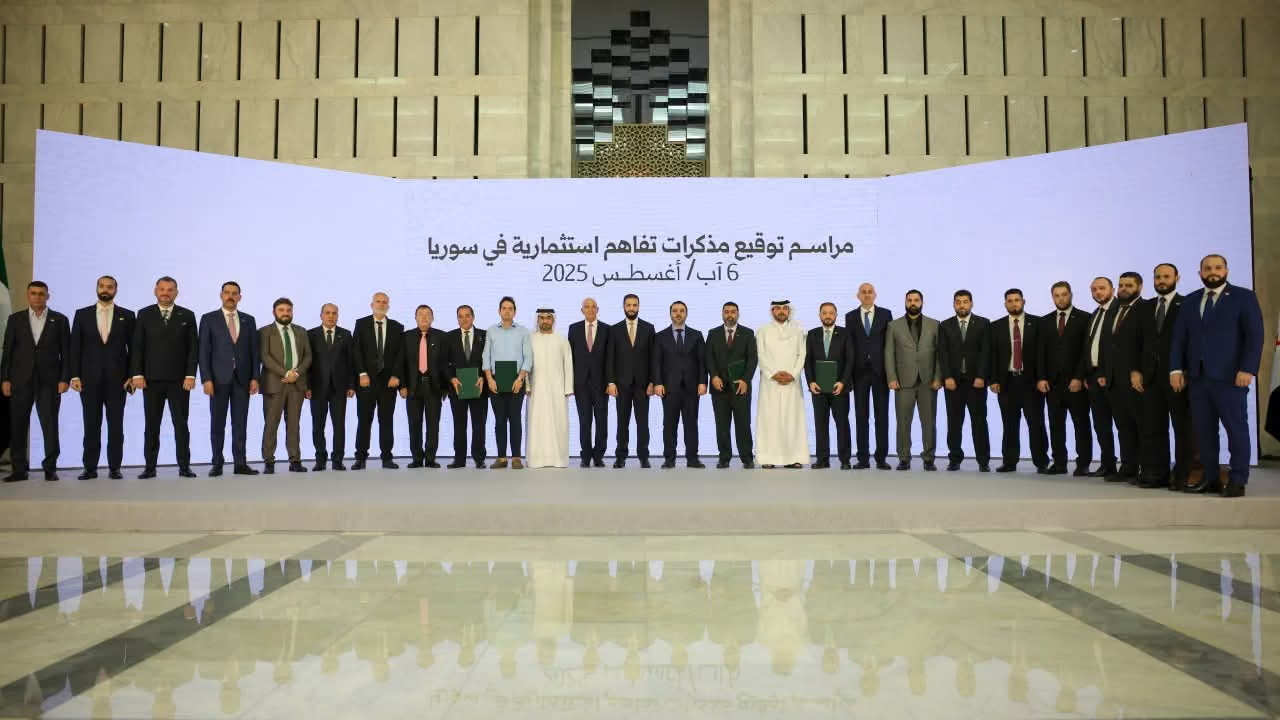
- 6 August 2025. Homs Governor Dr Abdul Rahman al-Aama signed an investment memorandum of understanding with the company to implement the Al-Naser Boulevard project, in the presence of President Ahmad al-Sharaa. SANA reported the signing the following day.
- 29 August 2025. The foundation stone was laid under the patronage of President Ahmad al-Sharaa and of Eng. Rifai Hamada, chairman of the board of Al-Omran Holding, with Governor al-Aama attending. The company states that the project falls within the Dar Al-Salam package of projects in Homs Governorate.
- 15 November 2025. The company announced the start of site works, describing three weeks of progress. That places the start in the second half of October 2025 and independently corroborates the October 2025 start reported by Syria Report's housing, land and property unit.
Al-Omran describes itself as part of the Al-Omran Holding Group, with origins in the late 1970s and more than forty years of activity, and lists completed works in Jeddah, Riyadh and Beirut alongside two projects in Homs. Its stated contact base is Homs.
THE MEMORANDUM TERMS, FROM HOMS GOVERNORATE
Homs Governorate published its own account on 7 August 2025. The memorandum was signed at the People's Palace in Damascus in the presence of President Ahmad al-Sharaa, by Governor Dr Abdul Rahman al-Aama for the governorate and by Eng. Rifai Hamada, chairman of the board, for Al-Omran.
What each side undertook
Al-Omran: preparing the detailed studies, executing the infrastructure works, building the residential and commercial buildings, developing Al-Naser Park and building a new wholesale market.
The governorate: facilitating administrative procedures, providing technical data, and forming supervision and follow-up committees to keep the work within the legal and technical frameworks of the Syrian Arab Republic.
The scope named at signing covered four areas: al-Masabegh, Souq al-Hal, Al-Qarabis and Al-Naser Park. This is the scope that the developer revised ten days later, as recorded in the scope correction above.
Compensation, as committed at signing
The governorate described compensating affected residents as one of the project's basic pillars, stating the principle that rebuilding should not come at the expense of people but in partnership with them. It undertook to form specialised technical and legal committees to assess damage, as a prelude to transparent and fair compensation mechanisms, and said residents would be involved in the assessment and planning so that rights are protected and no party is excluded.
Stated rationale and figures
The governorate gives the reasons as an acute housing shortage worsened by returning displaced residents, damaged infrastructure, the absence of any large public park inside the city, and the need to restore investor confidence. It confirms 4,500 residential units, approximately 15,000 direct and indirect jobs, and a maximum implementation period of seven years set in the memorandum itself, with execution to begin after the damage-assessment committees are formed.
Correction — 2026-08-21
The project was officially launched at a conference in Homs attended by official, economic, commercial and cultural figures, where updated specifications differing from those announced at signature were presented. According to SANA on 21 August 2026, Al-Omran Holding Company, the developer, announced that the project comprises about 2,500 residential, commercial, administrative and hotel units across some 500,000 square metres of above-ground construction.
The project also includes, per the same source, 250,000 square metres of underground parking providing about 5,000 spaces, a public park of around 350,000 square metres, and a 160,000-square-metre residential and commercial section. It is to be delivered in three phases lasting three, five and seven years respectively, and is expected to create between 8,000 and 10,000 jobs, with priority for Homs residents. SANA reported that the architectural partner in the project's planning and design is HESCO Engineering.
WHAT CHANGED SINCE SIGNING, AS OF 21 AUGUST 2026
The main description records the project as announced at signing in August 2025. The correction dated 21 August 2026 above sets out the specifications presented at the official launch in Homs, as reported by SANA. This update places the two sets of figures side by side: the figures from signing are kept as the record of the original announcement, and the launch figures are the latest announced.
- Housing units. At signing, Homs Governorate cited about 4,500 residential units. At the launch, Rifai Hamada, chairman of Al-Omran Holding, cited about 2,500 residential, commercial, administrative and hotel units. The announced unit count has therefore changed, and the launch figure covers more than one type of unit.
- Jobs. About 15,000 jobs were cited at signing. Hamada now cites between 8,000 and 10,000 jobs, with priority for Homs residents and construction materials sourced from the local market.
- Timeline. At signing, the governorate cited a maximum implementation period of seven years. At the launch, Hamada said the project will be delivered in three phases lasting three, five and seven years, with the timelines linked to the handover of the sites within it, particularly the existing wholesale market.
- Layout. An architect from HESCO Engineering, the planning and design partner, described two main sections: a public park of about 350,000 m2 (the same park size as at signing) and a residential and commercial section of about 160,000 m2. Hamada cited about 500,000 m2 of above-ground buildings and 250,000 m2 of underground parking with about 5,000 spaces.
- Scope. The scope named at signing included the Al-Qarabis neighbourhood, which the developer later removed, as recorded in the scope correction above.
According to SANA, the launch was attended by Abdul Rahman al-Aama, Secretary-General of the Presidency (Homs governor at the 2025 signing), Homs Governor Murhaf al-Naasan, and official, economic, commercial and cultural figures. The event featured a visual presentation of the project and its plan, architectural models and a short film about the city.
Gallery :



Al-Omran Real Estate Development and Investment Company
Al-Omran: investment memorandum of understanding, 6 August 2025
Al-Omran: foundation stone, 29 August 2025
Al-Omran: start of site works, 15 November 2025
SANA (English): Al-Naser Boulevard memorandum, 7 August 2025
SANA (Arabic): Al-Naser Boulevard memorandum, 7 August 2025
Al-Ouruba: Homs governor on the Al-Naser Boulevard memorandum, 7 August 2025
SANA (English): Al-Naser Boulevard launched in Homs, 21 August 2026
SANA (Arabic): Al-Naser Boulevard launch report, 21 August 2026