Teshreen Plant to Add 400 MW Within Six Months
04.10.2026

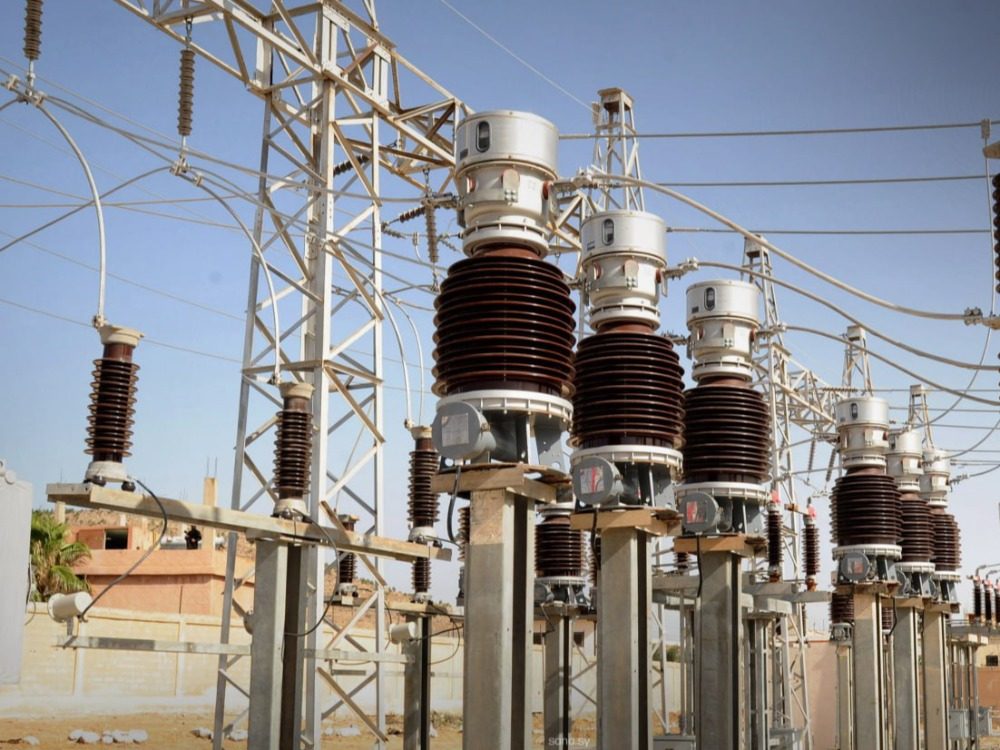
Mohammad Fadila, deputy CEO for generation affairs at the Syrian Electricity Company, outlined the technical status of three strategic power generation plants in Rif Dimashq, namely Deir Ali, Teshreen, and Nasiriyah, during an interview on Syrian state television.
Response to the Sudden Outage
Fadila confirmed that the company had brought a sudden, temporary outage affecting the three plants under direct control, restoring lines to service once the absence of any gas leak was confirmed. He noted that the incident caused no shortfall in power supply to the national grid, as feed lines were immediately rerouted and standby units at the Jandar and Banias plants, along with other gas-fired stations, were activated to compensate for the turbine outages at the three affected plants.
Teshreen Plant Rehabilitation
Fadila explained that the Teshreen plant rehabilitation project includes two steam units with a combined capacity of 400 megawatts, with one unit expected to enter service within five to six months. He added that technical teams continue to assess damage to gas turbine units and maintain affected lines and connections, relying on available spare parts to restore them as quickly as possible.
Current Gas Supplies
Fadila said total gas reaching the country currently stands at 11 million cubic meters per day, broken down as follows:
- 1 million cubic meters from the southern Jordanian source
- 4 million cubic meters from the northern Azerbaijani source
- 5 to 6 million cubic meters from domestic Syrian production
By comparison, actual demand to operate all plants at full capacity reaches around 20 million cubic meters per day.
Renewable Energy Contracts
Fadila announced the signing of contracts and memorandums of understanding to integrate renewable energy capacity of 750 megawatts from wind and 1,000 megawatts from solar power with Al-Qada Company, in addition to other projects with capacities ranging between 100 and 300 megawatts. He emphasized that renewable energy absorption into the grid is capped at a maximum of 30 percent, against 70 percent for conventional power, citing the risk of rapid collapse of renewable sources and the difficulty of quickly compensating for it without a broad, stable conventional network.
Future Expansion Plans
Fadila concluded by noting that tenders are being solicited for maintenance of the second, third, and fourth units at the Aleppo plant, to add 600 megawatts to the grid, alongside efforts to complete the remaining 20 percent of the Rastan plant project in Latakia, which would add another 500 megawatts.
Source: Al-Ikhbariah Syria
04.10.2026
Syrian Electricity Company, Teshreen plant, renewable energy, Rif Dimashq, power generation


.svg)

.avif)