Syria and Saudi Arabia Discuss Expanding Transport Corridors and Boosting Transit Traffic
13.08.2026

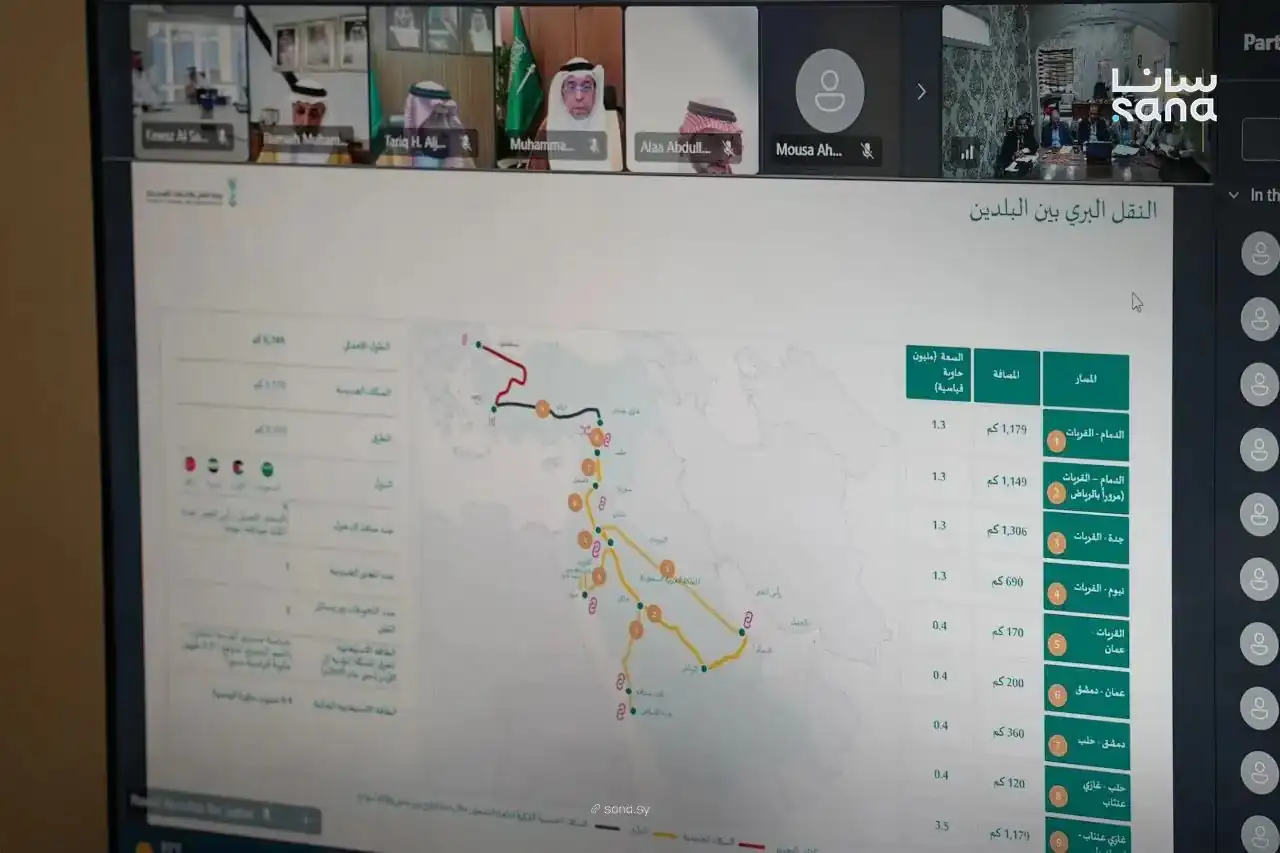
Scope of the Discussions
Syria's Deputy Transport Minister Mohammed Rahhal met his Saudi counterpart, Deputy Minister for Transport and Logistics Services Rumaih Al-Rumaih, via video conference to explore ways to strengthen cooperation in road transport, rail, logistics, and transit routes. The talks also addressed removing obstacles to truck and cargo movement and developing regional transport corridors.
Syria's Ministry of Transport announced through its Telegram channel that the discussions covered dry ports, as well as modernisation and equipment works under way at the ports of Latakia and Tartus, and their readiness to receive, clear, and forward maritime shipments overland to Saudi Arabia and the Gulf states.
Container Traffic Recovery and Dry Port Activation
Both sides noted that container and freight traffic has returned to levels approaching those recorded in 2009. They discussed activating dry ports and inland logistics zones and linking them to the maritime ports to support transit movement and rail connectivity.
The Turkey–Syria–Jordan–Saudi Arabia Corridor
The talks covered a rise in truck traffic along the Turkey–Syria–Jordan–Saudi Arabia corridor from roughly 10 to 30 trucks per day. Both sides confirmed that the Nassib border crossing is ready to handle truck and cargo flows toward the Kingdom, with projections cited by the Syrian side pointing to a potential volume of 100 trucks per day.
The two delegations also reviewed the status of the M45 international highway, approximately 500 kilometres long and built along most of its length with three lanes in each direction and central barriers. A comprehensive maintenance and rehabilitation plan is scheduled for the coming year, alongside a longer-term vision for toll roads on the north–south and east–west axes.
The Tanf–Walid–Arar Route and the Jadidah Arar Crossing
The parties discussed activating the Tanf–Walid–Arar axis through Iraq as a shorter alternative transit route between Syria, Iraq, and Saudi Arabia. The route is intended to ease pressure on the Nassib crossing and stimulate activity in the northern region of the Kingdom. This includes rehabilitating and widening the road leading to Tanf to accommodate current traffic of approximately one thousand tankers and trucks per day.
The two sides also discussed converting the operating mechanism at the Jadidah Arar crossing from unloading and transfer to direct transit for all nationalities and cargo types, following a successful pilot with Turkish trucks. The necessary adjustments are expected to be completed within the coming months.
Rail Connectivity, Visas, and the Upcoming Ministerial Visit
On rail connectivity, the two sides reviewed the operational status of the Aleppo–Damascus axis and its link to the ports of Tartus and Latakia, and discussed preparing a four-party feasibility study involving Syria, Saudi Arabia, Turkey, and Jordan to assess readiness for an integrated rail link. They also examined a southern connection between Damascus and the Jordanian border, approximately 100 kilometres long, and the financing and technical requirements needed for it.
On the visa file, the Syrian side raised the issue of waiting periods for drivers to obtain visas, which currently range between 40 and 50 days. The Saudi side confirmed it would follow up with its Ministry of Foreign Affairs. Both parties agreed to place the acceleration of multi-entry visas for drivers on the agenda of the Saudi Transport Minister's upcoming visit to Damascus at the end of this month, alongside the signing of the final draft of a memorandum of understanding on roads.
Source: SANA
13.08.2026
road transport, rail connectivity, transit, Latakia port, Tartus port, Nassib crossing, logistics, Syria, Saudi Arabia


.svg)

.avif)