Daraa Surveys Unlicensed Wells to Aid Water Supply
25.09.2026

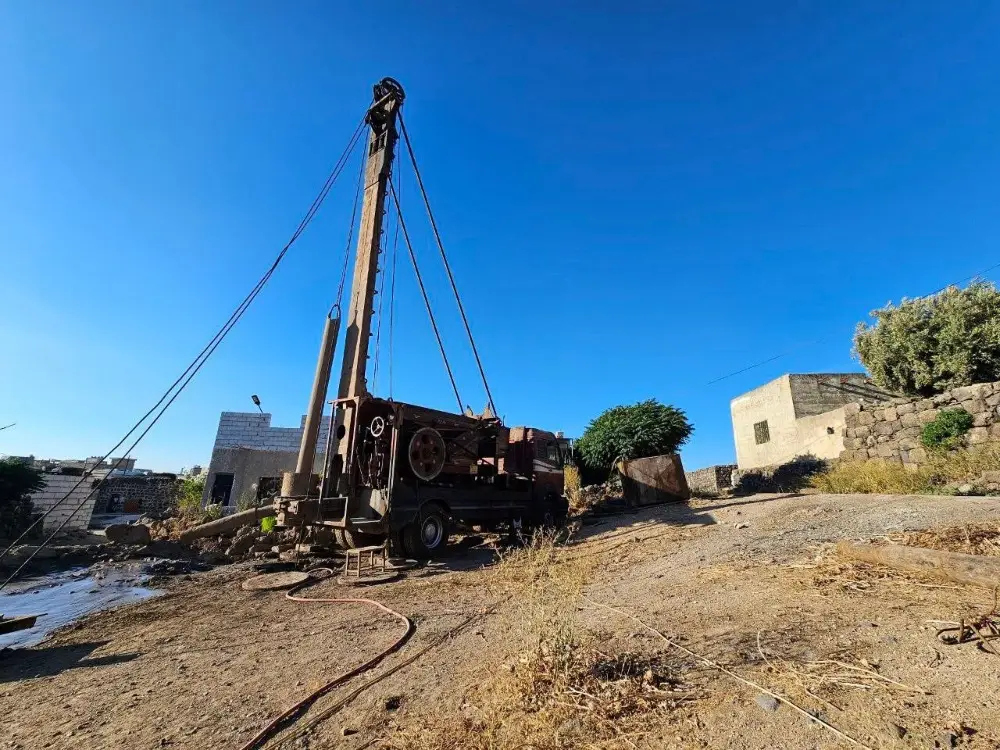
Daraa province is facing a growing decline in groundwater sources and mounting challenges in securing drinking water, making the issue of unlicensed wells one of the most complex files in the region. Local authorities, coordinating between the Water Resources Directorate and the General Company for Drinking Water and Sanitation, are working to survey these wells and assess their status.
Scale Still Undetermined
Hani al Abdullah, director of Water Resources in Daraa, said the province contains a large number of unlicensed wells, but no final official count exists yet because the survey process is still under way within the set deadline. During an earlier field visit to the Kahil and Kahil al Thawra irrigation stations, officials noted more than 12 unlicensed wells around the Kahil al Thawra station alone.
A History Spanning Four Decades
According to the Water Resources Directorate, some unlicensed wells in Daraa date back more than 40 years, when their numbers were relatively limited, before increasing in recent years due to climate conditions, reduced rainfall and rising water demand. These wells are spread across various parts of the province depending on agricultural activity and local water availability.
Impact on Groundwater Reserves
Al Abdullah noted that unregulated pumping from these wells has significantly affected groundwater reserves, a trend confirmed through periodic measurements from monitoring wells conducted monthly or as needed. He added that the impact assessment does not treat all wells the same way, but evaluates each case according to its location and use.
From Depletion to a Supply Source
The province is working on a plan to benefit from unlicensed wells located near irrigation stations, linking suitable ones to drinking water networks once legal and technical procedures are completed. Riad al Musalma, director of the General Company for Drinking Water and Sanitation in Daraa, said the circular on unlicensed wells aims to regularize their status and use eligible wells to support the drinking water system, particularly in the eastern region that suffers shortages. Ahmad Khattab, a member of the Executive Office for Agriculture and Water Resources, added that some wells around the Kahil al Thawra station could be connected to the station's reservoir to increase water quantities during summer months.
Legal Treatment Mechanism
Not all unlicensed wells are treated the same way. The handling process relies on the Water Legislation Law and its supplementary regulations, including Decision No. 8 of 2023, taking into account each well's location, use and impact on drinking water sources. Wells within organized zones may be partly linked to the drinking water network, while others may be sealed and kept as emergency reserves.
Source: Alikhbariah
25.09.2026
Daraa, drinking water, unlicensed wells, groundwater, water resources

.svg)

.avif)