.avif)

Rehabilitation of Three Flood-Damaged Bridges in Deir ez-Zor
.svg)


.avif)
.svg)

Project Background
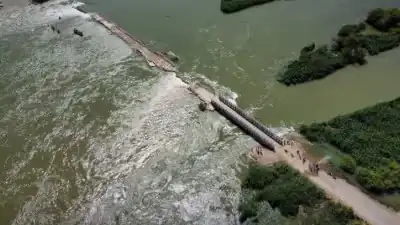
The General Establishment for Road Transport, operating under the Ministry of Transport, has announced the launch of procedures to maintain and rehabilitate a number of bridges in Deir ez-Zor Governorate. The move follows significant flooding along the Euphrates River, which caused a sharp rise in water levels and inflicted renewed damage on critical transport infrastructure. The flooding has affected the rural areas of Deir ez-Zor and Raqqa governorates since 26 May 2026, with several earthen crossings and a pontoon (floating) bridge collapsing during the rise.
Director General Muath Najjar stated that the affected bridges had previously sustained heavy damage and had undergone only temporary emergency backfilling at the time. The recent flooding compromised those interim repairs, necessitating the preparation of comprehensive technical studies for full and permanent rehabilitation.
Targeted Bridges
The project covers the rehabilitation of three key bridges in the governorate:
- Al-Siyasiyah Bridge
- Al-Mayadin Bridge
- Al-Ashara Bridge
These three crossings sit within a wider network of Euphrates River bridges in Deir ez-Zor. In January 2026, Deputy Governor Badri al-Masloukh stated that all five bridges connecting the two riverbanks were unsuitable for use, with some requiring rehabilitation and others requiring removal and rebuilding (claim, official statement). At that stage he estimated the cost of rehabilitating a single bridge at between 3 and 4 million US dollars and noted that the works would require foreign contractors with heavy equipment not available domestically (estimate). These figures were an early estimate and predate the formal plan described below; the official plan figures are denominated in Syrian pounds.
Executing Bodies and Technical Studies
Najjar confirmed that the General Establishment for Road Transport has completed the technical studies for all three projects. Contracts are to be awarded to the Syrian Construction and Building Establishment, which will carry out the maintenance and rehabilitation works across the three sites.
The initiative is backed by a presidential directive issued during a visit by President Ahmad al-Shara to the governorate (claim, reported by Al-Ikhbariyah, 30 May 2026).
Financial Framework and Wider Plan
On 7 June 2026, Transport Minister Yarub Badr, Finance Minister Mohammed Yisr Barnieh, and Deir ez-Zor Governor Ziad al-Ayesh, together with Director General Muath Najjar, reviewed the governorate's road and bridge plans (claim, SANA). According to that review, the 2026 maintenance plan for Deir ez-Zor comprises six projects to improve the road network, at an estimated cost of 872.7 million Syrian pounds. A separate flood recovery plan comprises four projects, at an estimated cost of approximately 3.965 billion Syrian pounds, and includes the rehabilitation of the Siyasiyah, Mayadin, and al-Bukamal bridges, the maintenance of the Deir ez-Zor to al-Bukamal to Iraqi border road and the Raqqa to Deir ez-Zor road, and the new Damascus to Palmyra to Deir ez-Zor road. The review also proposed preparing studies for two new bridges in Raqqa and Deir ez-Zor and rehabilitating existing bridges in accordance with modern international standards. The implication is that the three named bridges form part of a financed governorate-wide recovery and development programme rather than isolated repairs.
Objectives and Expected Impact
The projects aim to restore road connectivity between areas that have been cut off and to improve the flow of transport and services throughout Deir ez-Zor Governorate, particularly in communities that have suffered from damaged or non-functional bridge crossings over recent years.
Field Conditions and Emergency Response
Syrian Civil Defense teams, operating under the Ministry of Emergency and Disaster Management, have reported that the earthen bridge connecting Deir ez-Zor city to its rural surroundings has been taken out of service due to rising Euphrates water levels. Teams worked in coordination with the Deir ez-Zor City Council and technical services to temporarily remove a section of the bridge in order to facilitate water drainage and prevent a sudden collapse that could endanger residents.
Widespread flooding has been recorded along the Euphrates riverbanks in both Deir ez-Zor and Raqqa governorates, with approximately 2,500 families affected in Deir ez-Zor alone. Emergency teams, civil defense units, and local authorities continued to conduct response operations and precautionary evacuations to minimize human and material losses.
Progress Updates
On 1 June 2026, authorities reported that the governorate had passed the most critical phase of the river rise, with water levels in al-Huwayqa dropping by more than 25 centimetres; at that point the first phase of reinforcement on Al-Ashara Bridge was complete, while rehabilitation preparations for the Al-Siyasiyah and Al-Mayadin bridges were under way for the following week (claim, SANA). On 2 June 2026, Fayez Abbas, head of the Emergency Response Committee in Deir ez-Zor, announced the reopening of Al-Ashara Bridge to vehicle and pedestrian traffic after the completion of reinforcement and maintenance works, which had used additional quantities of rubble as an emergency field response (claim, SANA). These updates describe emergency reinforcement of the crossing; the comprehensive, permanent rehabilitation under the technical studies is a separate and longer phase.
Frequently Asked Questions
Which bridges does the project cover?
The project covers the rehabilitation of three bridges in Deir ez-Zor Governorate: Al-Siyasiyah Bridge, Al-Mayadin Bridge, and Al-Ashara Bridge.
What caused the damage to the bridges?
The bridges had previously sustained heavy damage and received only temporary emergency backfilling. Flooding on the Euphrates River, which caused a sharp rise in water levels from late May 2026, compromised those interim repairs and inflicted renewed damage.
Who is responsible for executing the works?
The General Establishment for Road Transport, under the Ministry of Transport, prepared the technical studies. The maintenance and rehabilitation works are to be carried out by the Syrian Construction and Building Establishment.
How much does the plan cost?
According to the government review of 7 June 2026, the 2026 maintenance plan for Deir ez-Zor is estimated at 872.7 million Syrian pounds for six road projects, and a separate flood recovery plan covering four projects (including the Siyasiyah, Mayadin, and al-Bukamal bridges) is estimated at about 3.965 billion Syrian pounds. An earlier January 2026 official estimate put the cost of rehabilitating a single bridge at 3 to 4 million US dollars.
How many families were affected by the flooding?
Approximately 2,500 families were affected in Deir ez-Zor Governorate alone.
Has any bridge already reopened?
Al-Ashara Bridge was reopened to vehicle and pedestrian traffic on 2 June 2026 after emergency reinforcement and maintenance works. This was an emergency measure; comprehensive permanent rehabilitation is a separate, longer phase.
What is the goal of the project?
The project aims to restore road connectivity between areas that have been cut off and to improve the flow of transport and services across Deir ez-Zor Governorate, especially in communities affected by damaged or non-functional bridge crossings.
Update — 2026-07-31
The project has moved from studies into execution. According to SANA on 29 May 2026, the General Establishment for Road Transport contracted the Syrian Establishment for Construction and Building to maintain three Deir ez-Zor bridges: al-Siyasiya, al-Mayadeen and al-Ashara. SANA reported on 4 June 2026 that rehabilitation of al-Siyasiya Bridge, which links the two banks of the Euphrates, had begun, executed by the Syrian Establishment for Construction and Building under the supervision of the Ministry of Transport through the General Establishment for Road Transport, with a contractual duration of 12 months.
SANA reported on 31 July 2026 that progress on al-Siyasiya Bridge had reached 19 percent against a planned 8.5 percent, broken down as reinforced concrete pier works about 60 percent, gantry crane assembly about 95 percent, steel formwork fabrication about 85 percent and structural rebar detailing about 6 percent, with completion expected on 29 March 2027. SANA had earlier reported, on 7 June 2026, that the governorate's flood-recovery plan comprises four projects at an estimated cost of about 3.965 billion Syrian pounds, alongside a 2026 maintenance plan of six projects estimated at about 872.7 million Syrian pounds.
Sources
SANA: Government reviews road and bridge rehabilitation plans in Deir Ezzor
SANA: Euphrates levels ease in Deir Ezzor as Syria restores water and transport services
SANA: Al-Ashara Bridge reopened to vehicle and pedestrian traffic
Al-Ikhbariyah: Plan to rehabilitate the Al-Ashara, Al-Siyasiyah and Al-Mayadin bridges