.avif)

Urgent Plan to Rehabilitate the 425-km Damascus–Deir ez-Zor Highway and Build a Second Carriageway
.svg)


.avif)
.svg)

A Tragedy That Brought the Highway Back into Focus
A fatal collision near the town of Sukhna on 25 July reignited urgent debate over road safety on the Damascus–Deir ez-Zor highway. Two passenger buses, one operated by the Ministry of Interior and one civilian, collided on the route, killing 35 people and injuring 30 others. Following the incident, head of state Ahmad al-Sharaa directed that all available resources be mobilised to address the aftermath, care for the injured, and support the families of the victims.
Immediate Safety Measures
The Director General of the General Establishment for Road Transport, Muadh Najjar, confirmed that the establishment will immediately begin addressing black spots along the highway and installing traffic signs and road markings. These steps are intended to reduce accident risks and improve safety conditions while comprehensive rehabilitation works are being prepared.
Najjar also called on all drivers, particularly truck and bus operators, to comply with traffic regulations and speed limits, and to ensure their vehicles are in full technical readiness before departure.
Rehabilitation Project and Second Carriageway
Najjar revealed that the establishment is currently evaluating bids submitted by several companies under both domestic and international request-for-proposals processes, covering the rehabilitation of the Damascus–Palmyra and Palmyra–Deir ez-Zor segments, as well as the construction of a second carriageway. He stated that the results of the evaluation will be announced once completed and the most suitable offer selected.
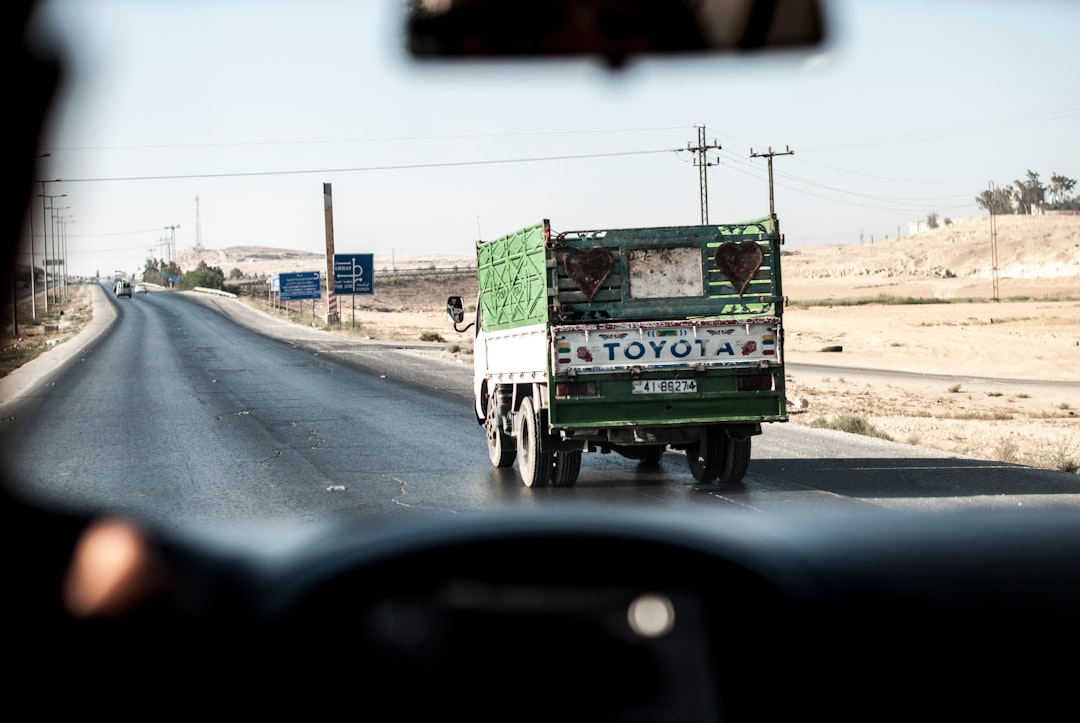
The second carriageway is designed to separate traffic flows in opposite directions. The existing road consists of only two lanes, one in each direction, with no physical divider between them, a configuration that significantly increases collision risk. The new carriageway will be equipped with full road-safety infrastructure, including lane markings and traffic signals, while the existing road will also receive equivalent safety upgrades.
Timeline and Project Scope
The rehabilitation project covers a total distance of 425 kilometres and is expected to take approximately two years to complete. Najjar indicated that maintenance works on the existing road will begin during the current year, running in parallel with the contractor selection process.
A Priority for the Ministry of Transport
Transport Minister Yarab Badr described the Palmyra–Deir ez-Zor corridor as a vital artery that suffered years of neglect and deteriorating maintenance, before regaining its strategic importance with the resumption of traffic and the growing volume of passenger and freight movement. He confirmed that the Damascus–Deir ez-Zor highway has been listed among the priority projects for road network rehabilitation, and that the ministry is working to raise road-safety standards and improve infrastructure efficiency, alongside ongoing investigations into the accident.
Update — 2026-08-19
The project has moved from plan to contract. On 19 August 2026 the Syrian Arab News Agency (SANA) reported Muadh Najjar, Director General of the General Establishment for Road Transport at the Ministry of Transport, as announcing that the tender for the two projects developing the Damascus–Tadmur–Deir ez-Zor corridor had been awarded to Saudi Arabia's Al-Rawaf and Syria's Al-Kawati, at a combined value of close to USD 300 million and an execution period of 780 days. The two projects rest on a study covering more than 420 kilometres of the corridor, and cover rehabilitation of the existing road plus construction of a second carriageway in the opposite direction to turn the axis into a dual carriageway, with the stated aim of raising traffic capacity and improving road safety standards.
The same report sets out a three-stage evaluation: verification of legal documents and guarantees, then a technical assessment requiring a minimum of 70 points to qualify, then a financial assessment in which an economic price is calculated by dividing the financial bid by the technical score. Najjar added that the Damascus–Aleppo road project has entered the negotiation stage following its own tender. The report gives no date for works starting on site.