UN Refugee Chief Backs 'Syria Without Camps' Plan After Idlib and Aleppo Visit
12.08.2026

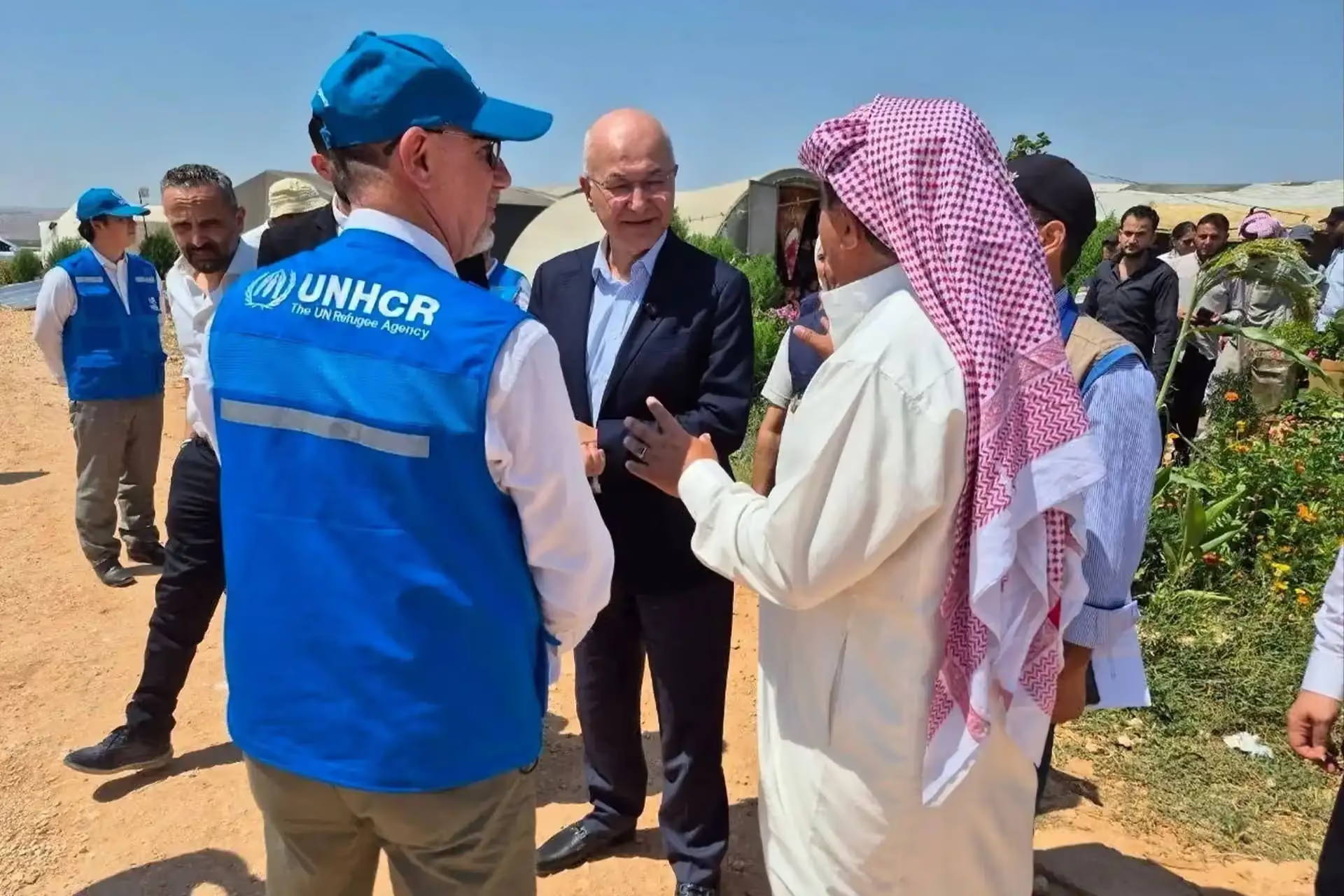
Field Visit to Idlib and Aleppo
The UN High Commissioner for Refugees, Filippo Grandi's successor Barham Salih, conducted a field visit on Tuesday to the governorates of Idlib and Aleppo in northern Syria. During the visit, he inspected conditions at the Al-Hijra camp north of Idlib and heard directly from displaced families about their needs and the difficulties they face in accessing basic services.
Salih held talks with Idlib Governor Mohammed Abdul Rahman covering support for service and humanitarian projects aimed at improving conditions for families in shelters and camps, and securing the requirements for their voluntary return, according to the Syrian Arab News Agency (SANA).
Support for 'Syria Without Camps'
Salih announced UNHCR's backing for the Syrian government's 'Syria Without Camps' plan, describing it as an ambitious programme that merits support. He stated that UNHCR would work in cooperation with other international organisations and donor countries to mobilise the support needed to enable Syrians to overcome the challenges of displacement.
The 'Syria Without Camps' plan was launched on 9 May 2026, with the objective of fully resolving internal displacement, dismantling all displacement camps across the country, and reaching sustainable solutions by 2027.
Infrastructure and Livelihood Projects
The Director of Social Affairs and Labour in Idlib, Ahlam Al-Rashid, noted that agreement was reached during the visit on strengthening support for Idlib residents to achieve a safe, voluntary, and sustainable return. She indicated that pledges made during the visit cover projects within the scope of infrastructure rebuilding, as well as income-generating projects for families returning to their towns.
Displacement Figures in Idlib
Al-Rashid disclosed that the number of families in camps has fallen from 266,000 families across 1,146 camps to approximately 91,000 families in around 700 camps, while some 174,000 families have already returned to their towns and villages.
The origins of displaced families remaining in Idlib camps break down as follows:
- 39 percent from Idlib governorate itself, mostly from the southern countryside
- 30 percent from Hama governorate
- 19 percent from Aleppo governorate
- 4.7 percent from Homs governorate
- 2.2 percent from Latakia governorate
- The remainder from other governorates
Aleppo Discussions and Return Mechanisms
Salih met with Aleppo Governor Azzam Al-Gharib to discuss mechanisms for supporting the return of displaced persons to their original areas and homes, and ways to provide suitable conditions for voluntary return. He confirmed that UNHCR is engaged across multiple work tracks in Aleppo city, its countryside, and other areas including Afrin.
Source: Al Jazeera Arabic
12.08.2026
Syria Without Camps, internal displacement, UNHCR, Idlib, Aleppo, voluntary return, infrastructure, livelihood projects


.svg)

.avif)