Syria Shipping Union Signs Deals With Jordan, Iraq
28.09.2026

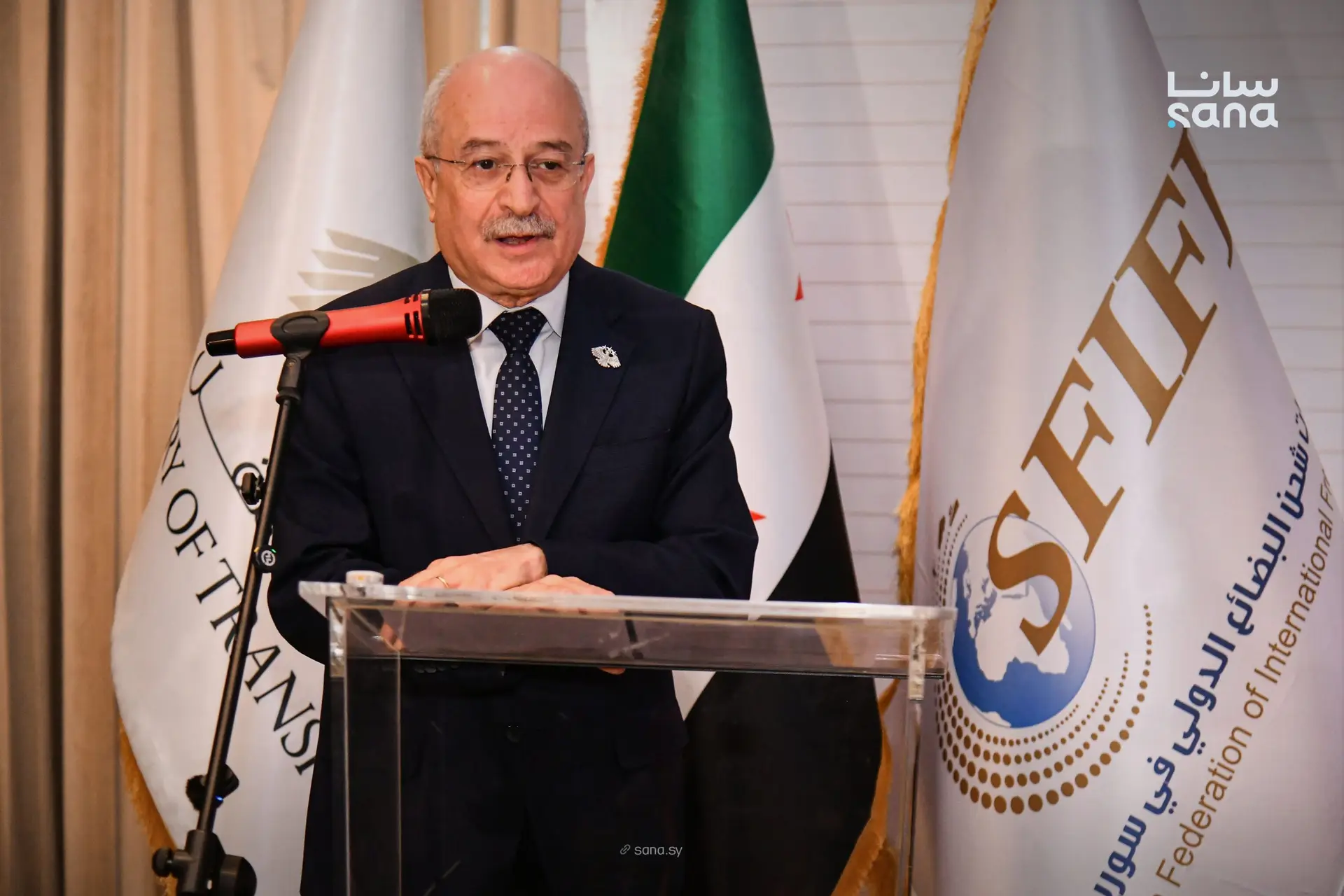
Annual General Assembly Meeting
The General Assembly of the Union of International Freight Shipping Companies in Syria held its 2026 annual meeting at the Golden Mazzeh Hotel in Damascus, alongside the annual logistics forum themed Towards Sustainable Logistics Integration. The event brought together representatives of government bodies, unions, chambers of commerce and industry, and shipping, transport and logistics companies.
The meeting reviewed the state of the shipping and logistics sector and the challenges facing companies operating in it, along with ways to develop the business environment and strengthen public-private cooperation. The union also presented its achievements over the past year, its vision and plans for the coming phase, its executed 2025 budget, as well as the 2026 agenda and budget of the assembly.
Memoranda of Understanding With Jordan and Iraq
During the meeting, the union signed memoranda of understanding with both Jordan and Iraq aimed at strengthening cooperation and facilitating transport movement, while adopting more effective working mechanisms. The agreements also cover accelerating the resolution of sector problems and activating the participation of transport sector representatives in discussions on related decisions.
Syria as a Regional Transit Corridor
Transport Minister Yarub Badr said in his address to the meeting that Syria is regaining its traditional role as a regional corridor for international trade, benefiting from its geographic position linking Europe with the Middle East and the Gulf, and Iraq with the Mediterranean. The minister pointed to the possibility of building partnerships among Syria, Lebanon, Jordan, Iraq and Saudi Arabia based on integration in production, storage, logistics and international trade.
Minister Badr added that a national policy for developing sustainable transport in Syria is nearing issuance, stating it rests on three pillars:
- Economic efficiency
- Social inclusion and integration
- Environmental protection and reducing the transport sector's environmental impact
Sector Challenges and Training Programs
Saleh Kishour, head of the Union of International Freight Shipping Companies in Syria, said the union works to convey shipping companies' problems to government bodies and coordinates with transport unions in neighboring countries to address border difficulties.
Mazen Dirawan, head of the Federation of Syrian Chambers of Industry, called for ending the border rotation (munaqala) rule due to the damage and increased time and costs it causes, abolishing truck transport office queues, and allowing competition in the transport sector, noting the issue has been raised with the Ministry of Transport on multiple occasions.
Union secretary Hassan Ajam said part of the rotation file with Iraq has been resolved, with work continuing on the issue with Lebanon, Jordan and Turkey, pointing to challenges including rising transport and fuel costs and weight controls, and the need to modernize Syria's transport fleet, train personnel and adopt digitalization. Ajam noted the launch of a training program for shipping company staff in land, sea, air transport and customs clearance, delivered by specialists and offering internationally recognized certificates.
Rawad Abdulfattah, owner of a Lebanese shipping and customs clearance company, stressed the importance of facilitating truck movement between the two countries, particularly enabling Syrian trucks to load cargo from Beirut port, and easing rotation procedures and fees at crossings and ports.
The Union of International Freight Shipping Companies was founded in 2006 and forms an umbrella framework for international shipping companies, with over two decades of experience contributing to the development of the profession and its role in economic activity and transport.
Source: SANA
28.09.2026
freight shipping union, logistics Syria, MoU Jordan Iraq, transport ministry, regional trade


.svg)

.avif)