Islamic Bank Consortium Funds Damascus Tunnel Project
17.09.2026

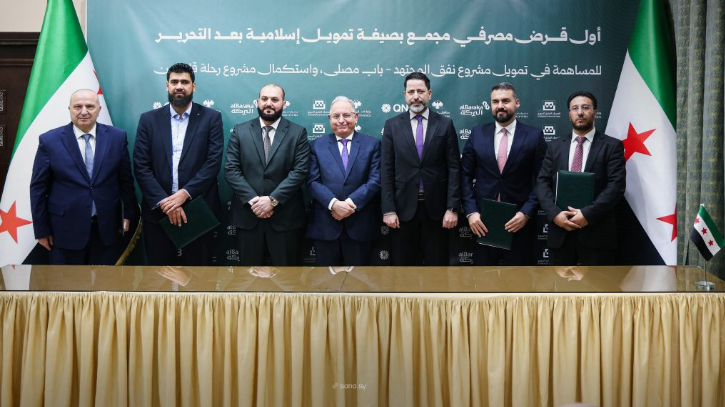
Public and private banks have signed an agreement to finance the Mujtahid, Bab Musalla tunnel project through a joint Islamic financing structure, involving the Commercial Bank of Syria, Al Baraka Bank Syria, and Qatar National Bank Syria. Financial strategy and risk expert Dr. Saleh Ashram told Al Watan newspaper that the financing model signals a new direction for infrastructure funding in Syria.
A New Financing Model
Ashram described the agreement as a new form of financing partnership between the public banking sector, represented by the Commercial Bank of Syria, and the private sector, represented by Al Baraka Bank Syria and Qatar National Bank Syria, to fund an infrastructure project under an Islamic financing structure. He noted that the Ministry of Finance had previously signaled an intention to finance the public budget deficit through Islamic sukuk, describing this as part of a broader expansion of financing tools available to the state and the economy.
Government Attention to the Project
Ashram pointed out that the signing ceremony was attended by the Minister of Finance, the Governor of the Central Bank of Syria, and the Governor of Damascus, which he said reflects the level of government attention given to this type of development project and to the financing model used.
Role of the Private Sector
According to Ashram, this cooperation fits within a broader economic direction pursued by the government. He referenced remarks made by President Ahmad al-Sharaa in Dubai regarding Syria's shift from a socialist economic model toward one that supports a larger role for the private sector and an open market. Ashram added that this aligns with one of the pillars of the recovery strategy proposed by the World Bank, which calls for private sector led growth and recovery.
Scale of Financing Needs
The World Bank's latest estimates put the cost of rebuilding damaged physical assets in Syria between 140 billion and 345 billion dollars, with a central estimate of around 216 billion dollars. Ashram said the scale of these financing needs is too large for the public budget alone to cover, meaning Syria will require financing and investment partners from inside and outside the country, whether from the banking sector, private investors, or international and regional governments and institutions.
Source: Al Watan
17.09.2026
Mujtahid tunnel, Islamic financing, Commercial Bank of Syria, Al Baraka Bank, Syria rebuilding

.svg)

.avif)
.svg)