EU Set to Resume Formal Dialogue with Syria and Overhaul Sanctions Framework
17.04.2026


New Phase of EU Engagement
An internal document prepared by the EU’s diplomatic service and circulated to member states this week outlines a new phase of engagement with Syria, centered on resuming formal political contacts and opening pathways for broader economic and security cooperation. According to the document, first reported by Reuters, the EU will initiate structured, high-level political dialogue with the Syrian transitional government on May 11, while also fully reviving the cooperation agreement signed with Damascus in 1978.
Reforming the Sanctions Regime
The EU has signaled its intention to redesign and adapt its sanctions framework in a manner that preserves leverage over the transition process, while continuing to target parties that obstruct political progress. This comes as Syria, following the fall of the Assad regime at the end of 2024, seeks deeper integration into the international community after most Western sanctions were lifted in the latter part of that year.
Economic Cooperation and Refugee Return
The European paper sets out plans to strengthen economic ties through a trade and investment framework, the mobilization of private sector financing, and the establishment of a technical assistance center to support business environment reforms. The EU also intends to work with Syrian authorities to facilitate the safe, voluntary, and dignified return of refugees and displaced persons. Europe currently hosts more than one million Syrians, with approximately half residing in Germany.
Regional Transport and Energy Hub
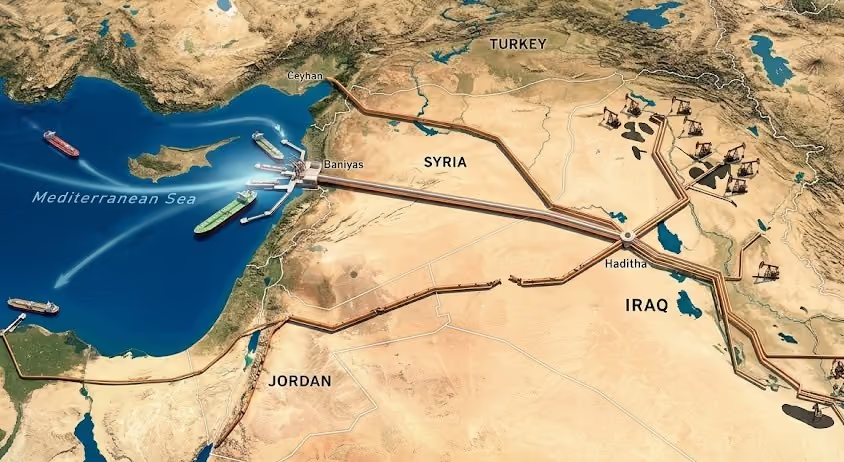
The document highlights European ambitions to integrate Syria into regional connectivity projects, including the India-Middle East-Europe Economic Corridor, reinforcing Syria’s potential role as a hub for transport, energy, and communications. Turkey, Syria, and Jordan are also working to develop rail networks linking southern Europe to the Gulf region as part of a broader regional transport initiative.
Security Support and the Kurdish Dimension
On the security front, the EU is considering support for the training of Syrian police forces and the strengthening of the Interior Ministry’s capabilities, alongside cooperation on counter-terrorism, organized crime, and drug trafficking. Brussels also expressed support for the January agreement between Damascus and Kurdish forces in northeastern Syria, which provides for the integration of local institutions into the state structure and the expansion of Kurdish rights as part of a wider political transition.
17.04.2026
European Union, Syria, sanctions, political dialogue, rebuilding, refugees, economic cooperation, regional connectivity

.svg)

.avif)
.svg)