
No items found.

.png)

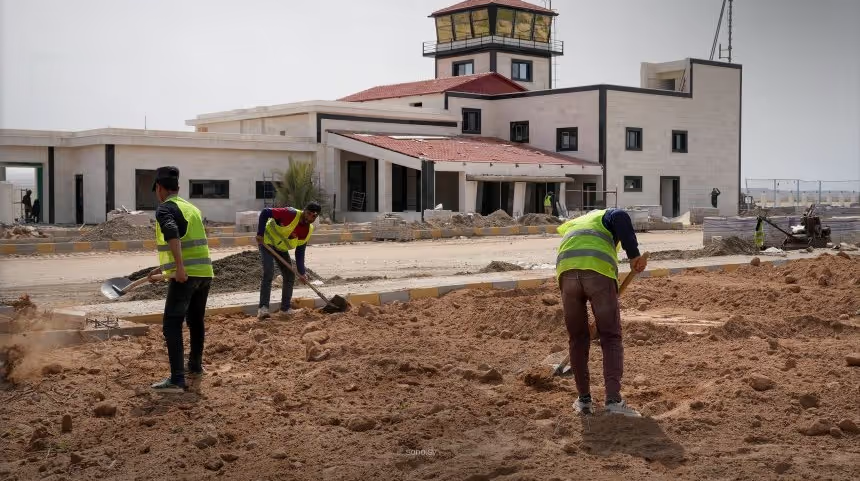


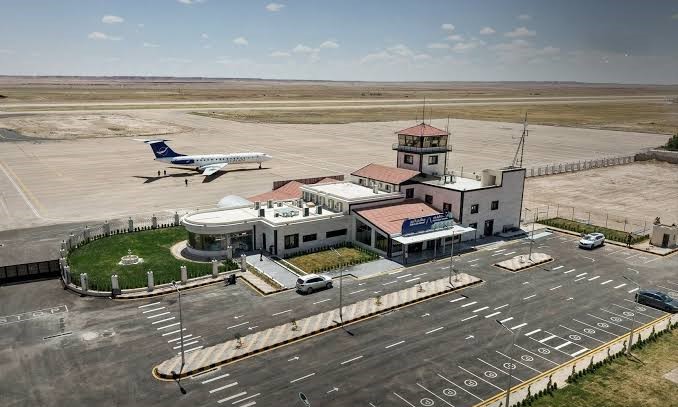
The General Authority for Civil Aviation and Air Transport has announced that rehabilitation works at Deir ez-Zor Civil Airport have reached an advanced stage, with completion rates across vital facilities exceeding 90 percent. The milestone marks significant progress toward reconnecting the governorate with the national air navigation network after more than a decade of inactivity.
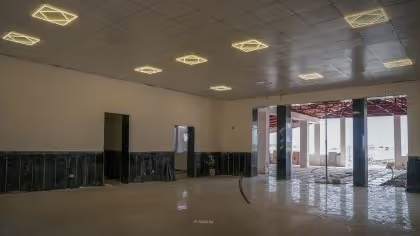
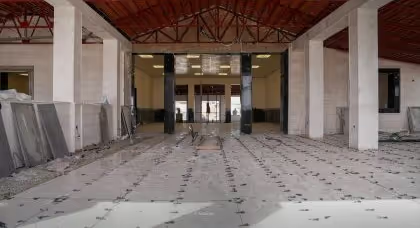
The Authority's Government Communications Director, Alaa Salal, confirmed that a substantial portion of runway rehabilitation and core facility works has been completed, alongside preliminary technical works on navigation systems. The passenger terminal and administrative offices stand at approximately 90% completion, with remaining tasks limited to final finishing works including painting and floor tiling, while air conditioning units are scheduled for installation within the coming days.
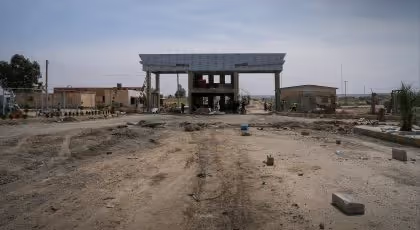
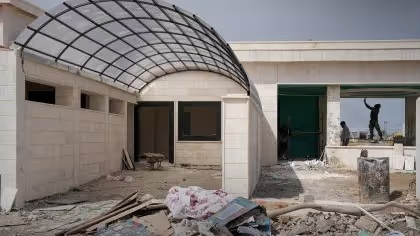
Salal further noted that perimeter wall works and runway maintenance have been fully completed, while maintenance of one of the entrances leading to the aircraft parking apron remains ongoing. Stone cladding works on the administrative buildings and passenger terminal have reached approximately 95%, with final finishing continuing across most sections.
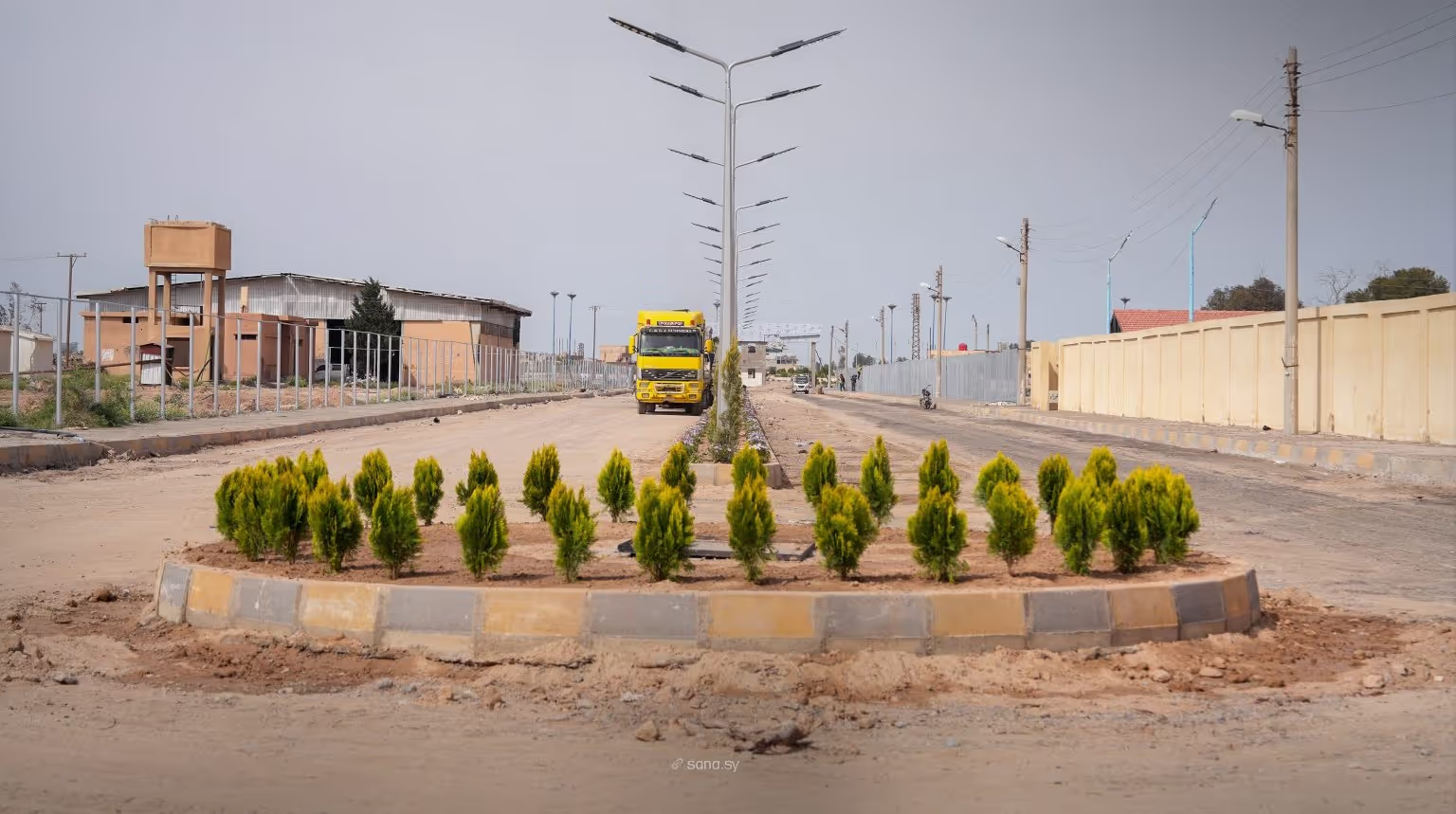
Navigation lighting systems are technically ready, pending only the arrival of the lighting equipment for installation and commissioning. Works on the VIP reception hall are also progressing, while landscaping has reached approximately 70% completion and entrance gate works stand at the same level.
The Authority's current phase focuses on three primary tracks:
In this context, the Deputy Head of the Authority, Amjad Nakhal, conducted a field visit to the airport to review the progress of infrastructure and operational facility rehabilitation, as part of a comprehensive plan to raise readiness levels ahead of the official reopening.
Deir ez-Zor Civil Airport is a strategic asset for eastern Syria, and its return to service is expected to alleviate the governorate's isolation, facilitate passenger movement, and support economic activity across the region. The project forms part of a broader national vision aimed at restoring vital facilities in Syrian governorates and expanding domestic air connectivity.
Technical and engineering teams have made significant progress on the ground, bringing the airport closer to operational readiness according to the following milestones:
The project goes beyond mere passenger transport; it carries significant economic and social dimensions:
The project is advancing rapidly as part of a broader government plan to rehabilitate and reactivate vital airports and infrastructure in Syria. Current efforts are focused on ensuring that all facilities strictly comply with civil aviation safety standards before the official announcement of the first flights.
.svg)
.svg)


.png)
.svg)