No items found.

.png)


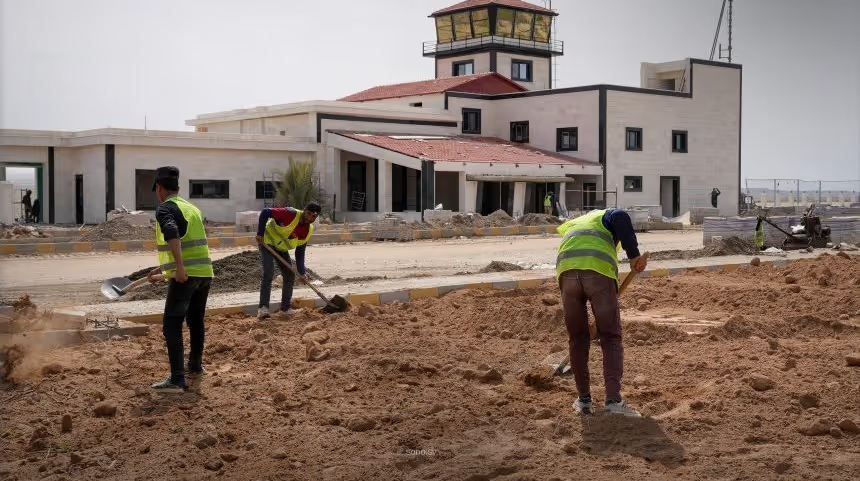
Technical crews from the Tartus branch of the Syrian General Railway Corporation have commenced rehabilitation works on the rail line connecting Tartus port to Talkalkh station in the western countryside of Homs governorate. The Tartus governorate confirmed in an official statement that the works aim to raise the line's operational efficiency and ensure its full technical readiness, thereby facilitating the smooth flow of rail freight between the port and Syria's interior regions.
The Tartus–Talkalkh line holds considerable logistical significance, linking one of Syria's principal Mediterranean ports to the western Homs countryside and serving as a key corridor for the movement of goods between the coast and inland Syria. Its rehabilitation is expected to meaningfully expand the capacity of the national rail network to handle bulk freight, particularly agricultural commodities.
In a related development, the Syrian General Railway Corporation announced on 11 April the commencement of wheat transfer operations from Tartus port to inland storage facilities. The cargo, approximately 40,000 tonnes carried aboard the vessel Inesia, is being transported by rail to the Shanshar silos in Homs and the Nasiriyya silos in Damascus, as part of the government's plan to strengthen food security.
In January, the first grain-dedicated train departed from Latakia port bound for Aleppo, carrying approximately 1,500 tonnes of grain after a suspension of nearly fifteen years. The train travelled along the Latakia–Aleppo corridor, passing through Homs and Hama governorates, marking the return to service of one of Syria's most strategically important rail routes following comprehensive rehabilitation works covering both the track infrastructure and supporting facilities.
These projects form part of a broader national effort to rebuild Syria's rail network, which sustained extensive damage during years of conflict. The Syrian General Railway Corporation is working to restore rail transport as a foundational pillar of the national freight system, with particular emphasis on moving strategic commodities such as grain and foodstuffs between the country's ports and its major inland urban and storage centres.
.svg)
.svg)


.png)
.svg)