Al-Furqlus Oil Refinery Project


Al-Furqlus Oil Refinery Project in Homs, Syria: A 210,000 Barrels per Day Refinery Development
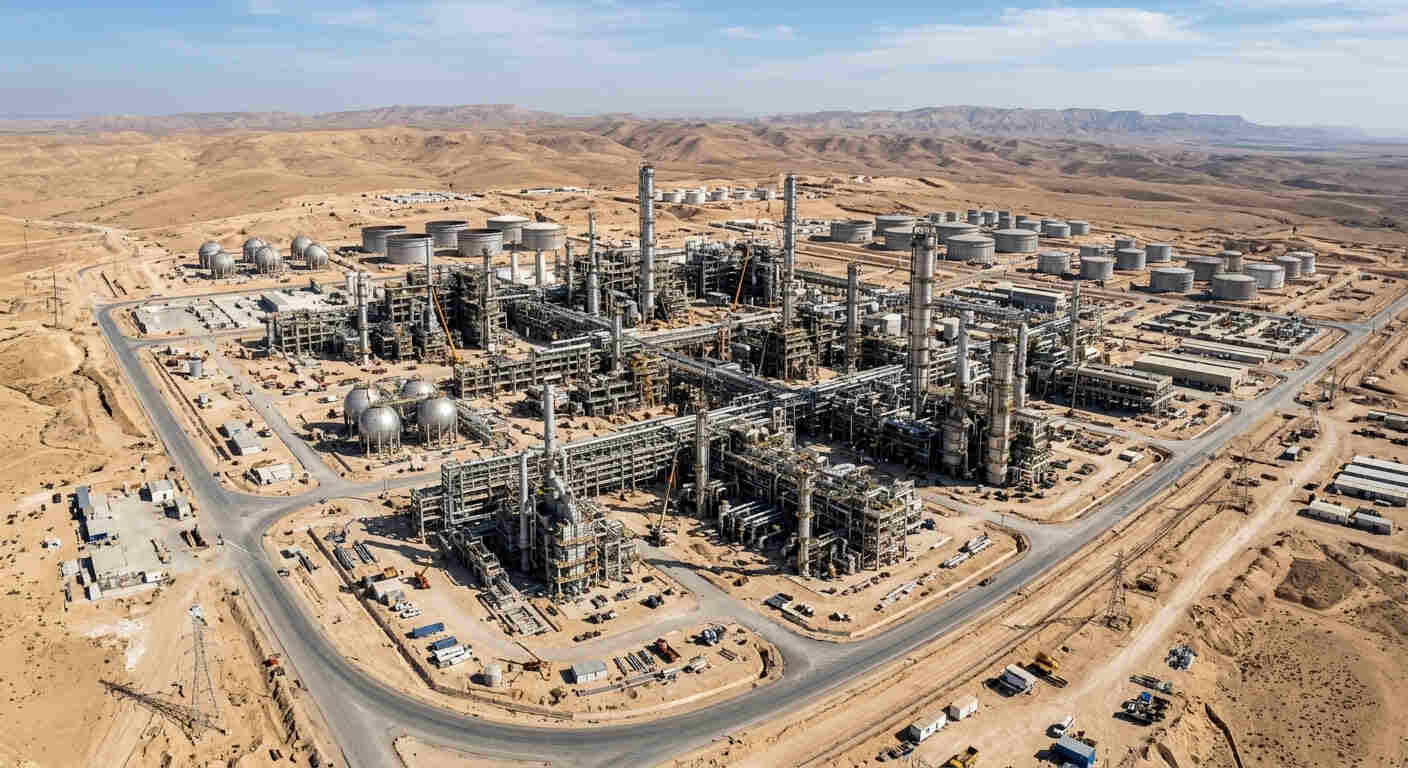
The Al-Furqlus Oil Refinery Project is a planned petroleum refining and industrial development located in the Al-Furqlus area of Homs Governorate, Syria. The project involves establishing a modern oil refinery designed to process heavy and light crude oil, as well as condensates, with a total design capacity of approximately 210,000 barrels per day.
The development is structured under a Build-Operate-Transfer (BOT) model, covering project financing, engineering, construction and operation before the eventual transfer of the facility. According to the 2026 terms of reference issued by the Syrian Petroleum Company (SPC), the project also includes the possibility of developing an integrated petrochemical complex and a dedicated base oil production facility.
The proposed refinery is designed to process different crude oil blends, produce high-value petroleum derivatives and incorporate supporting utilities, storage facilities, transportation infrastructure and environmental management systems.
Project Location and Land Area
The proposed Al-Furqlus Oil Refinery is located in Homs Governorate, approximately 60 kilometres east of Homs city, along the Homs–Palmyra road. The site is also approximately 160 kilometres from Tartous Port.
The proposed location covers a desert area situated away from residential communities and close to existing oil, natural gas and electricity transmission networks.
The total designated land area is approximately 400 hectares, equivalent to 4 million square metres, with provision for future expansion.
The technical requirements identify several infrastructure connections necessary for the development, including:
- Road connections linking the site with port facilities.
- Pipelines for supplying crude oil and natural gas.
- Pipelines for transporting refined petroleum products.
- A railway connection linking the site to the Syrian railway network.
- Connection to the public high-voltage electricity grid at 230 kV.
- A raw water supply source with a specified capacity of 4,000 cubic metres per hour.
- Crude oil and refined product transfer and measurement facilities.
These connections are intended to support the transportation of raw materials, energy supply, industrial operations and the distribution of refined products.
Refinery Design and Processing Capacity
The Al-Furqlus Oil Refinery is designed for a total processing capacity of approximately 210,000 barrels of crude oil per day.
According to the technical specifications, the refinery will incorporate three independent atmospheric distillation units, each designed to process 70,000 barrels per day.
The three units are intended to operate in parallel and accommodate different feedstock combinations:
- A unit processing a blend of light crude oil and condensates.
- A unit processing a mixture of light and heavy crude oil.
- A unit dedicated to processing heavy crude oil.
The refinery design also includes two vacuum distillation units to process heavy residues produced by the atmospheric distillation operations.
The independent configuration of the processing units is intended to provide operational flexibility and allow individual units to undergo maintenance without requiring the complete shutdown of the remaining units.
The refinery will adopt deep-conversion processing technologies to maximise the production of higher-value petroleum derivatives.
Crude Oil Feedstock and Processing Flexibility
The refinery is designed to process Syrian heavy and light crude oil, together with condensates.
The technical requirements specify the following feedstock characteristics:
- Syrian Crude Oil: API gravity ranging from 22 to 38.
- Condensates: API gravity of up to 50.
- Sulphur Content: A maximum of 3.5%.
- Other Contaminants: Metal and salt content within the permissible limits defined by the referenced ASTM standards.
The technical configuration also allows the possibility of blending Syrian crude oil with imported crude grades that meet equivalent specifications if sufficient domestic feedstock is unavailable.
This flexibility is incorporated into the refinery design to accommodate variations in crude oil availability and feedstock characteristics while maintaining the required processing performance.
Petroleum Products and Production Targets
The project is designed to prioritise the production of white petroleum products, with a target yield exceeding 85% of the crude oil feedstock.
The planned product specifications require petroleum derivatives to meet Euro 5 standards as a minimum and comply with applicable Syrian national standards.
The main targeted petroleum products include:
- Gasoline.
- Diesel.
- Kerosene.
- Liquefied Petroleum Gas (LPG).
The project also includes provisions for processing heavy refinery residues and producing additional petroleum-based materials.
These products include road asphalt, oxidised asphalt blocks and waterproofing sheets designed according to the technical specifications outlined in the project requirements.
Base Oil Production Facility
A dedicated base oil production line is included in the project scope.
According to the 2026 technical document, the proposed base oil production facility is designed for an annual capacity of approximately 150,000 tonnes.
The production line is intended to supply the requirements of the associated lubricating oil blending facility, with the possibility of marketing surplus quantities in local and international markets.
This component forms part of the project's wider industrial integration, linking crude oil refining with the production of materials used in lubricant manufacturing.
Potential Petrochemical Complex
The proposed refinery development also includes provisions for studying the establishment of an ancillary petrochemical complex in the future.
The refinery layout and processing configuration are required to accommodate potential integration with this additional industrial facility.
The technical requirements include provisions for directing selected refinery streams, particularly naphtha and liquefied petroleum gas, as feedstock for future petrochemical processing.
The design also considers the provision of suitable pipeline corridors, utility connections and extraction points to facilitate the transfer of these materials without disrupting the refinery's main operations.
The petrochemical complex is presented as a potential future development component and is not described as an already operational facility.
Supporting Utilities and Industrial Infrastructure
The refinery requires an extensive network of utilities and supporting industrial facilities to maintain continuous operations.
The technical requirements include provisions for the following systems:
Power and Steam Generation
The facility is required to incorporate independent power generation and industrial steam production systems. The power generation complex is specified to cover 120% of peak consumption demand and include an N+1 standby unit.
A connection to the public electricity grid is also specified as a backup option.
Water Supply and Treatment
The project includes raw water supply infrastructure and an advanced industrial water treatment system.
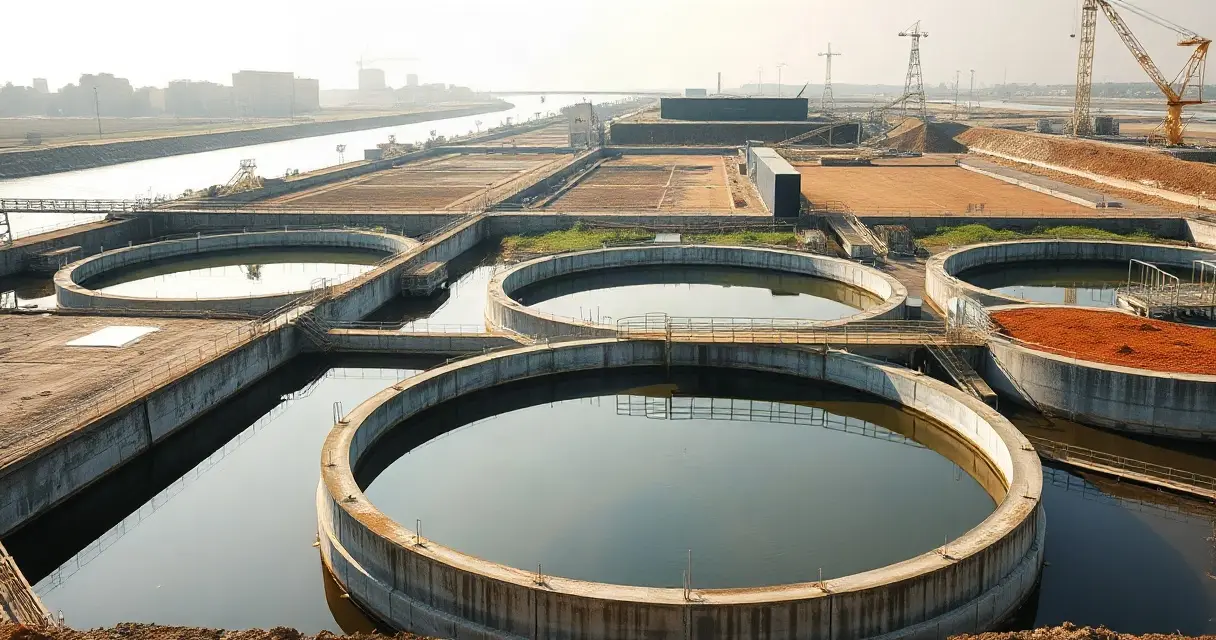
The technical requirements adopt a Zero Liquid Discharge (ZLD) approach, focusing on treating and recovering industrial wastewater for reuse within the facility.
Natural Gas and Industrial Gases
Supporting facilities include natural gas supply arrangements, industrial nitrogen and oxygen production, and the necessary storage and distribution systems.
Storage and Logistics
The development includes integrated crude oil and petroleum product storage facilities, loading systems, pipeline connections and internal material transfer infrastructure.
Automation and Control
The refinery is designed to incorporate distributed control systems, automated monitoring, asset management and operational safety systems.
These utilities and supporting facilities form part of the technical infrastructure required for the operation of the proposed refining complex.
Environmental Management and Safety Systems
Environmental management and industrial safety are included in the refinery's technical requirements.
The proposed facility incorporates wastewater treatment, gas recovery, sulphur recovery and emissions monitoring systems.
The main environmental and safety provisions include:
- Hydrotreating units for removing sulphur and impurities from petroleum product streams.
- Sulphur recovery units using Claus technology or an equivalent process.
- Tail gas treatment systems with a minimum specified sulphur recovery efficiency of 99.9%.
- Vapour recovery systems for storage tanks and loading facilities.
- Continuous emissions monitoring systems.
- Industrial wastewater treatment and recycling.
- Hazardous waste handling and management facilities.
- Integrated fire detection and firefighting systems.
The project specifications also require petroleum products to meet at least Euro 5 standards.
These provisions are part of the proposed engineering and operational requirements for the refinery.
Storage Facilities and Operational Capacity
The refinery's storage system is designed to provide sufficient operating inventory for continuous production and product distribution.
The technical requirements specify the following minimum storage periods:
- Crude Oil: Storage capacity sufficient for at least 30 days of full-capacity refinery operation.
- Final Petroleum Products: Storage capacity equivalent to at least 20 days of production.
- Liquefied Petroleum Gas (LPG): Storage capacity sufficient for at least 10 days.
- Intermediate Products: Surge storage capacity equivalent to at least 10 days.
The storage facilities are also required to include measurement, monitoring, safety and containment systems in accordance with the applicable technical standards.
Project Delivery Model and Implementation Schedule
The Al-Furqlus Oil Refinery Project is structured under a Build-Operate-Transfer (BOT) model.
Under this framework, the project company is responsible for financing, engineering, procurement, construction and operation of the refinery during the agreed investment period, followed by the transfer of the facility to the designated management entity under the contractual handover arrangements.
The 2026 terms of reference establish a proposed implementation schedule of 40 months from the date of contract signing.
The proposed schedule consists of three main stages:
- Engineering Design: 8 months for Front-End Engineering Design (FEED) and detailed engineering.
- Procurement and Construction: 26 months, with activities overlapping with the design stage.
- Commissioning: 6 months for testing and preparation for operational readiness.
The total proposed implementation period is 40 months from contract signing. The document also indicates that shorter implementation schedules may receive preferential evaluation consideration.
This timeframe represents the proposed technical schedule in the terms of reference and should not be interpreted as a confirmed construction deadline.
Relationship with the Existing Homs Refinery
The proposed Al-Furqlus refinery is a new facility and should be distinguished from the existing Homs Refinery.
In a statement published by SANA on 15 November 2025, the General Manager of the Homs Refinery Company indicated that the existing refinery would continue operating until the new Al-Furqlus refinery had been completed and placed into service.
The same report described an earlier design proposal for the new facility with a capacity of approximately 150,000 barrels per day and an estimated preparation period of three to four years.
The later 2026 technical terms of reference specify a revised design capacity of approximately 210,000 barrels per day.
The two facilities are therefore separate installations, with the new Al-Furqlus refinery forming the subject of the current development and technical specifications.
Al-Furqlus Oil Refinery Project Overview
The main published specifications of the Al-Furqlus Oil Refinery Project are summarised below:
- Project Name: Al-Furqlus Oil Refinery Project.
- Location: Al-Furqlus, Homs Governorate, Syria.
- Distance from Homs City: Approximately 60 kilometres east.
- Distance from Tartous Port: Approximately 160 kilometres.
- Total Land Area: Approximately 400 hectares, expandable.
- Equivalent Land Area: Approximately 4,000,000 square metres.
- Refining Capacity: Approximately 210,000 barrels per day.
- Atmospheric Distillation Units: Three units, each with a capacity of 70,000 barrels per day.
- Vacuum Distillation Units: Two units.
- Base Oil Production Capacity: Approximately 150,000 tonnes annually.
- Target White Product Yield: More than 85% of crude oil feedstock.
- Minimum Product Standard: Euro 5.
- Future Industrial Component: Potential ancillary petrochemical complex.
- Electricity Connection: 230 kV.
- Specified Raw Water Supply Capacity: 4,000 cubic metres per hour.
- Delivery Model: Build-Operate-Transfer (BOT).
- Proposed Engineering Design Period: 8 months.
- Proposed Procurement and Construction Period: 26 months.
- Proposed Commissioning Period: 6 months.
- Total Proposed Implementation Period: 40 months from contract signing.
- Project Management Entity: Refining and Chemicals Company, acting on behalf of the Syrian Petroleum Company (SPC).
The Al-Furqlus Oil Refinery Project is planned as an integrated petroleum refining development in Homs Governorate, combining crude oil processing, base oil production, petroleum product storage, supporting utilities and the potential future development of a petrochemical complex. Its 2026 technical specifications establish a design capacity of approximately 210,000 barrels per day and a proposed implementation period of 40 months under a Build-Operate-Transfer framework.